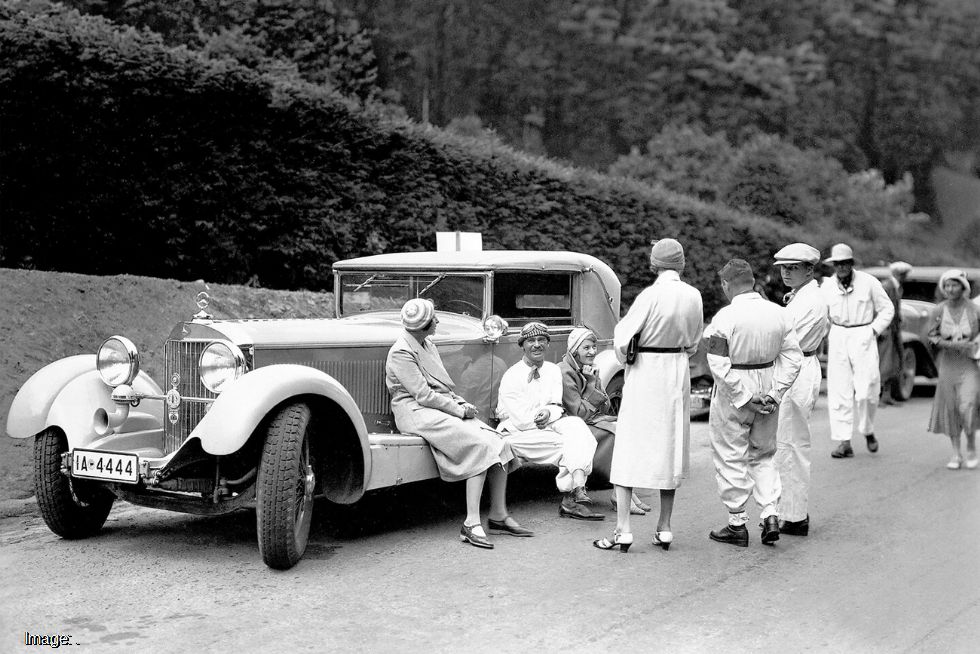
Once bitter rivals, tough times forced Mercedes and Benz together

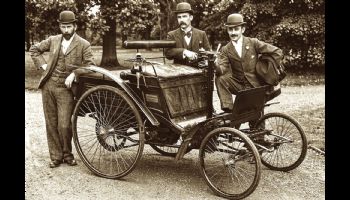
During this time, Austrian tycoon Emil Jellinek raced cars under the alias Monsieur Mercedes when he convinced Daimler chief engineer, Wilhelm Maybach, to build faster, lower, and more stable cars. In 1900, Jellinek ordered 36 of those revolutionary new cars to be named Daimler-Mercedes, after his daughter. It was part of a broader rights deal to sell the cars in Eastern Europe and the United States.
Mercedes delivered the first of those revolutionary 35 HPs in 1900. The cars spurned the traditional motorized horse-cart car style in favour of a steel ladder frame, a low centre of gravity, the engine bolted directly to the chassis, and Maybach’s groundbreaking honeycomb radiator. The Mercedes 35 HP (below) dominated races to the extent that French Automobile Club secretary Paul Meyan declared, "We have entered the Mercedes era."
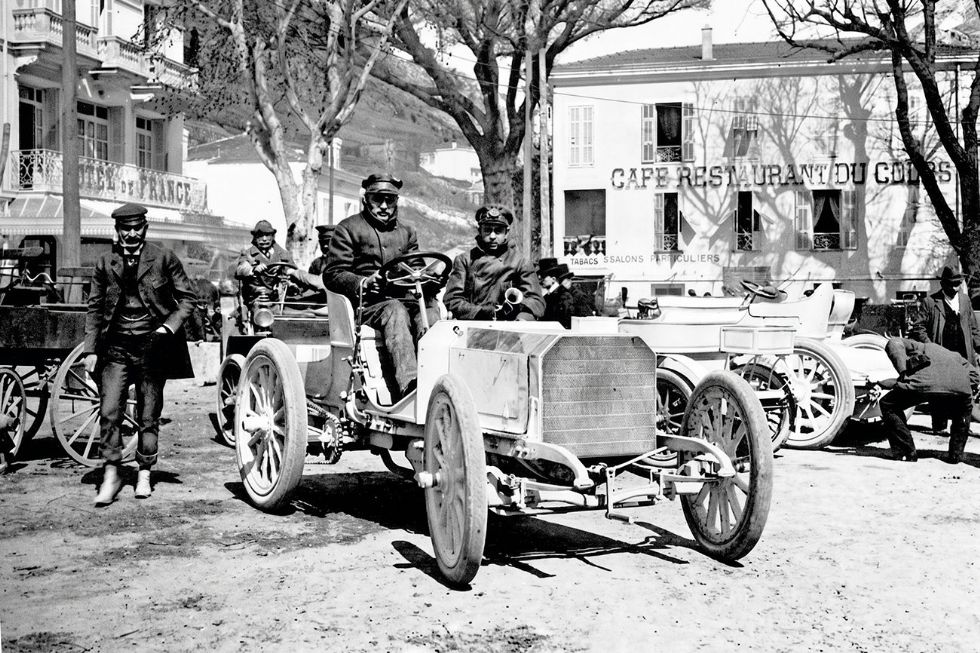
Mercedes was registered as a trademark in 1902
Mercedes was registered as a Daimler trademark in 1902, while Emil Jellinek changed his family surname to Jellinek-Mercedes. Then Daimler added the three-pointed star to represent motorized transport on land, sea, and air in 1919. All Daimler passenger cars were then sold as Mercedes until 1926.
It was at that time that the devastation of World War I and the catastrophic economic collapse that followed, crippled Weimar Germany. Local demand for high-end cars disappeared literally almost overnight. Worse still, imports, and notably Henry Ford’s mass production Model T, threatened to flood Europe with affordable cars.
Neither of Germany’s leading luxury car makers, Daimler or Benz, were equipped to survive alone. Realising that broad consolidation would save both marques from certain bankruptcy, financier Emil Georg von Stauss and a group of banks persuaded the rival Daimler and Benz boards to find common ground in order to survive. And thrive.
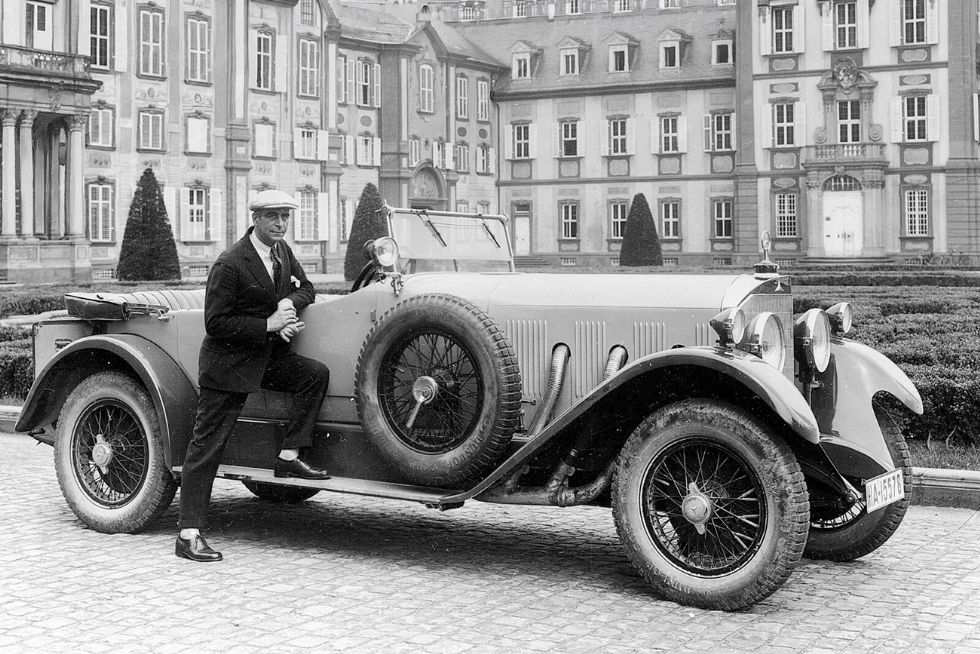
Daimler & Benz agreed to agree in 1924
Benz and Daimler duly signed an Interessengemeinschaft, an agreement of mutual interest in 1924. Both companies retained legal independence but purchasing, production and advertising among other activities were standardized. Daimler and Benz’ engineering operations furthermore aligned as Daimler’s chief engineer; Ferdinand Porsche collaborated with Benz’ technical leadership.
Their Sales networks also merged, as all Mercedes and Benz dealerships sold and maintained both marques’ cars. Originally set to run through the year 2000, the arrangement proved so effective through those trying economic times that the Daimler and Benz boards expedited a total merger.
Daimler and Benz formally unified as Daimler-Benz AG on 28 June 1926. Based at Untertürkheim, Stuttgart, the passenger vehicle line took the name Mercedes-Benz, combining Daimler’s iconic car brand with the Benz family name. Its badge married Daimler’s three-pointed star with Benz’s traditional laurel wreath.
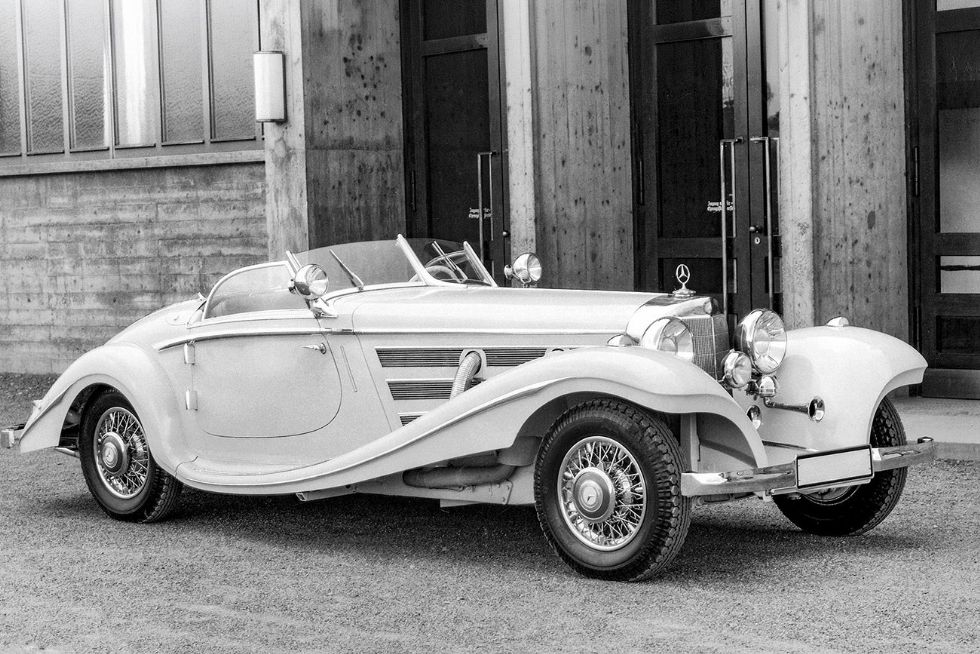
Porsche’s mighty Mercedes-Benzes dominated
Mercedes-Benz immediately found success. Ferdinand Porsche’s mighty S, SS, and SSK (above and top) series followed the supercharged Model K (two up and below) to rapidly cement the newly minted marque's dominance on road and track for the decades that followed.
South Africa proved a difficult nut for the new Mercedes-Benz to crack, however. While Hess' Benz Velo was the first car ever to come to the country, rugged and affordable American marques dominated the local car market. Both Ford and General Motors already manufactured cars in Port Elizabeth by ’26, in an effort to avoid high import tariffs. Which buyers of fully imported Mercedes-Benz had to pay in full.
That failed to deter wealthy mining magnates, diplomats, farmers, and the expat German community from snapping up the few Mercedes-Benz cars that landed in the Union. Imported in small batches or on bespoke special order, they were distributed via private motor agencies and shipping factors in Johannesburg, Cape Town and Durban.
Driving was a challenge in 1920s South Africa
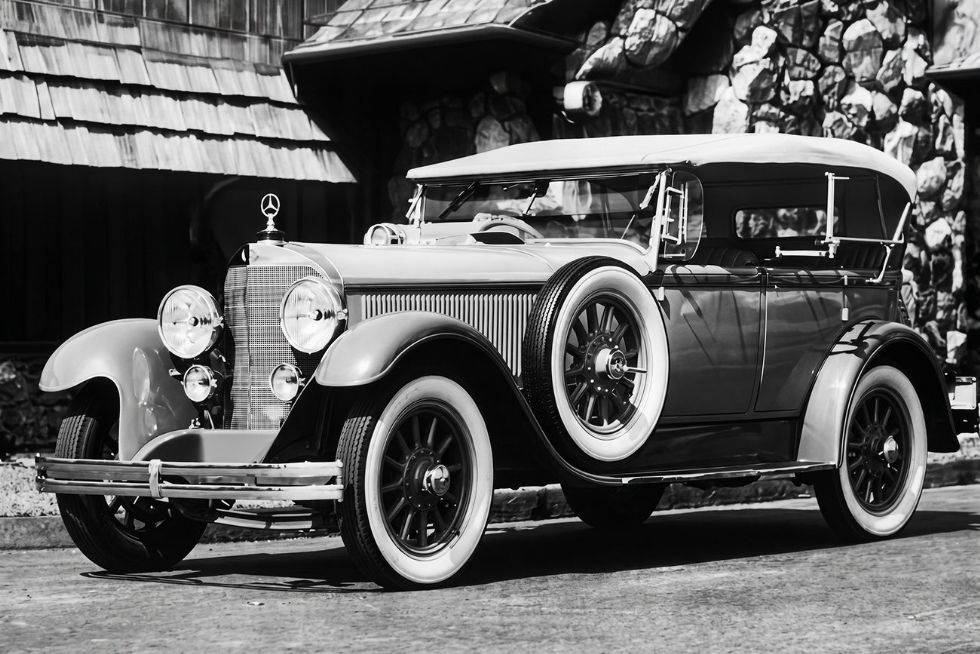
Driving was still a challenge in South Africa in the late ‘twenties, especially on country ‘roads’ outside the major cities. Unpaved, corrugated and middelmannetjie dirt tracks required imported models to come in heavy-duty export specification, including extra ground clearance, reinforced leaf springs, and tropical radiators.
The first unified Mercedes-Benz models to reach South Africa were a few large, formal Type W11 Stuttgart 260 and W10 Mannheim 370 six-cylinder tourers and limousines. Often shipped as bare rolling chassis, local coachbuilders would finish the cars as open tourers or landaulets to suit those tough South African conditions.
A few prominent local racing enthusiasts and wealthy privateers also imported a handful of high-performance Mercedes-Benz S Series Grand Tourers. Among those Model K and SSes stole the occasional headline at early club hillclimbs and long-distance trials across the Transvaal and Cape Colony.
Mercedes Benz engineered the Type 170 for SA
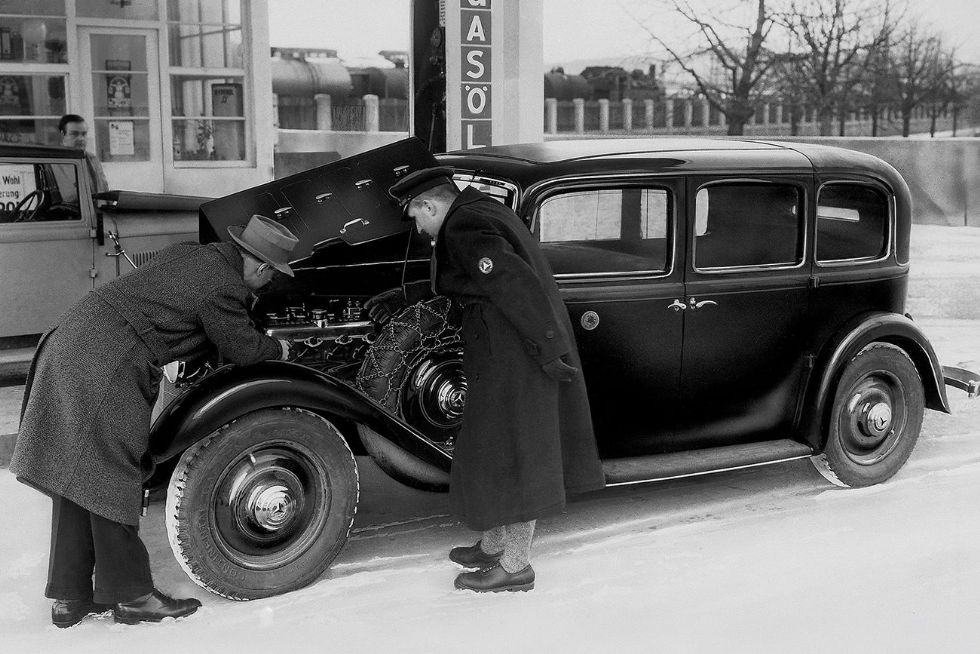
Realising the strength of the South African and other colonial markets, Mercedes-Benz began engineering cars specifically for the likes of South Africa’s rough terrain. The 1936 four-cylinder W15 Type 170 and W136 170V introduced fully independent swing axle suspension and tubular backbone chassis that handle district roads far better than older beam-axle designs.
Those four-door saloons and cabriolets Mercedes-Benzes achieved meaningful South African sales through a specialised dealer network. A few of the world’s first diesel car Mercedes-Benz W138 260d (above) followed in 1936 to take advantage of diesel’s immense range and low fuel cost among long-distance transport and agricultural buyers…
The Nazi government however imposed currency restrictions on cars exported to South Africa to fund German mission stations and cultural institutions in the latter 1930s. SA Motors overcame complex financial hurdles to keep importing Mercedes-Benz models while at the same time sustaining those institutions.
A reputation built on pre-war Mercedes-Benzes
It went from bad to worse in September 1939, South Africa declared war on Germany. Car shipments were frozen, dealer stock and spares pipelines dried up, and several German-owned dealerships and private cars were sequestered under wartime regulations.
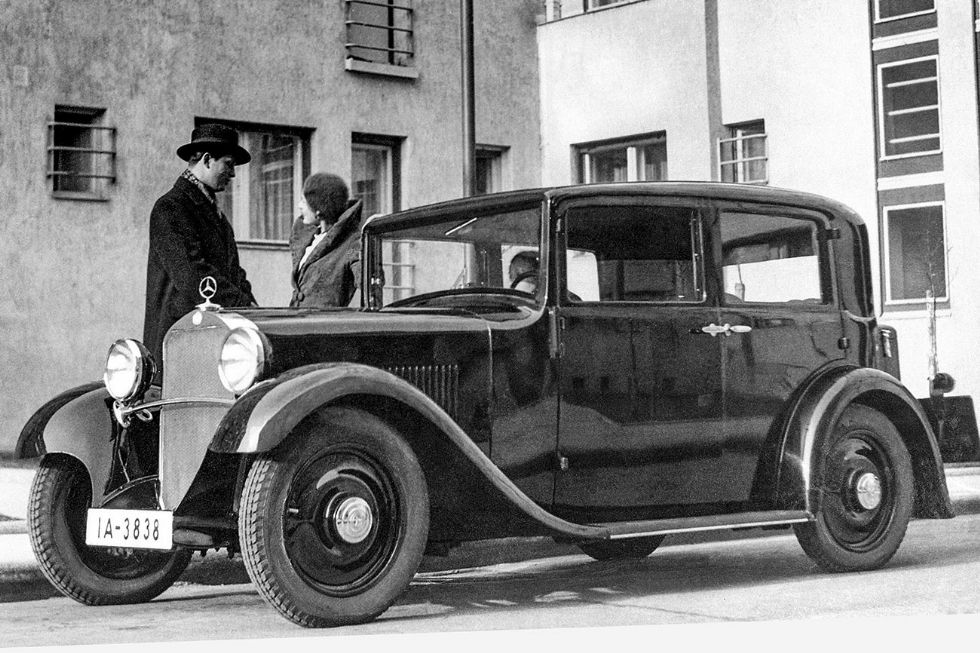
The rugged pre-war 170V (above) among other Mercedes-Benzes had however earned a great reputation in South Africa by the end of hostilities. So several dealer bodies came together to lay the groundwork and formally establish the Mercedes-Benz in the Transvaal and Cape in the early 1950s. But that’s a story for another day…