So how does the new one really shape up in the real world?
When it comes to road testing, there’s one vehicle that we always pay a little extra, special attention to here at Auto. The Toyota Hilux. Why? Well that’s simple. It’s the vehicle that most of you will go out and buy next. By some fair margin, too. Toyota has sold 173,618 Hiluxes over the past five years. Or 6.58% of all new vehicles sold in South Africa in that time. It comprehensively thrashes the Volkswagen Polo Vivo at 117,144 units, or 4.44% of the market, and 106,897 Ford Rangers at 4.05%, in second and third.
Knowing the new one was coming, we previewed it heavily over the past four or five years. We eventually came closer to it in our prediction than any other media did anywhere on the planet. And then knowing it was coming, we prepared by sending the previous model off by taking one on safari last year, and again on a cool road trip in December. Which meant the old one was still top of mind when this new Hilux rocked up.
Yes, we’ve tested it already. But this is the acid test, so to say. We used our recent 2026 safari to compare the new Hilux to our notes on the old one taken on those abovementioned two extended trips. We know the old bakkie’s warts well. And we wanted to compare those to this new one. Especially since our media peers have been glowing in their welcome of the new Hilux. But public opinion has not been altogether praiseworthy.
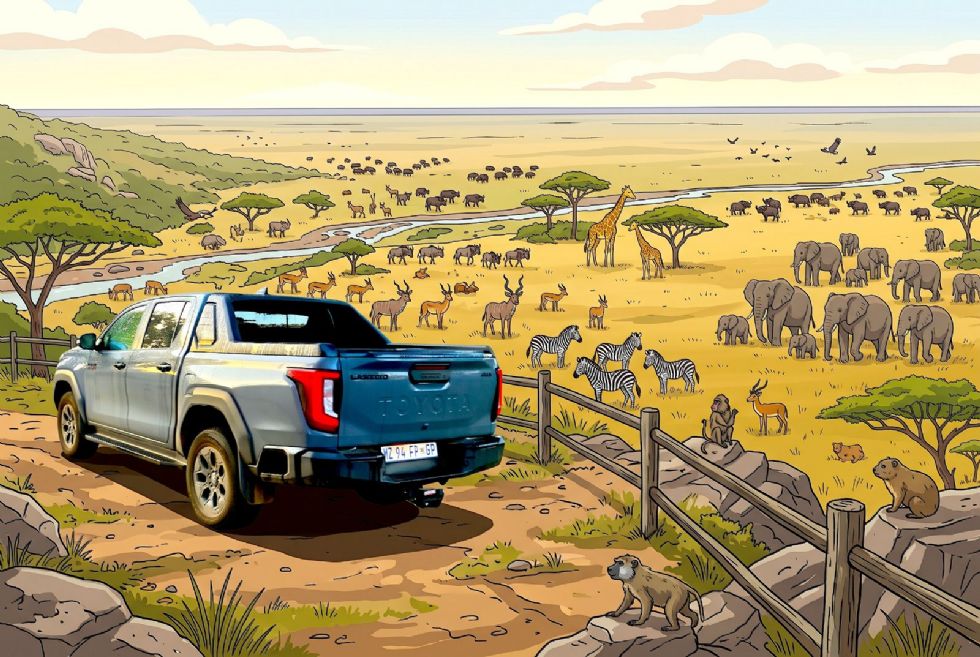
A proper safari tonk
Some accuse Toyota of delivering an underwhelming mechanical evolution, criticising it carrying over its 2.8 GD-6 (2.8 turbodiesel 6-speed automatic) heart and this being just another reskin at the end of the day. Much of that flatulence comes from jealous Ranger nerd social platforms that automatically forget that Ranger too, is on a sixteen year old chassis tarted up for the umpteenth time. Show me a traditional bakkie that isn’t?
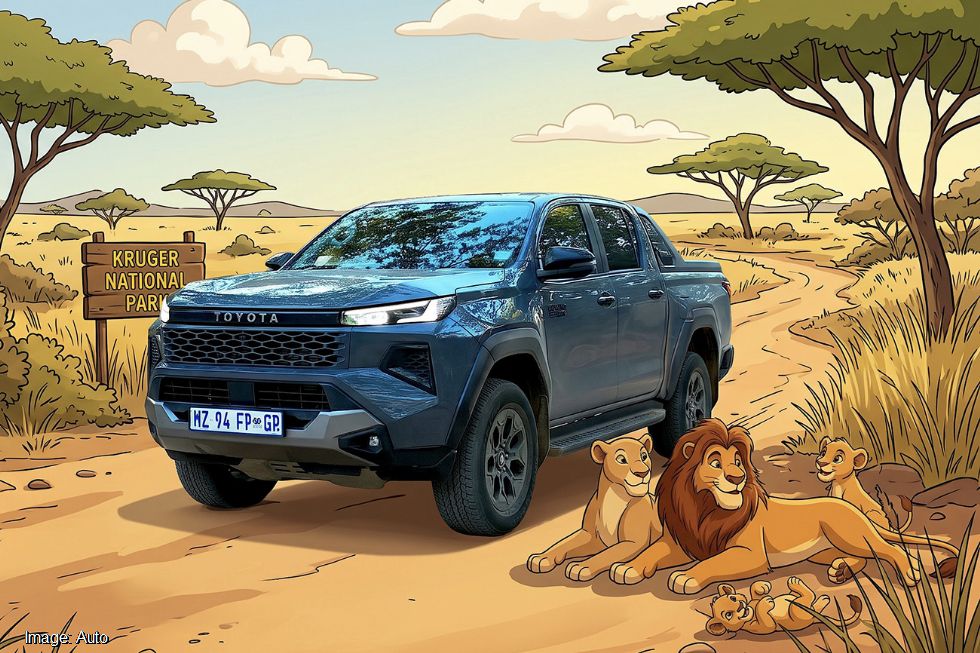
There are also complaints about software nannies and fuel consumption, but more on that anon. Getting back to the facts, our trip was identical to last year’s, albeit later in the year and driving a new Hilux 2.8 GD-6 Legend 4x4 versus last year’s run in the old one. We picked the bakkie up at ORT, spent the weekend in Jozi and set off to Malelane Gate because Numbi still has a sinkhole to navigate, so a full day at the wheel to get to Satara in time for the evening braai. Then six nights in the park as we made our way up to Punda Maria and back via Tzaneen. A proper tonk.
No need for first impressions and all that because we covered that already. This is more about living the new Hilux for a fortnight in conditions we knew the old one well with. First off, the cabin is a revolution versus the old one. More like a Prado now than a cow’s bum, it’s neat, modern and functional. Has all the buttons and knobs and is sensitively enough laid out. The charging pad is also most welcome and its pretty well ergonomically turned out too, considering it still has a sizeable transmission tunnel for all that to work around.
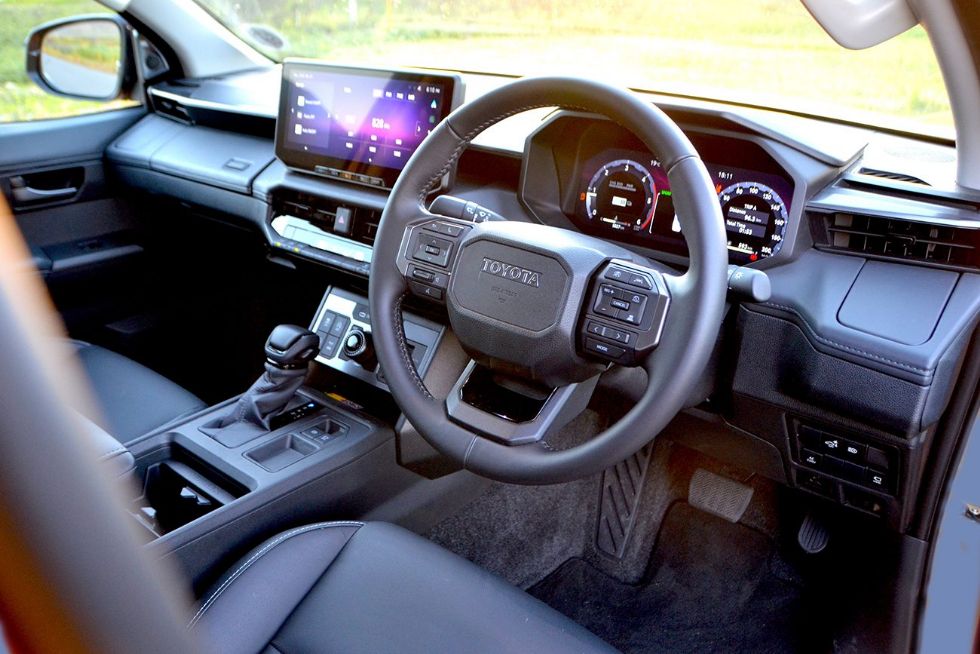
A major Hilux cabin step forward
Seats are comfy, it’s all adjustable enough although the steering telescope is still a bit limited. The interface is now far more workable and is a far simpler task to get Carplay to introduce the iPhone to the Hilux. But still not as good as it can be with too many steps in between. We since had a Chinese bakkie rival that took two clicks on the dash and one on the phone to connect. The Toyota system’s checks and balances still complicate it too much. The screen is good, uncomplicated and simple enough to use.
As the trip went on, we picked up an issue with one of our iPhones refusing to charge on the pad and the other never having a problem. The next two cars we drove had no problem with either phone. The other little malady we found was the cruise control, which starts from 30 km/h, tended to drop periodically at Park speeds below 50 km/h. It’d show a warning that would disappear after five minutes and then we could use the cruise again. Both frustrating, but may possibly just be early-build glitches that we trust the software guys in Prospecton will soon sort.
For the rest, our grey Hilux Legend was immaculate on safari. Its far better ride shines through. Yes, of course it can be a little tough and creaky because it’s a bakkie and there has to be a compromise. But we hardly noticed the serrations that can drive you mad on those long, boring, game-free stretches of Kruger dirt, it rides well and is surprisingly quiet and comfortable. Later on the way home over the escarpment, I revelled in its surprising chassis. And no, not once did I feel I need ten speeds in the box or a V6 turbodiesel up front. And the nannies? Once you turn them off, they’re off. So all good.
48V 150 kW 500 Nm 7.7 l/100 km Hilux does the job
If anything, this latest, secret 48V starter generator ‘hybrid’ is more than enough for a double-cab bakkie. Do you really need any more than 150 kW, 500 Nm and the ability to tow three and a half tonnes anyway? Yip, I thought not. One area where the new model really excelled, and this in total contradiction to some of the myths out there, is in fuel consumption. Compared to last year in the same model and variant old Hilux where my notes confirmed we ran 8.8 litres per hundred for the full two weeks we had it, driving pretty much the same way this year, we did 7.7. That’s significant.
To put that into perspective, driving the old Hilux at 8.8 l/100 km took 220 litres of diesel, which cost R20.59 per litre for a total of R4,530 in April 2025. This year covering the same distance at 7.7 L/100 km was still far more expensive at R6,550 considering our precious R34.03 a litre diesel rate. However, worked at the current fuel price, the new Hilux is just on a thousand rand cheaper to run over 2500 km. Now considering a double cab travels on average 25,000 km a year, that translates to a ten grand saving that thoroughly busts the internet myth that the 48V/mechanical tweaks delivered nothing…
One small aside, it’s always heartening to know that Toyota has invested heavily in encrypted tracking, hardened ECU access, fortified onboard security and enhanced factory anti-theft security architecture. Rest assured that there will be comments on how many Hiluxes they steal, by the regular keyboard critics, because SA’s biggest selling car is also its most stolen car. Even if it’s only the seventh most stolen versus its sales numbers in SA. But more on that next week…
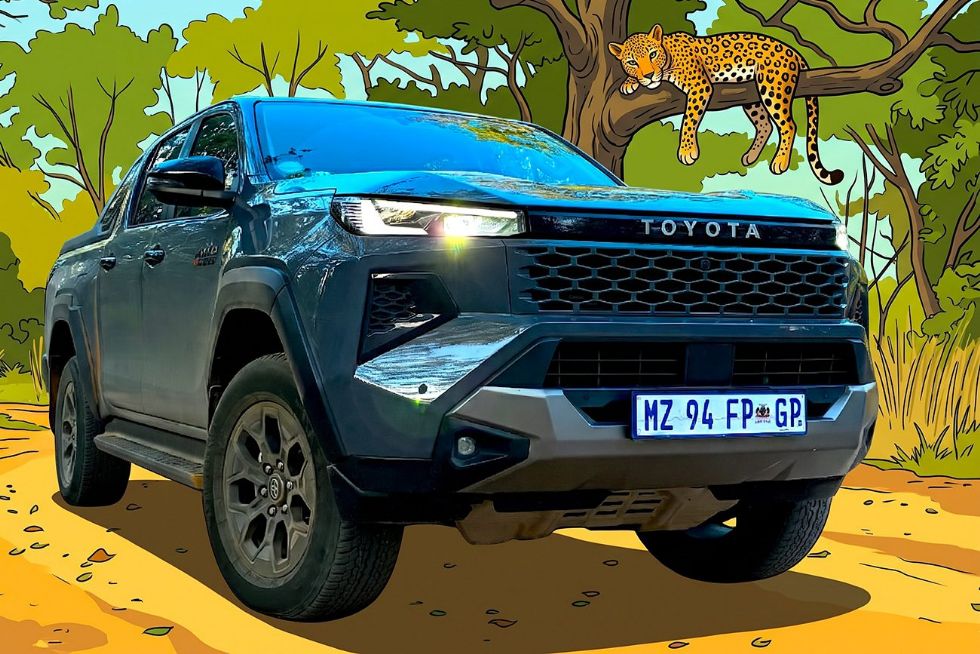
Why the new Hilux is so difficult to beat
For the rest, there’s no doubt that Toyota sells cars better than anyone else. Which means its vehicles may not always be the absolute best money can buy when subjected to cold, clinical comparisons. But in the case of the Hilux, this new iteration is remarkably tough to knock considering how well it stacks up, underpinned by all that inherent ‘Toyotaness’.
So yes, sure, the new Hilux still has a wart or two. It may well just be another facelift, just like every other bakkie on the road. The initial launch range is tight, and early-build cruise control quirks and interface glitches certainly contrast with its swish new 12.3-inch screen gains. But returning a genuine 7.7 L/100 km across our safari versus last year’s 8.8, it’s significantly more frugal, and far better screwed together to deliver exceptional rigidity and cabin isolation that showed up impeccably over Kruger's corrugated dirt loops.
Most importantly, as they say, it’s a Hilux. And measured against the outgoing bakkie we knew so well, it is a massive step forward, as Auto’s comprehensive Safari Test so well proved. — Michele Lupini
Testing: Giordano Lupini
ROAD TESTED: Toyota Hilux 2.8GD-6 DC Legend 4x4 MHEV
Engine: 150 kW 500 Nm 2.8-litre turbodiesel I4
Hybrid: 9 kW 65 Nm starter generator, lithium-ion battery
Drive: 6-speed automatic 4x4
Payload: 	800 kg
Braked Towing: 	3500 kg
TESTED:
0-60 km/h:	4.20 sec
0-100 km/h: 	9.80 sec
0-120 km/h:	13.60 sec
0-160 km/h:	26.71 sec
400m: 		16.8 sec @ 134 km/h
80-120 km/h: 	6.94 sec
120-160 km/h:	13.10 sec
CLAIMED:
VMax: 		175 km/h
Fuel: 		7.5 l/100 km
Real World:     7.7 l/100 km
CO2:		197 g/km
Range:		1070 km
Warranty/Service: 3y 100K/9 Service 90K km
LIST PRICE: 	R999K

How does it compare?
Check with Auto's Test Data right here