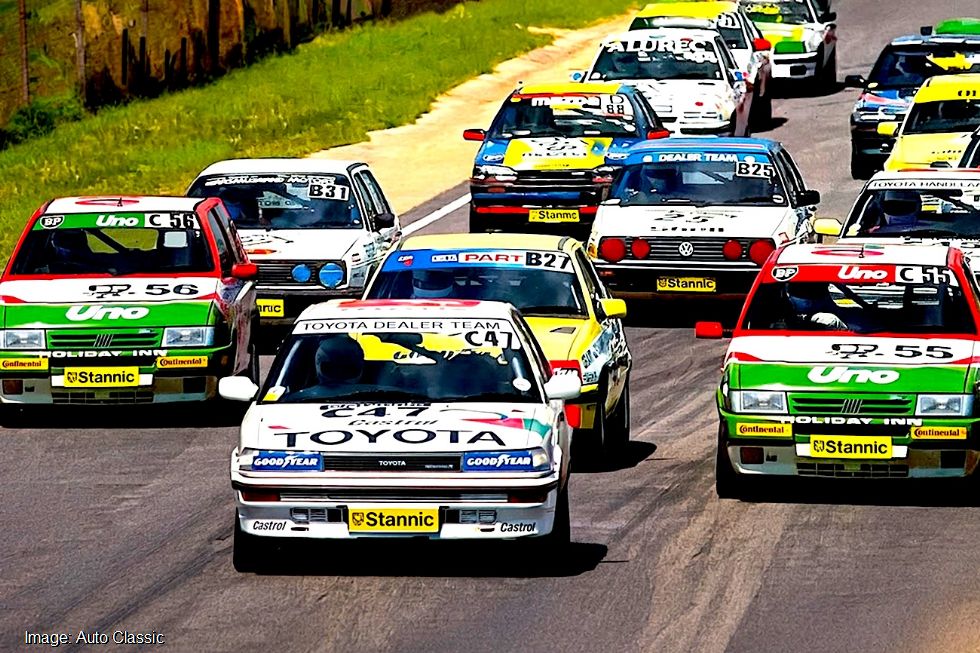
Corolla has a splendid history in South African racing
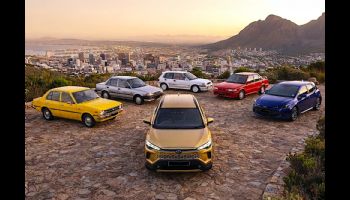
So the Toyota Corolla is 60 years old. An astounding 57 million sales later across twelve generations, there are many reasons it remains the world’s, and South Africa’s, favourite car. Not least of those is its racing success. Take a journey with Auto Sport as we take a closer look at that largely forgotten, yet incredible success on South African racetracks…
The Corolla was not Toyota’s first racing car in South Africa. Super reliable, the Corona shone in the early ‘70s 9 Hour and other endurance races in Chris Swanepoel, Garth Le Reservee and other hands, slaying giants and winning Index race after race as it went. It was not until the early 1980s that the Corolla made a mark in South African racing. That in part due to Toyota taking a break from motorsport after initially proving the brand on track.
The company however missed the advantages that winning on Saturday had on selling on Monday and it made a hasty return. Since when Toyota’s been a pillar of the South African sport. While it also always maintained a championship challenging presence in off-road or today’s rally-raids, and the National Rally Championship, Toyota has been omnipresent in circuit racing all along. And the Corolla has always been the central pillar of that track plan.
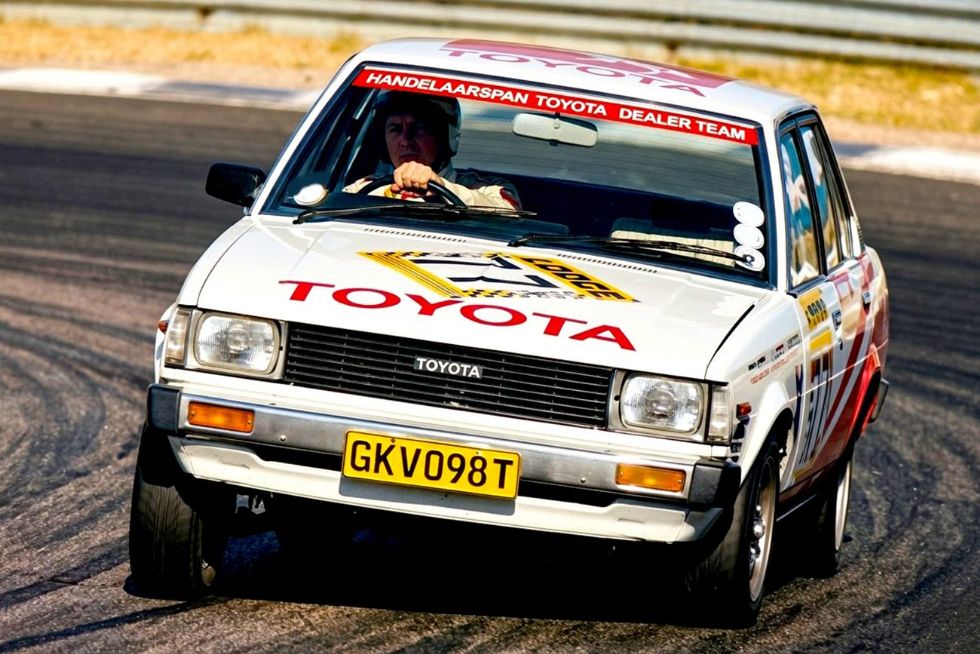
Jan Hettema blazed Toyota’s track racing trail
On Toyota’s 1980 return, newly signed multiple rally champion, and a fierce competitor on track too, Jan Hettema raced a Corolla SR5 in Cartoria colours in class X of the Group 1 standard production car championship. Jan won on debut, broke the Kyalami lap record and went on to take Toyota’s first South African circuit racing class title. Later that year, Mike O’Sullivan also debuted a SR5 in Star Modified Production Cars.
Hettema stepped into a new-look Toyota Corolla GL to win once again Class X of the 1981 Group 1 championship, which he repeated to celebrate his 50th birthday in ’82 (above). For ’83 Hettema had a Corolla TRD to take Alan Esterhuizen’s Alfa Giulietta on in Class W. He won to share Toyota’s first overall tin top racing championship with fellow rally legend Sarel van der Merwe’s Class W Golf GTi.
Toyota had a quieter season on track in 1984, highlighted by Don Bruins and Brian Rowlings and the Knez-Repsold Toyota 1.6s coming home an impressive 11th and 12th behind a pack of World Endurance sportscars in the Kyalami 1000 endurance race. Toyota Motorsport was back with a vengeance for 1985, however, as Tienie Oosthuizen (below) stormed to the final overall Group 1 Championship titles in his Corolla TRD Liftback.
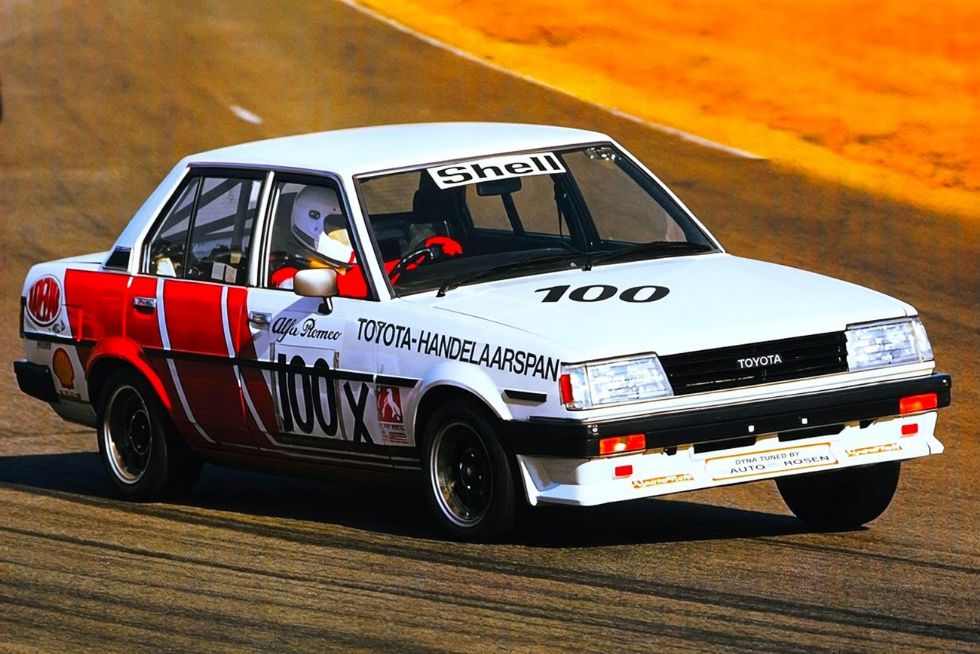
Rear wheel drive titles before the FWD revolution
Stannic Group N racing then emerged phoenix like out of the ashes of Group 1 at a most opportune time for the Corolla. Toyota launched the all new front-wheel drive Corolla during ’85, and Dave Repsold soon had one winning in Modified Saloon Car racing. There was however something even better waiting in the wings, and perfectly poised for the new standard production Group N class.
Toyota never had a car to win when Group N started. So it went out and built a milestone car. Plain and simple, built to win, the Toyota Conquest RSi 16V hatchback ran a potent and until then Japan-only 16-valve twin-cam 1600 fed by race-style multi-choke injection with race-tuned, rose-jointed suspension.
The all-new RSi 16V arrived just in time to debut in the 1986 Stannic Group N series. Mike White wasted little time to wrap up a dominant Class C title in the Inland series. Also new to Group N for ’86, Colin Hastie drove a Corolla Conquest 1.3 Hatch to the overall and Class E Inland titles, while James Andrews was a very close second in the Coastal chase.
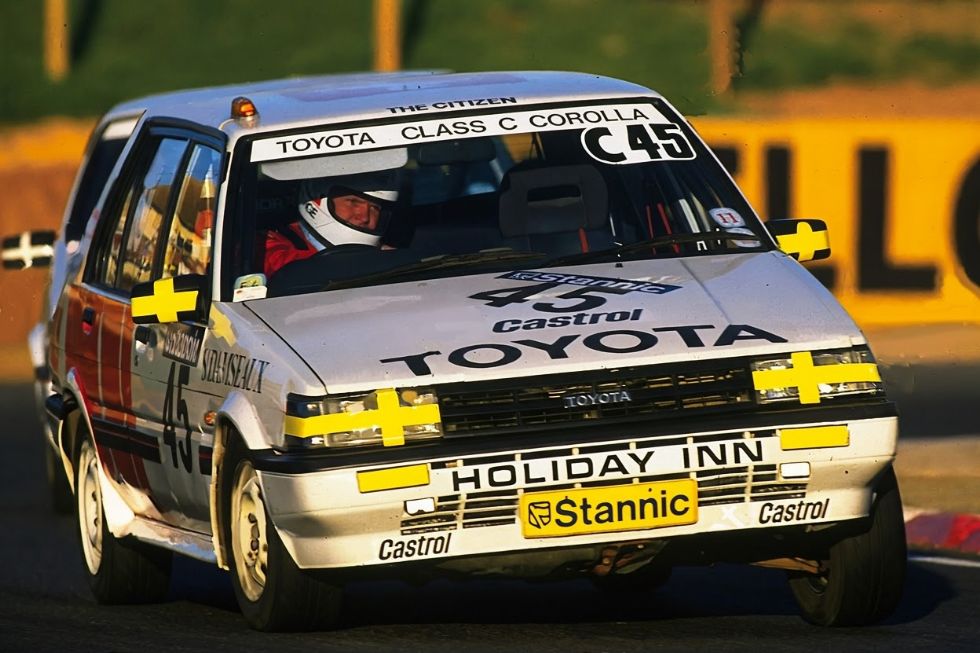
The Corolla RSi swept the board in Class C
After a tough National series where Toyota lost both classes by a whisker, Mike White and Serge Damseaux surprised all to win the Killarney 6 Hour endurance race overall in their giant-killing Class C Corolla. White’s RSi 16V and Leon Mare’s Conquest won the 1987 Inland Group N C and E titles, while Steve Wyndham and Deon Joubert were first and second in E in the Coastal series.
Mike White and Basil Mann then made amends by winning the Class C and E titles in the 1987 National Group N Championships. For 1988, second overall Inland, White took Class C, while Damseaux won the Coastal title overall and ended second in the Nationals for a Class C sweep (above). 1989 was a quieter year as Serge Damseaux ‘only’ won Class C in the new second generation RSi 16V.
Damseaux and his RSi started the new decade with another overall and Class C Coastal title while White and Nic de Waal scored an Inland 1-2 before White added yet another National Group N title to the Toyota Corolla RSi’s cabinet (top). Damseaux was Coastal C champion again in 1991 but Toyota withdrew in protest of the unfair class structure following a bitter feud with the Unos before the Nationals.
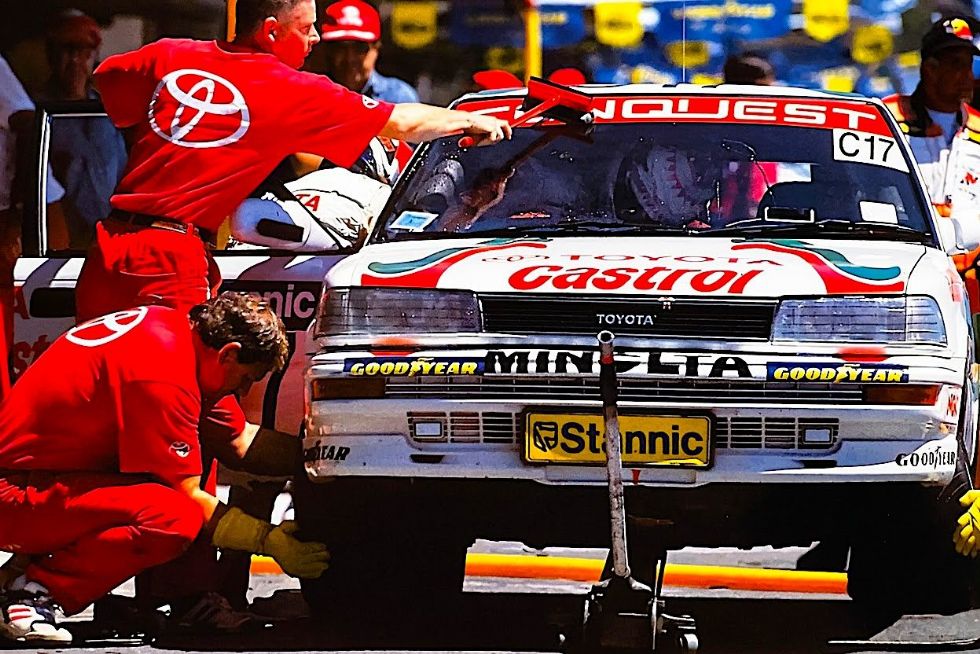
Giant Killing Corolla RSis just kept on winning
With the Uno Turbos shifted to Class C for 1992 and Group N down to one National series, Mike White fought Grant van Schalkwyk’s 2-litre Opel Kadett GSi off to the 1600 cc Toyota Corolla RSi’s tenth Group N championship. WesBank Modified racing proved a tougher nut for the 1600 16-valve Corolla to crack, considering its rivals could modify to compete. Still, Dave Repsold soldiered on to finally take that Class C title in ’92.
1993 saw the arrival of the South African Touring Cars with Mike White and Serge Damseaux racing a pair of locally built Corollas. Victory evaded them that maiden season as the two ended fifth and sixth in the chase. Back in Group N, Steve Wyndham added an overall and Class C title to the RSi’s cart, while Repsold won Class C and young Charl Wilken Class E in the Modified series.
Steve Wyndham was Group N Class C champion again in 1994 in his RSi, when Wilken won Modified Class D. Then Charl stepped up to take Class C and second overall in Group N in 1995 as he and Leon Mare scored another giant-killing Killarney 9 Hour RSi win (above). Wilken doubled up with the overall and Class C WesBank titles, where D champion Etienne Roos made it a Toyota 1-2 in the final year of Modified saloon car classes before the series became V8-only.
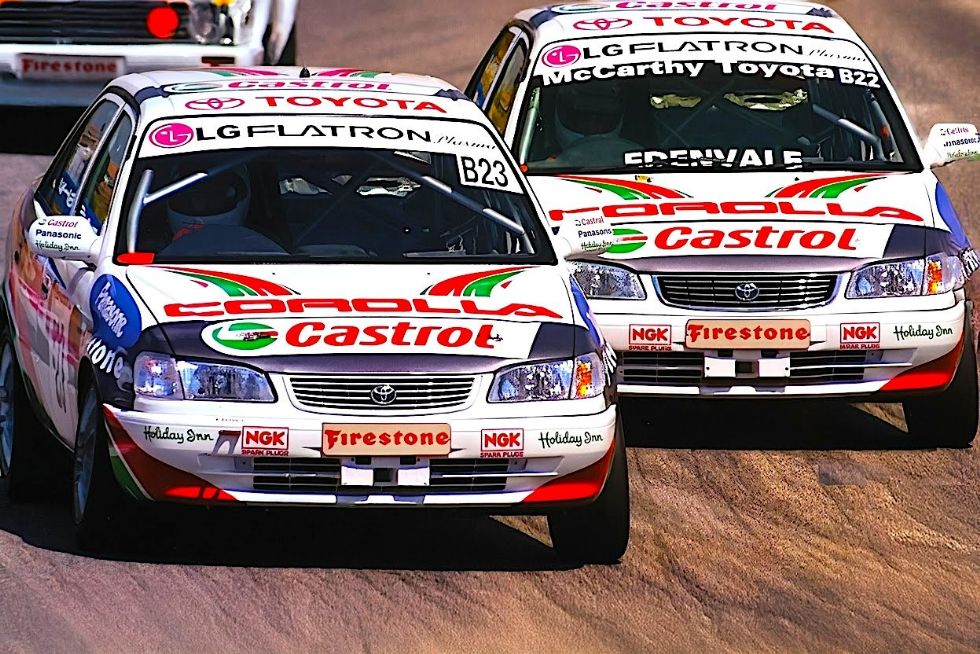
Twenty valves for a new era of champions
After a decade of giant-killing service, Toyota replaced the venerable 16V with the all new 20-valve Corolla RSi in 1997. With huge racing boots to fill, it did so better than well. Only available as a four-door, the new Corolla was an immediate rival to the Honda Ballade V-Tec, the Opel Astra 200iE and Nissan's 200 STi.
Powered by Toyota’s 102 bhp per litre five valve per cylinder 'blacktop' 1600 cc 20-valve four pot mated to a close-ratio 5-speed manual, the stripped-out 115 kW 150 Nm RSi 20V screamer with sporty suspension and big brakes soon made a huge impression on track.
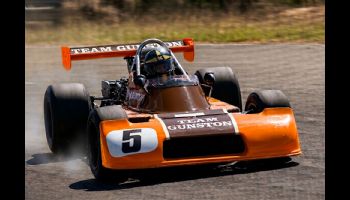
After a part-season with Mike White and Charl Wilken, Wilken and Hilton Cowie were competitive in '98. But Charl took a sensational last corner Class B title in 1999 before Toyota upgraded to the 6-speed RXi 20V for 2000. Wilken took another B title in 2002 (above), before the advent of turbo cars ended the 20V Class B reign. All was not lost in ’03 and ’04, however, as young Dave Compton powered to double smaller class titles in his Tazz.
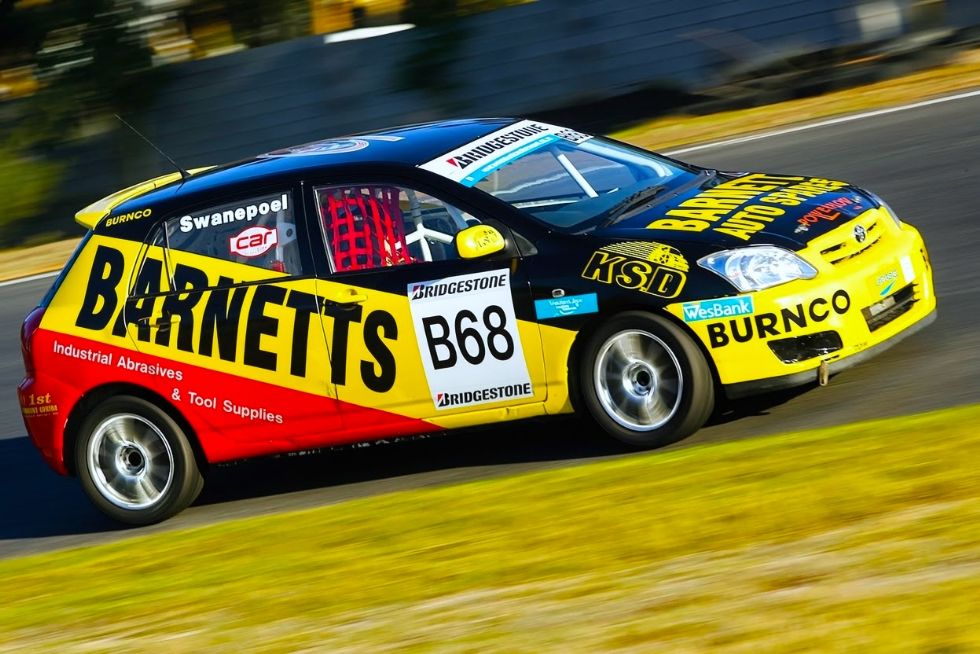
Run X continued the Corolla racing charge
With new class rules as Group N morphed into Production Cars, the way opened for the 141 kW 180 Nm close-ratio six-speed manual RunX badged Corolla RSi 16V hatchback to pick up the baton in the new Class B in 2005. Dave Compton led Phillip Kekana and Brian Martin to a Toyota 1-2-3, before Compton romped to another Toyota Class B 1-2 over Phillip Kekana in 2006.
After two close misses, privateer Kosie Swanepoel (above) took another Run-X RSi Class B title in 2009. In its infinite wisdom Production Cars however culled its naturally aspirated classes from 2010, effectively ending a quarter century of Toyota South African standard production car domination.
It was only a decade later, long after Production Cars imploded, that a Toyota returned to the front as the new South African Global Touring Cars found their feet on the cusp of lockdown. Stalwart Michael van Rooyen brought Toyota Gazoo Racing into the fold, winning a couple of races en route to a super close second in the 2019 championship aboard his Toyota Corolla TC.
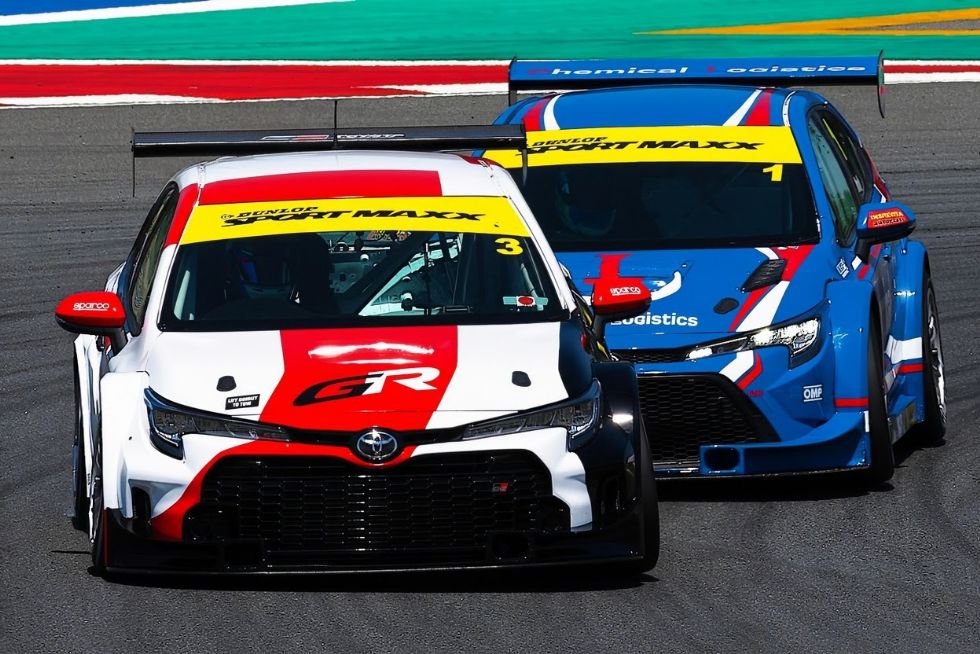
Gazoo Corollas for the Touring Cars era
With four Corollas racing in Covid 2020, privateer Robert Wolk was second with van Rooyen and Mandla Mdakane’s Gazoo cars fourth and fifth ahead of Julian van der Watt as Wolk and van Rooyen both won races. Wolk then beat van Rooyen to the 2021 Touring Cars crown as Scott Temple made it a Corolla 1-2-3, before Robert, Sa’ood Variawa and Michael repeated the feat in ’22.
Variawa then beat Wolk to another Corolla 1-2 in 2023, while van Rooyen was second in ‘24 and finally took his title in 2025. Michael and rookie Gazoo Racing teammate Jason Coetzee won several races en route to Jason ending third and Michael fifth in the 2026 chase.
There are many very good reasons why the Toyota Corolla remains the undisputed all-time best-selling nameplate in automotive history, crossing 57 million units across 12 generations as it marks its 60th anniversary in 2026. But one of the biggest factors is its unrelenting racing success, especially in South Africa. Here’s to another 60 years of Toyota Corolla domination on road and track! – Michele Lupini
*All information in this story was researched from the manuscripts of the author’s definitive new book, Springbok Tin Top due for publication early in 2027. Covering the incredible history of South African saloon car racing in a 304-page super quality large format coffee table book, take a look at sister book South African Champion here, and watch this space for more information on a publication that covers over a century of mostly forgotten stories, races, results and champions.