A whack off its Lexus stepsister, it’s still a tough sell on local turf
There was a time when choosing an electric vehicle meant stepping into a brave new world of high-tech motoring. Today, the novelty has worn thin, particularly in a market like ours. Enter Toyota’s new bZ4X, the world’s biggest carmaker’s first battery-electric effort that shares its foundational e-TNGA architecture and mechanical blueprint with its posh Lexus step-sister.
Priced at roughly R1.2-million, the Toyota undercuts its posh Lexus cousin by a fair margin. Yet that comparative saving still leaves it monumentally expensive next to a conventional Corolla Cross or RAV4. It is a pleasant enough machine to roll around in, but it suffers all those same absent EV infrastructure charging headaches too.
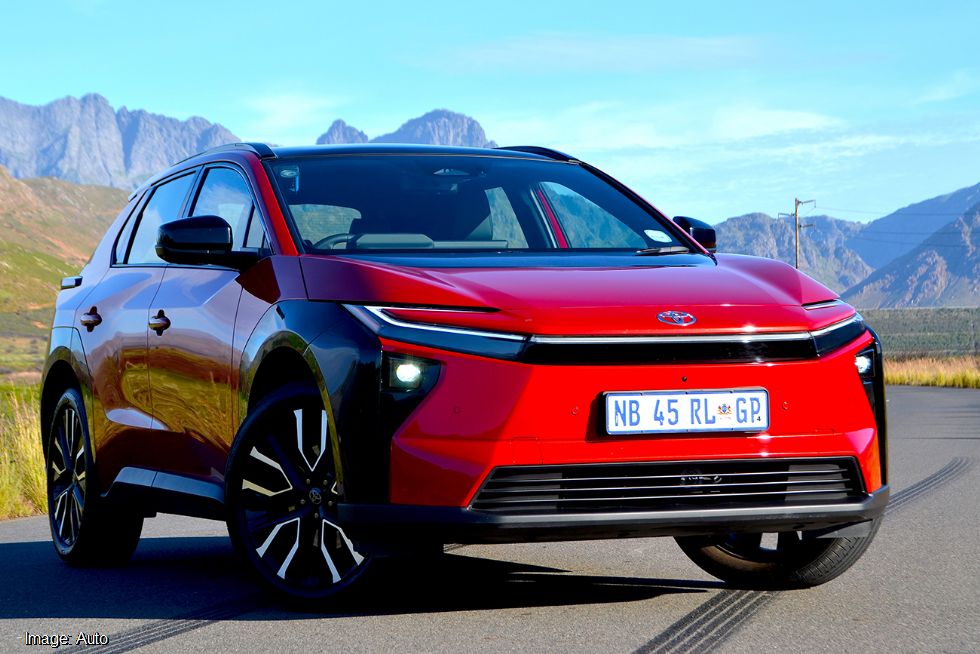
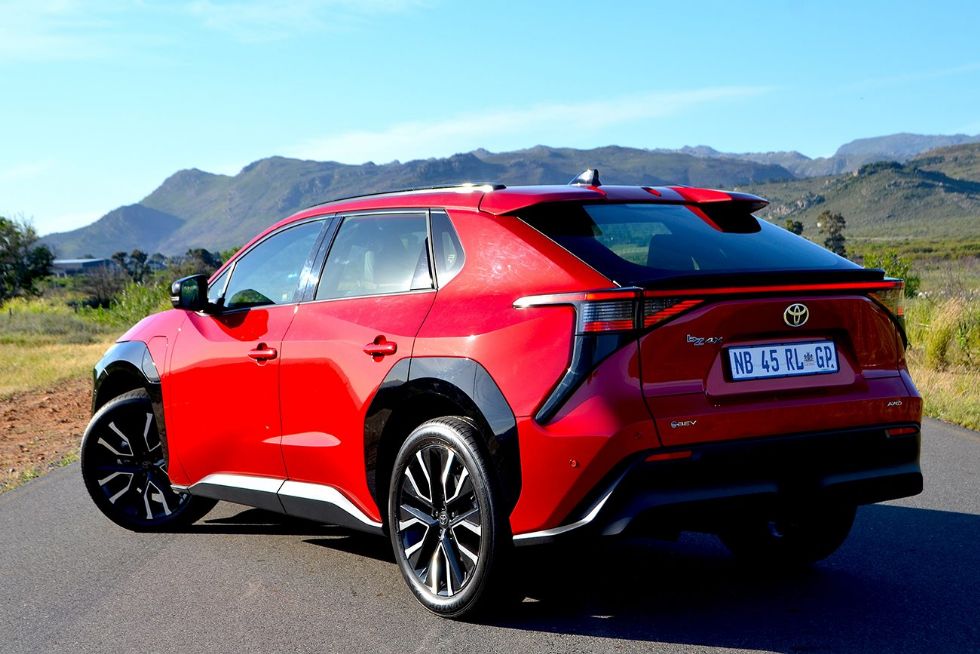
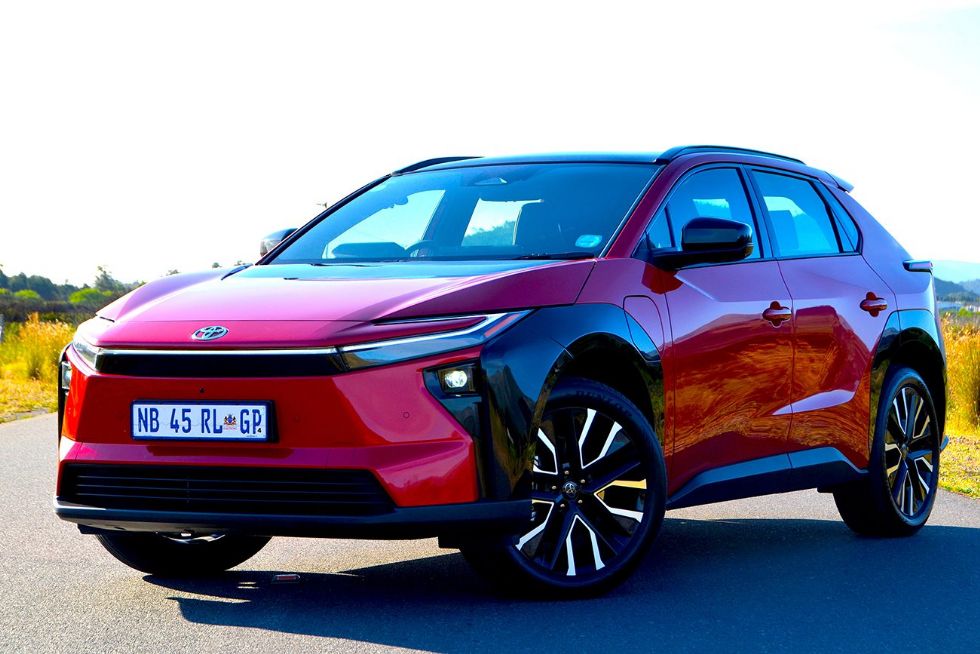
Viewed in profile, bZ4X shares its stretched wheelbase and distinct proportions with its Lexus sibling, all wrapped up in Toyota’s own latest sharp-nosed styling language. Bold plastic cladding frames the wheel arches, giving it a chunky stance, though the overall silhouette remains firmly rooted in the modern two-box crossover mould. And our red tester certainly pops.
FAMILIAR ARCHITECTURE, FAMILIAR QUIRKS
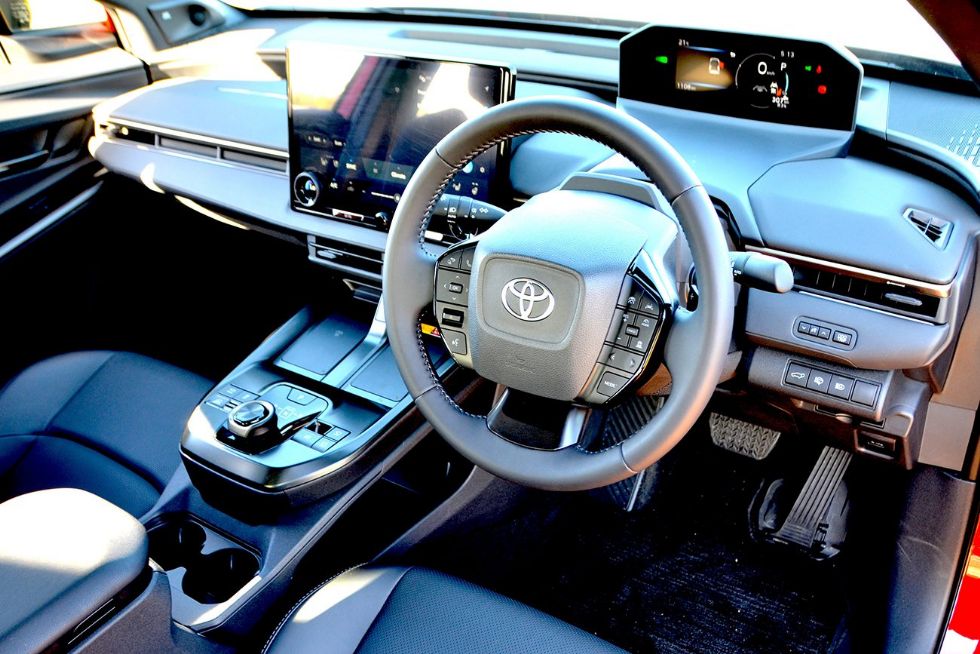
Step inside, and the cabin layout mirrors the ergonomic puzzle we found in the RZ. Storage solutions are scattered, and while material quality is durable enough for family duty, much of the switchgear feels conventional rather than cutting-edge. Rear accommodation, however, benefits from that dedicated EV floorpan with generous legroom for even adult passengers.
Chief among bZ4’s own quirks is the driving position. Because it retains a conventional steering setup rather than a party trick yoke, finding a comfortable seating arrangement while still managing to see the instrument cluster over the rim proves nearly impossible for most drivers. Either compromise your posture or fly blind.
Yet, as we have noted time and again with battery cars on local soil, beautiful packaging counts for little when the core architecture fights your lifestyle. South Africa’s paltry charging infrastructure remains a third-world bottleneck, rendering long-distance highway travel an ill-advised exercise in tedious planning.
THE MSANZI EV REALITY CHECK
To honestly evaluate the bZ4X is to as always confront the grim reality of electric motoring in South Africa, where full EVs account for a microscopic fraction of total new car sales. With a public fast-charging network that remains sparse and unpredictable, leaning on an electric crossover outside major metropolitan bubbles requires saintly patience.
Real-world range inevitably shrinks when you encounter undulating open roads or heavier running, and plugging into local infrastructure is painfully slow compared to the three-minute convenience of a petrol pump. Solar setups and home wall boxes offer a Bandaid solution, but they come at an eye-watering installation cost if you have to add the solar to make your EV pipe dream properly true.
For all its quiet urban refinement and instant electric shove off the line, the bZ4X suffers from the same foundational mismatch that plagues every luxury EV launched in this market. It’s a potentially effective piece of engineering trapped in an incompatible environment.
SOLID PERFORMANCE, DYNAMIC REALITY
Strap on the VBox, and the performance figures confirm a brisk, silent runner that gets off the line with instant torque delivery. BZ4X accelerates from standstill to 100 km/h in 4.6 seconds flat. The standing 400-metre sprint is cleared in 13 seconds at 165 km/h. Which is where it hits a brick wall. A true performance car can run 300. This barely does half.
Out on the open road, that instantaneous throttle response makes light work of overtaking. The vital 80–120 km/h takes a rapid 3.2 seconds, giving the crossover plenty of mid-range flexibility to slip past slower traffic without hesitation. It’s also fun to play with the regen to see how well you can master EV driving.
Yet chasing those top end limited performance numbers takes an immediate toll on battery reserves. While it surges forward with effortless authority, continuous highway cruising rapidly depletes the battery, exposing the limits of its range when pushed beyond urban confines.
PRICED OUT OF PRACTICALITY
To appreciate where the bZ4X sits, you have to look at its positioning. At well over a million, it asks an extraordinary premium over traditional internal-combustion alternatives that will happily lug a family across the country without a second thought about voltage or grid availability.
Against value-packed hybrid offerings or honest petrol workhorses in Toyota’s own stable, the bZ4X struggles to make a rational financial case for itself. It demands deep financial commitment for a compromised ownership experience outside of daily suburban commuting. Unless of course you really need to make that statement and must have a Toyota.
Ultimately, the Toyota bZ4X is a competent battery-electric vehicle that suffers from the exact same identity crisis as its Lexus cousin. If you have deep pockets, a dedicated home solar rig, treat it strictly as an urban runabout and need to polish your green status marble, it gets the job done.
For anyone else, save your cash and buy that RAV4 or Corolla. We live in South Africa after all. – Michele Lupini
Images & Testing: Giordano Lupini
ROAD TESTED: Toyota bZ4X AWD
Combined Output:160 kW 337 Nm
F & R Motors: permanent magnet synchronous
Drive: Direct AWD
Battery: 355V 71 kW/h Lithium-ion NMC
ROAD TESTED:
0–60 km/h:        2.2 sec
0–100 km/h:       4.6 sec
0–120 km/h:       6.4 sec
400m:             13.0 sec @ 165 km/h
80–120 km/h:      3.2 sec
CLAIMED:
VMax:             165 km/h
Energy:           15.1 kWh/100 km
CO2:              0 g/km tailpipe
Range:            450 km
Warranty/Service: 3y/100K km / 8y/160K km
LIST PRICE:       R1.18K

How does it compare?
Check with Auto's Test Data right here