All you must know about Chinese cars before you take the plunge
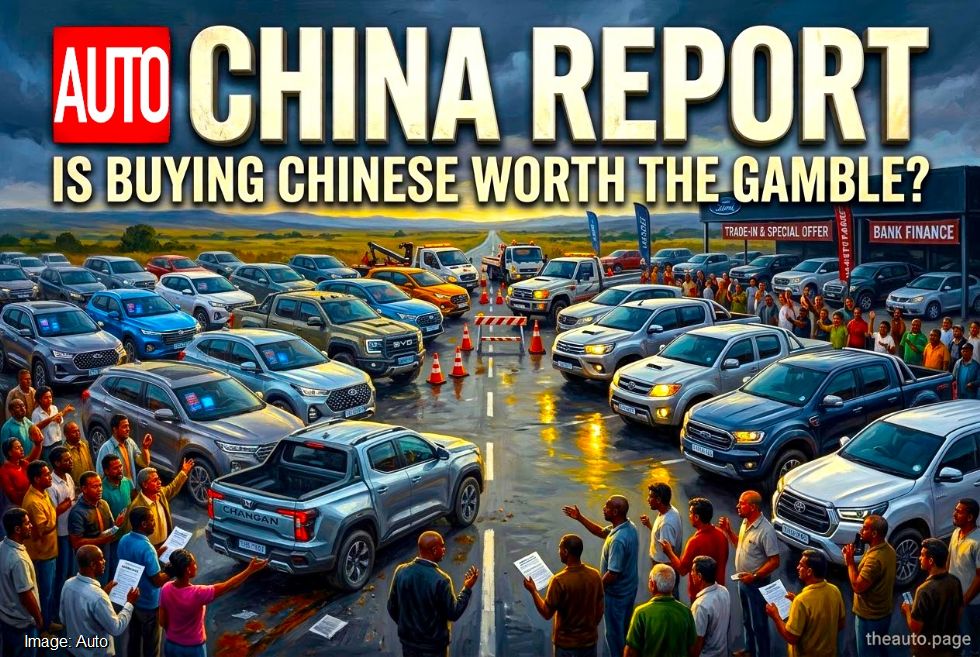
Walk onto any South African car dealer floor in 2026 and it’s a revolution. Chinese brands now command 20% of national new car sales, up a quarter from a year ago. The Chery Group’s own, Omoda, Jaecoo and Jetour badges, and GWM’s Haval, P-Series, and Tank lead the charge. All manna from heaven for cash-strapped Saffer households. For the price of a cloth seat and hubcap base legacy hatchback, the Chinese will dish you up an SUV with panoramic roof, twin digital screens, faux-leather, and 360-degree cinema.
Credit where credit’s due. Chinese carmakers have democratised car affordability, specification and safety in South Africa. Five years ago, traditional European and Japanese car dealers demanded half a million for three-cylinder crossovers with plastic steering wheels, halogen lights, and optional cruise control. So the Chinese packed Level-2 driver assistance, six airbags, and million kilometre engine warranties into the R350 grand bracket. Which left the legacy lot floored on price and spec.
So what’s the catch? Cars from that first Chinese tsunami now sit in that crucial three-to-five-year trade-in window. It reveals a number of new challenges that define a different aspect of Chinese motoring in South Africa. And it’s not a pretty picture. This warts and all Auto Report takes a good, bad and ugly look at the challenges. Split into six topics, each also links to its own, detailed report. We cover it all from depreciation disaster to parts delays, half-baked Chinese engineering to Chinglish screen madness, the parts dilemma and legacy carmaker retaliation. So if you’re keen on buying Chinese, maybe you want to read this first…
Stunted Development Failed Engineering
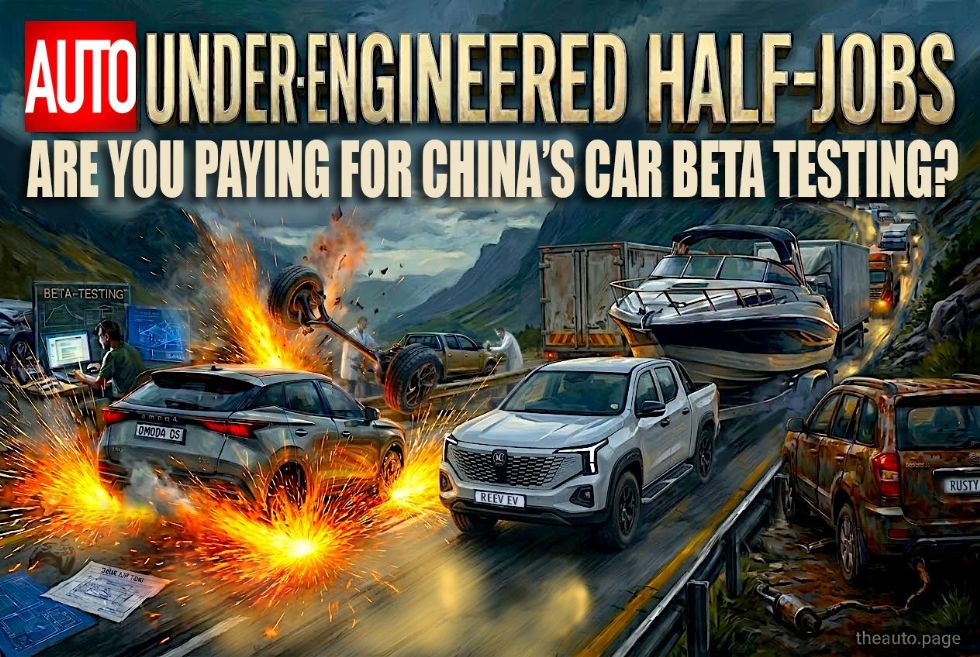
Chinese cars punch hard in the showroom. Doors shut with a thunk. Double-glazed glass kills noise. Spec sheets read like a German luxury sedan. But at half the price. They ace five-star NCAP crash tests. If you spend your life crawling the N1 at 40 km/h listening to a podcast, the cabin is plush. Under the skin, however, slashing development from 60-month Kalahari torture and Swedish ice tests to a 6-month games console ritual leaves scarred refinement and decrepit cars.
Malaysia has banned the Omoda 5 and recalled all cars sold after complete rear axles simply broke off while driving on the freeway. Coastal South African panel shops report rusted Chinese subframes and brackets within months. And then there’s the ongoing Jaecoo J7 Gross Vehicle Mass farce. Its 335 kg legal payload and Jetour T2’s similar 375 kg loading limit mean that three average South African rugby forwards make them illegally overloaded. Without fuel or luggage, that is.
Drive them hard, and Chinese vehicles feel crap. All of them to a car. Most dual-clutch gearboxes suffer abject launch failure pulling away. Followed by violent wheelspin. Brakes swing from dead to binding mid-press. Steering is lifeless, like cardboard, across the board. And the cars waft, wobble and wallow along. Climb out of three Chinese SUVs on the trot and into a base VW or Toyota, let alone a BMW or Merc and those legacy chassis feel from another, way advanced planet. Tap here to read the lowdown on the Chinese car development disaster…

Lost Knobs and the Chinese Cockpit Cockup
Giant, glitzy and glamorous great-definition screens dominate every Chinese dashboard. Backed by crisp 3D cameras and wireless CarPlay, Auto or some absurd generic Shanghai app. Some models actually respect the driver. The Tank 300 and 500, BYD Shark bakkie, the GACs and others deploy chunky physical knobs and dials for aircon, volume, and 4x4 locks. Look, the legacy brands get this wrong too. The previous Golf, Mercedes and BMW among them. Lest we forget Geely’s ergonomic nightmare button free Volvo cockpits.
90% of Chinese cars have however had Mainland bean-counters delete every physical button to save a buck on wiring and the switches. In an Omoda, a Jaecoo, a Jetour, a Chery, or a Leapmotor, for instance, changing fan speed, demisting the screen, adjusting wing mirrors or just opening the glove box takes three to five deep touchscreen taps to achieve. Worse still, CarPlay locks away the native aircon bar. To drop fan speed at 120 km/h, you must swipe out of Google Maps, wait for a 3D graphic to load, and drive 200 metres blind. And that’s just scratching the surface.
Add neurotic driver-monitoring that bongs every time you dare check a wing mirror; piss poor LED headlights, and abominable translation from Mandarin to English. Menus tell you to ‘Open or Close ESP’ instead of ‘ESP On or Off’, call the Demister ‘Front Gear Heating’, and bark ‘Do Not Drive Tired!’ through the speakers. All of which is so dangerous that Euro NCAP’s 2026 safety rules now enforce star penalties on touchscreen-only cabins. So much for that Volvo 5-star status. Click here for the full story on the Chinese cockpit cockup.
The Tragedy of Depreciation and the Resale Trap
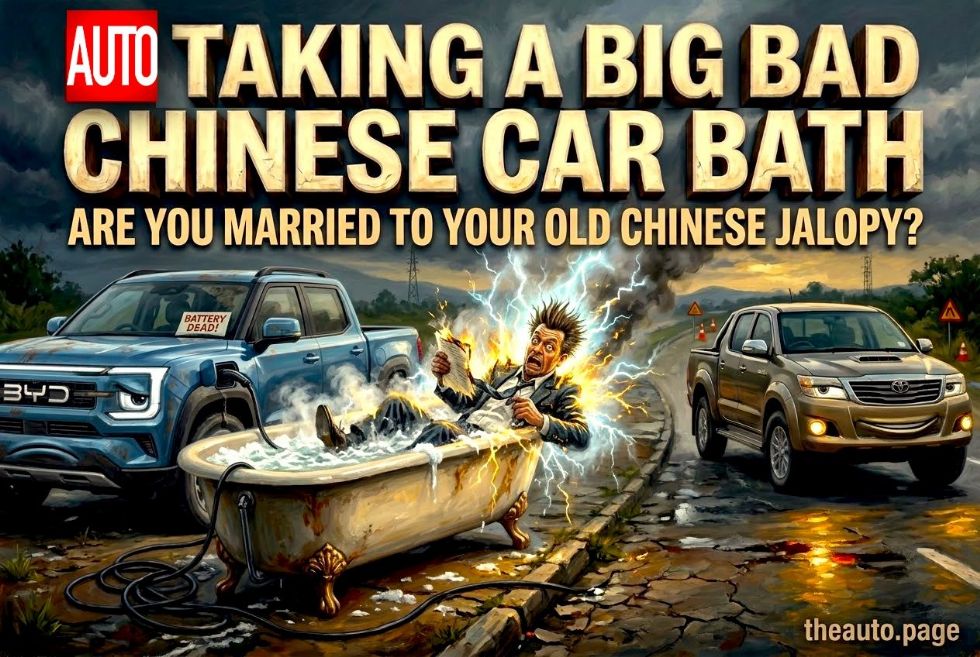
If you’re on a monthly budget, a new Chinese crossover or bakkie makes easy maths on the face of it. But dealer groups and finance houses report tumbling used values, negative-equity traps, and the risk of taking a disastrous bath on Chinese car depreciation. Before you sign a 72-month finance contract blinded by glitz and cabin LEDs, weigh the 40% off upfront showroom value against the 60% ownership sting waiting down the road.
Some Haval, Chery and GWM models undercut traditional rivals by up to 120 grand on spec-adjusted price. Established workhorses also hold decent value. Our 2026 market audit shows that a 2023 GWM P-Series retains 73% of its original list price and the Haval Jolion 1.5T Luxury holds 72%. That matches Isuzu and Ford. But step up to higher-spec Chinese SUVs, coupé crossovers, and new-energy vehicles, and resale values collapse.
Dealer giant Combined Motor Holdings in August reported an 11% jump in new car volumes versus a 10% drop in used sales. Worst of all, owners trading in five-year-old Chinese cars generally owe the bank more than dealers will ever pay for the cars. WesBank echoed this when retail vehicle finance profits dropped 35%, on weaker used prices spurred by cheap new imports. Why? Because Chinese brands eat their own young. Fat factory margins allow fifty grand showroom deal assistance sweeteners. Which destroys the used value of most two-year old Chinese cars. Follow this link to better understand why balloon payments marry so many Chinese car owners to metal they desperately want rid of…
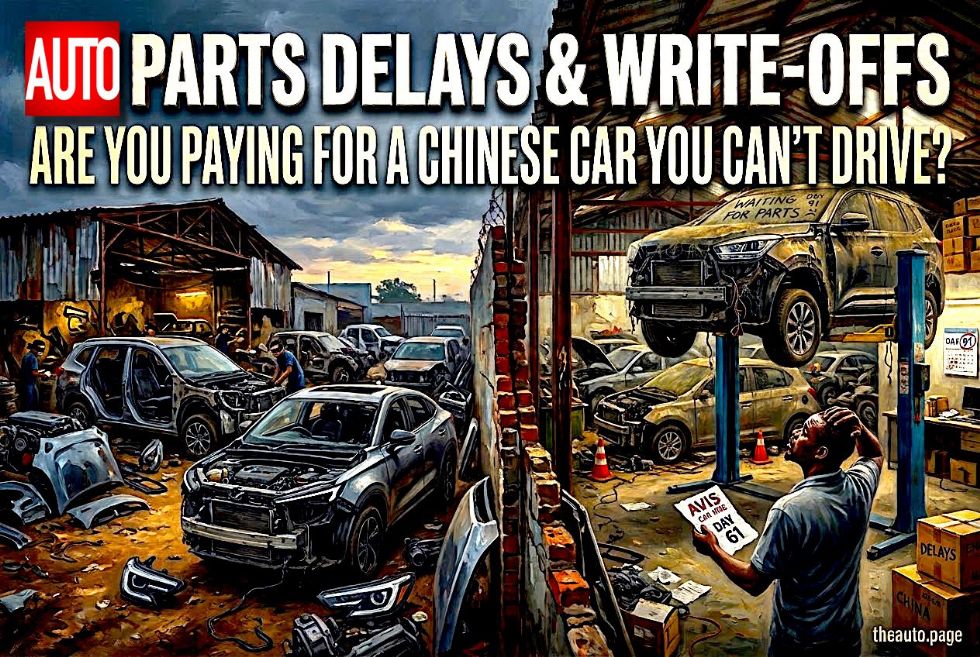
The Parts Disaster, Write-Offs and the Hijacking Flip
When it comes to parts, Chinese brands point to massive Gauteng warehouses full of spares and components to woo buyers. Chery and GWM each claim 97% to 98% parts availability across 100 dealers. For oil filters, brake pads, and wipers, sure, it is true. Service parts for volume sellers are cheap and on the shelf. As 2021 models exit warranty, independent suppliers like CMH Motor Parts Direct also cash in on generic aftermarket mechanical parts.
Just don’t crash your Chinese car. While service parts are easy to come by, the exact opposite applies to accident repair components. Imported body panels, complex matrix LED headlights, and bumper radars sit on three month backorders on a good day. So much so that insurers warn that standard 30 to 60-day substitute car-hire policies expire long before newer Chinese sub-brands will finally emerge from Mzansi panel shop repairs. Locally built Toyota, Volkswagen and other steel pressings, PG Glass, and scrapyards ensure far quicker panel shop turnaround for traditional cars.
Worse still a minor Chinese car bumper bashing could very well see the vehicle written off. High OEM panel prices combined with low three-year trade values mean that a fender bender will easily breach insurers’ 65% repair-to-value write-off limits. And forget the myth that criminals ignore Chinese cars. Fidelity ADT and the Insurance Crime Bureau confirm that Haval, Chery and other popular Chinese models are the next wave of hijacking and keyless relay-theft targets. Because syndicates steal them to strip scarce crash parts for cash. Read more about the Chinese car crash calamity here.
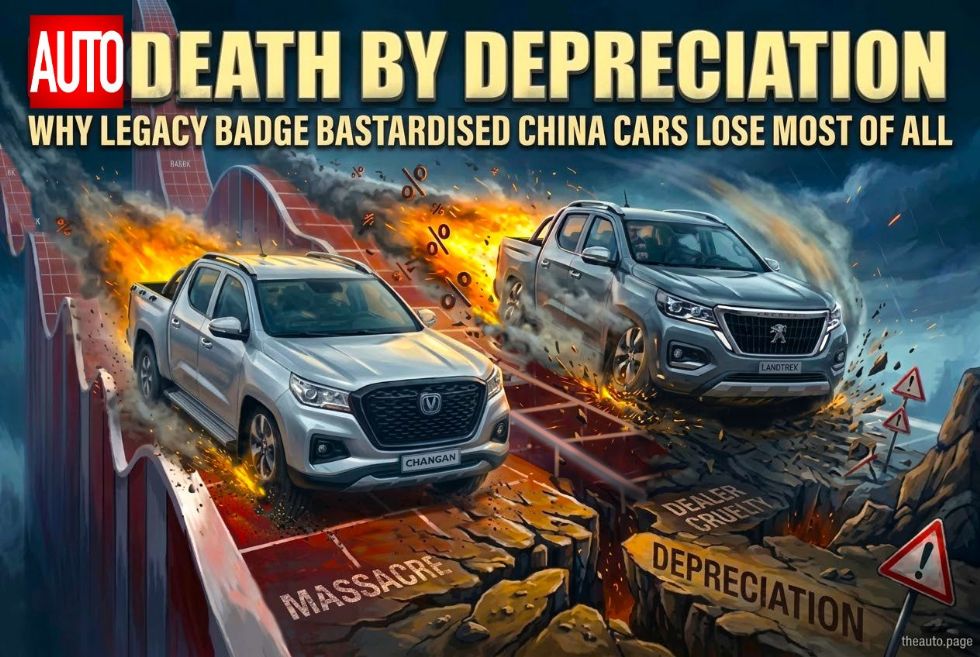
The Stepsister Myth: Chinamen in Fancy Dress
What happens when a Western carmaker slaps a French Lion or a Yankee Oval onto a 100% China car and charges a Western premium? Look, badge engineering is nothing new, and it’s rife across the car market. But charging Rolex rates for a copy watch has its limits too. All the Ford Territory and Peugeot Landtrek have achieved is to prove that simply slapping a famous badge on a car will never disguise the shoddy Chinese half job lurking beneath. In fact all it’s done, is cause a used car bloodbath.
Far from Napoleon’s cousin, Peugeot's Landtrek double-cab is really the Chinaman’s stepsister. Listed at up to R760K, it’s just a Kunming Yunnei diesel powered Changan Hunter underneath. Unlike, say for instance a Ford Ranger, which was infused with royal Volkswagen blood to receive its Amarok sibling. The wheels came off when Changan returned to SA and undercut Peugeot by R190K with the Hunter. So now used 2023 Landtreks suffer 48% retention as dealers desperately try to dump demo stock.
And don’t be fooled by Trump’s tariffs. The Ford Territory is actually a Chinese JMC Equator Sport built in Nanchang. It benefits from Ford's 130-dealer network and large cabin but carries all the Chinese flaws from a laggy wet DCT to a drunken want for fuel, screen-buried aircon, and heavy fleet dumping. Within 18 months, R590K 2024 Territories shed an astounding R230K to clutter used floors for just R360K. Want to know how to avoid throwing good money at the Wolves in Western Clothing? Tap this link.
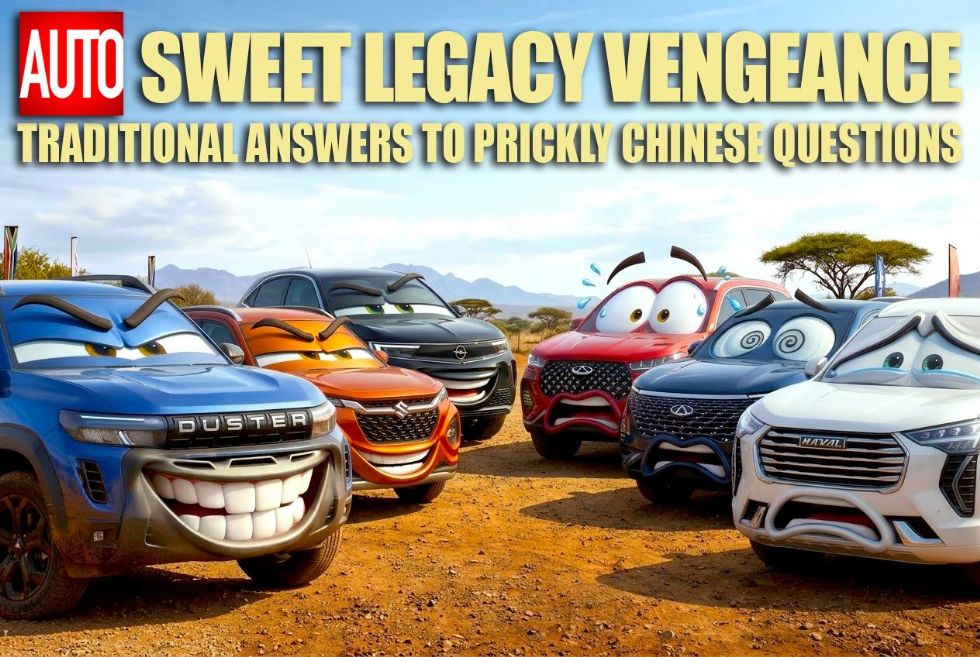
A Traditional Response: The Empire Fights Back
Once arrogant, legacy brands took a bit to react to the Chinese attack while pricing remained bloated across the board. Now they’re fighting back. Don’t be fooled that the Chinese cannot be beaten on price. They no longer stand alone in the bargain basement. Established brands increasingly source budget models from India, while also slashing up to a quarter-million off European metal on the dealer floor. They may lack panoramic roofs and voice-activated sunshades, but the old school strikes back with sorted chassis, superior powertrains and third-better fuel economy. And they’re sold via respected, credible and proven dealer bodies too.
Stellantis has repositioned Citroën with punchy engines, smooth 6-speed automatics and immaculate WRC bred drivability versus unpredictable jerky Chinese whips with chip packet feel. Most of Suzuki’s superb Toyota endorsed range sits well this side of half a million, while Kias, Volkswagens and others all offer great little cars well this side of four hundred grand. They match Chery and Haval rand-for-rand while sipping six litres per hundred, rather than ten, and drive like a sweet dream in comparison.
The Europeans are happy to fight in the showroom too. Ask and the discount comes running. Ignore Renault's huge hundred and fifty grand off Captur and Duster window stickers at your own peril. Want a bit more? Get a bargain of the year eight-seat Opel Zafira Life for this side of R600K. It has a proper 370 Nm European turbodiesel for as much as a thirsty sixteen-hundred Chinaman. There are plenty more too. Just scratch a little. Tap here to learn how vengeful that old school tie can be.

Buy With Your Eyes Wide Open
Chinese cars are neither showroom miracles nor unredeemable junk. They have certainly shaken up a greedy market. But by the same token, they’re actually worth every cent of that huge discount once all the cows finally come home. If you want great space and gadgets in a R350K Chinese bargain, put a 15% deposit down, refuse the balloon payment and opt for a high-volume Haval or GWM with a transferable warranty. And keep it for seven years. Then the maths may work.
But if you do buy that balloon on a zero deposit, don’t expect to trade out of your Chinese depreciation disaster in three years. And don’t expect slick steering feel, linear brakes or real world 6.5 litre per hundred fuel economy either. Let alone being able to load in four average South African adults, or to get the car back from the panel shop within three months if you happen to smash it. Those are just some of the Chinese motoring realities they may forget to tell you in that swanky showroom.
Yes, sure, Chinese cars have their advantages. Not least of all that they’re dirt cheap and on the face of it, many really are lovely in their own special ways. But then they also come with their own particular Chinese car penalties. And those only tend to bite hardest a couple of years into the experience. So look past the screens, the lovely leatherette, the apparent glitz, alleged glamour, sweet smoke and misty mirrors. And do the five-year maths before you sign. Or go negotiate a massive discount on a really proper traditional rival.
And if you still happen to do so, make sure that your eyes are wide open, whatever car you buy…