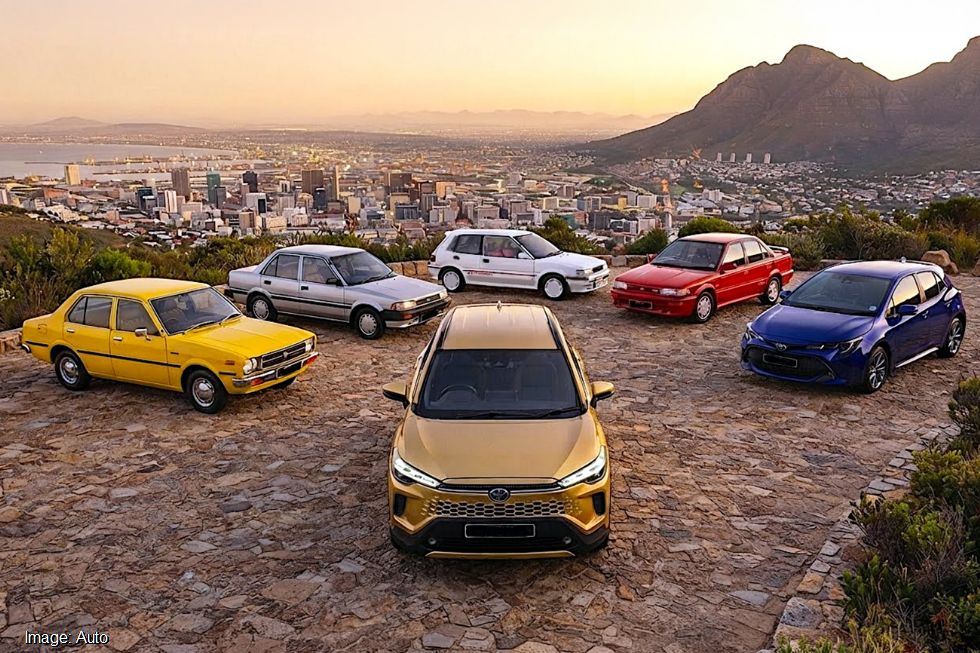
The Toyota Corolla isn’t just a huge success. It’s a piece of South Africa.
Sixty years ago, Toyota pulled the wraps off a humble, rear-wheel-drive 1.1-litre two-door saloon designed to motorise Japan’s booming middle class. They called it the Corolla, Latin for ‘crown of flowers’. Six decades later, it remains the undisputed, all-time best-selling passenger car nameplate on earth, leaving the Beetle, Golf, and Model T firmly in its wake.
Yet while the rest of the world enjoyed the crisp E10 first-generation and coke-bottle E20 second-generation models, South Africa had to wait. But when the Corolla finally touched down in 1975, it didn't just arrive as an import. It set up shop for life.
That South African story officially began in May 1975, when Toyota South Africa Motors commissioned production of the third-generation E30 at its Prospecton plant in Durban. South Africa became only the third country outside Japan to manufacture the model, embedding the nameplate into local folklore from day one.
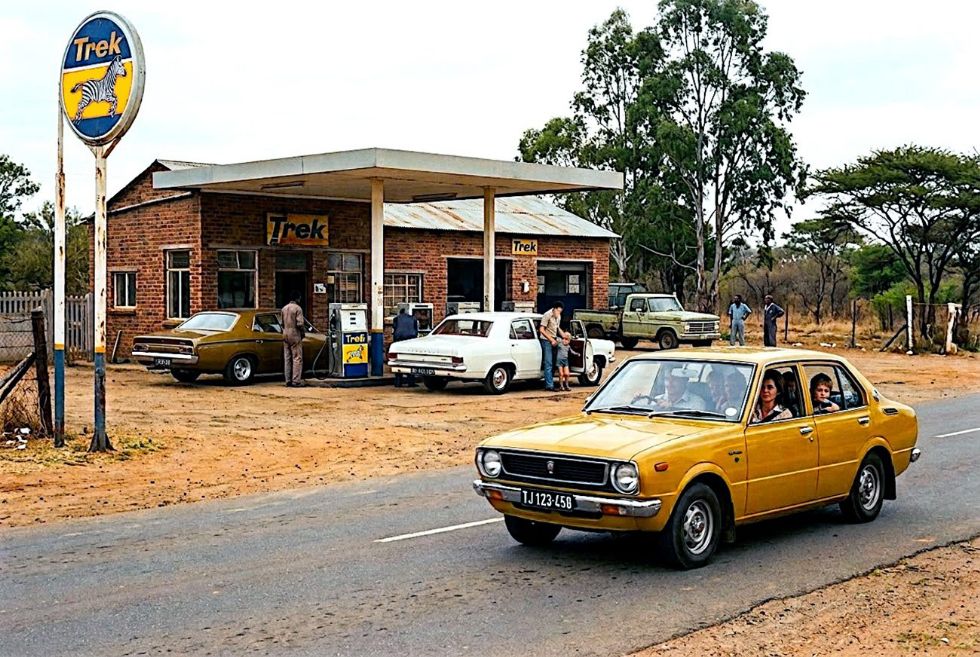
Rear-Wheel Drive Foundations
Arriving in the blockaded wake of the 1973 fuel crisis, the rear-wheel-drive Corolla E30 was the right car at the right time. Offered in both two and four-door, as well as rugged station wagon guises, it packed dependable 1.2-litre 3K and 1.6-litre 2T pushrod engines. Unpretentious and tough as teak, it laughed at rutted dirt roads. And its critics soon laughed on the other side of their faces as South African families traded thirsty sixes for fuel-sipping Durban-built reliability (above).
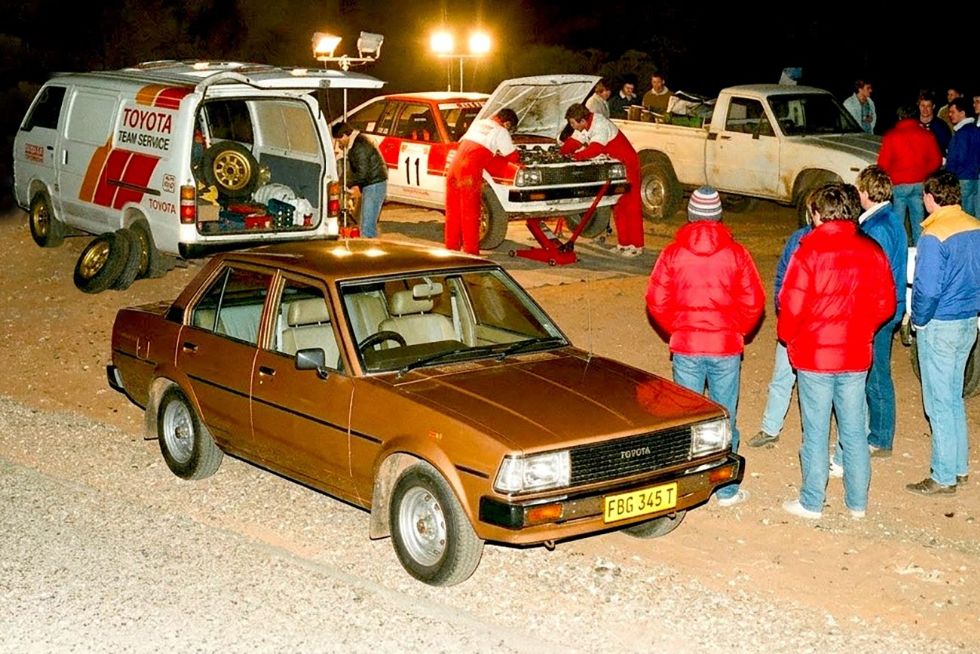
If the E30 lit the spark, the razor-edged, fourth-generation E70 fanned the flames. Launched locally in 1980, the box-shaped E70 Corolla propelled Toyota into overall South African vehicle market leadership that year as the manufacturer donned a crown it would famously never relinquish.
With an improved five-speed manual box, and an expanded engine line-up spanning 1.3 to 1.8 litres, the E70 (below) was everywhere. It gave rise to everything from fleet-spec 1.3 workhorses to plush GL and sporting SR models, cementing it as South Africa’s default automotive currency, while Corolla also dominated on track and stage.
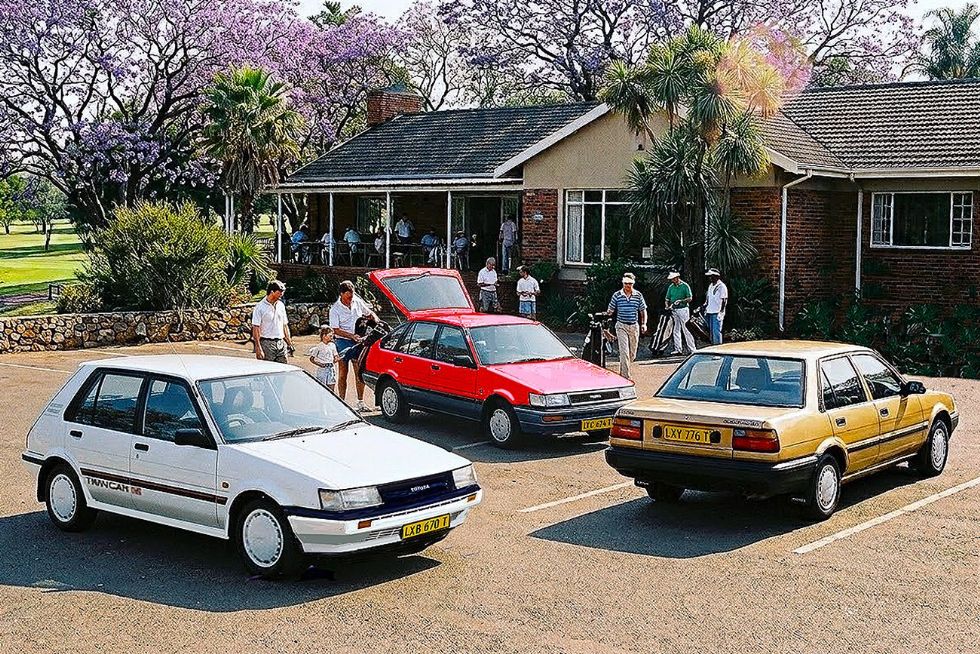
The Front-Wheel Drive & Twin Cam Era
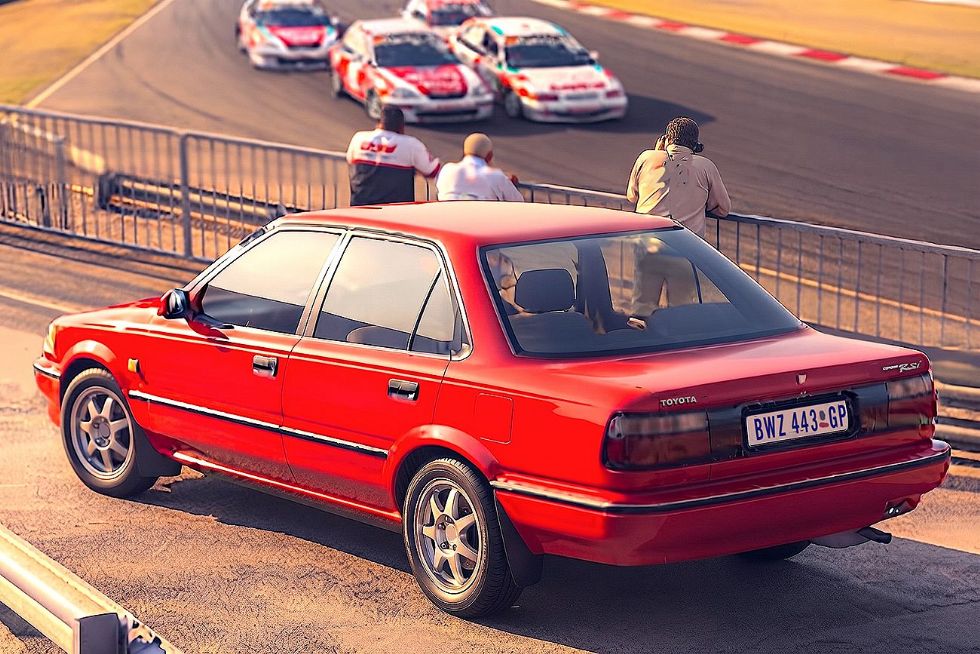
The mid-‘80s brought the biggest mechanical upheaval in the Corolla’s history in its switch from rear- to front-wheel drive in the E80 series. Purists cried foul, but Toyota opened the range up to distinct body shapes, welcoming the sporty five-door Conquest hatchback and rakish Avante liftback alongside the traditional three-box sedan (below).
Crucially, this generation proved that practicality did not preclude genuine high performance. While everyday reps racked up hundreds of thousands of kilometres in humble 1.3 GLs, Prospecton slotted the legendary 16-valve 4A-GE twin-cam motor into the Conquest and sedan, creating the RSi and GLi Twin Cam 16 that democratised 8,000 rpm thrills.
In 1988 came the smoother, rounded sixth-generation E90, affectionately christened the ‘Rounder’ across Mzansi. The E90 redefined local build quality, spawned fuel-injected Twin Cam Executive sedans, and proved so durable that TSAM skipped the global E100 generation entirely, later rebadging the E90 Conquest as the immortal, budget-busting Tazz that ran until 2006.
20-Valve Legends to High-Revving RunX
When the eighth-generation E110 arrived in 1996, it brought aerodynamic packaging and dual airbags, but it also delivered arguably the most celebrated performance Corollas in local folklore. The 1.3 and 1.6 GLE and GLX sedans kept doctors, reps, and rental fleets moving with clockwork dependability.
At the sharp end sat the iconic 4A-GE 20-valve motor, first in Silver Top and later in screaming 115 kW Black Top specification paired with a snick-snick 6-speed gearbox. The metallic silver RXi with its factory boot spoiler became an instant street racing legend and a permanent piece of South African car culture as it dominated in Group N races and slayed giants on the rally stages (below).
The turn of the millennium brought the ninth-generation E120, adopting European styling, a taller roofline, and modern VVT-i engines. The Conquest nameplate gave way to the RunX, which ranged from sensible 1.4 and 1.6 runabouts to the manic 141 kW RunX RSi, whose 2ZZ-GE engine screamed all the way past 8,000 rpm to chase down anything that called itself a hot hatch.
The Quest Solution and Crossover Pivot
By its tenth and eleventh iterations, the Corolla sedan evolved into a spacious, semi-executive saloon, leaving hatchback duties to the Auris while the four-door ruled corporate fleets and emerging e-hailing networks. To keep affordability alive, TSAM introduced the Corolla Quest, utilising previous-generation tooling in Durban to offer full-size sedan space at entry-level hatchback pricing.
Today, while the sleek twelfth-generation sedan and hatch arrive as fully imported models on the sharp TNGA platform, the market's centre of gravity shifted irrevocably toward high-riding crossovers. Toyota answered by investing R2.8 billion to retool the Prospecton plant for the Corolla Cross.
That move kept the Corolla nameplate South African-built while instantly creating another runaway sales champion. By packaging proven Corolla dynamics into a practical SUV silhouette and democratising petrol-electric hybrid motoring, the Cross ensures that after 60 years globally and 50 years in Durban, the Corolla remains Mzansi’s undisputed default choice.
To celebrate, Toyota is releasing a series of 60th Edition specials headlined by the Corolla Cross, alongside distinctive special-edition styled 60th birthday Corolla Hatches and Sedans. Watch this space or contact your Toyota dealer on launch details and availability now.