From Import Oddity to Industrial Giant: The Birth of MBSA

Following the arrival of the Benz Velo as South Africa’s first motorcar in 1897, and the momentous 1926 merger of Mercedes and Benz in Stuttgart, Auto’s 140-year celebration moves to home soil. It traces how the Three-Pointed Star evolved from an imported luxury curiosity into the bedrock of South African motoring.
In the early years, Mercedes and Benz machines arrived the traditional way: completely assembled, packed inside timber crates, and sold through scattered independent colonial concessionaires. South Africa’s vast distances, punishing dust roads, and baking sun quickly proved a natural proving ground for the brand’s rugged engineering.
That continued after they merged and in the early post-WWII years. Industrial growth and looming import restrictions however forced a rethink. If Stuttgart wanted to sell cars in meaningful numbers across southern Africa, it had to build them locally. That transformation began not in Pretoria or Johannesburg, but beside the Buffalo River in East London.
CDA AND THE PONTON PIONEER
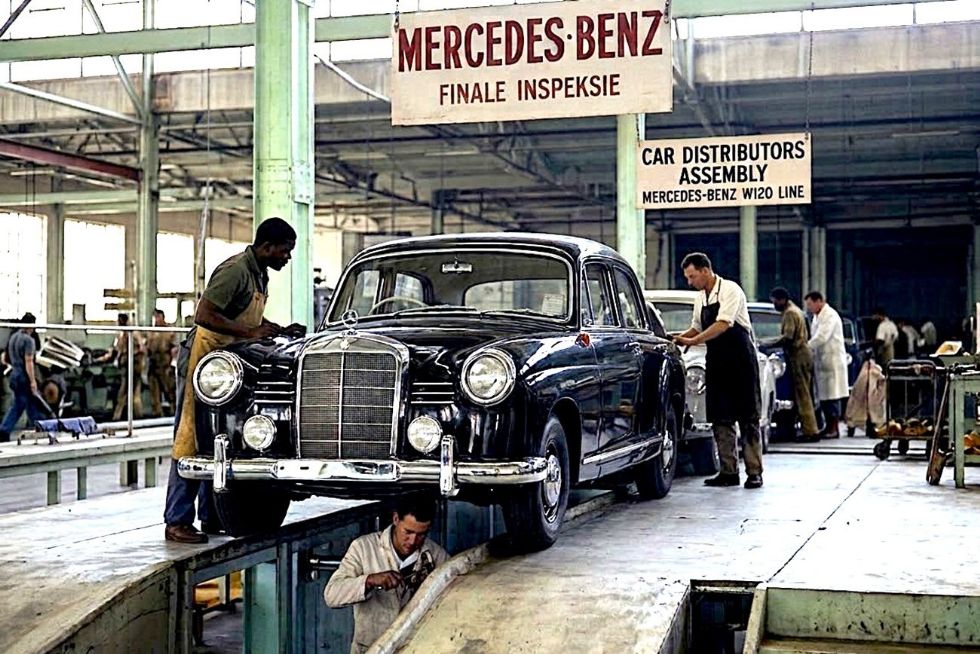
Car Distributors Assembly was already founded as an independent contract assembler in the Eastern Cape port in 1948. Armed with dockside rail links and an adaptable coastal workforce, CDA built semi-knocked-down kits for several British and American marques before catching Stuttgart's eye.
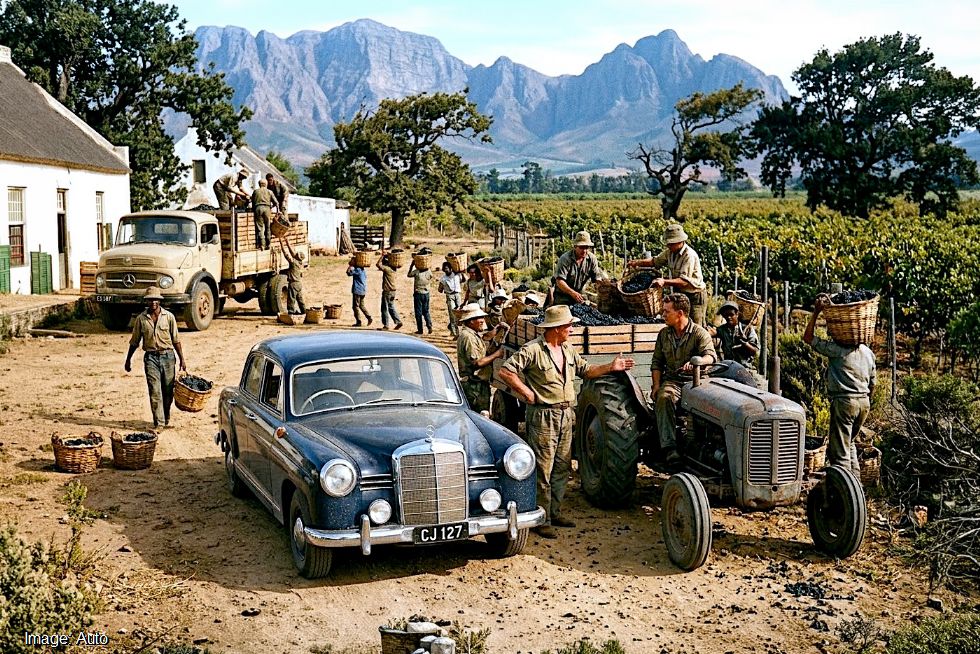
Recognising South Africa as one of its prime global export markets, Daimler-Benz signed a formal contract assembly agreement with CDA in 1957. On 31 January 1958, local history rolled off the line: the first South African-assembled Mercedes-Benz, a black W120 ‘Ponton’ 180.
The unit-construction, three-box Ponton was the perfect machine to pioneer local production. Robust, rattle-free, and engineered to an obsessive margin of safety, it became the default choice for doctors, farmers, and magistrates alike. The 180D followed, forging the brand's unburstable reputation on rough rural gravel as much as it did on those first South African freeways.
THE RISE OF UCDD AND THE HEAVY HAULERS
While CDA handled assembly in the Cape, national distribution remained fragmented. That changed fundamentally in 1962 with the creation of United Car and Diesel Distributors. Based in Pretoria, UCDD took over as the sole general distributor for all Mercedes-Benz passenger and commercial vehicles.
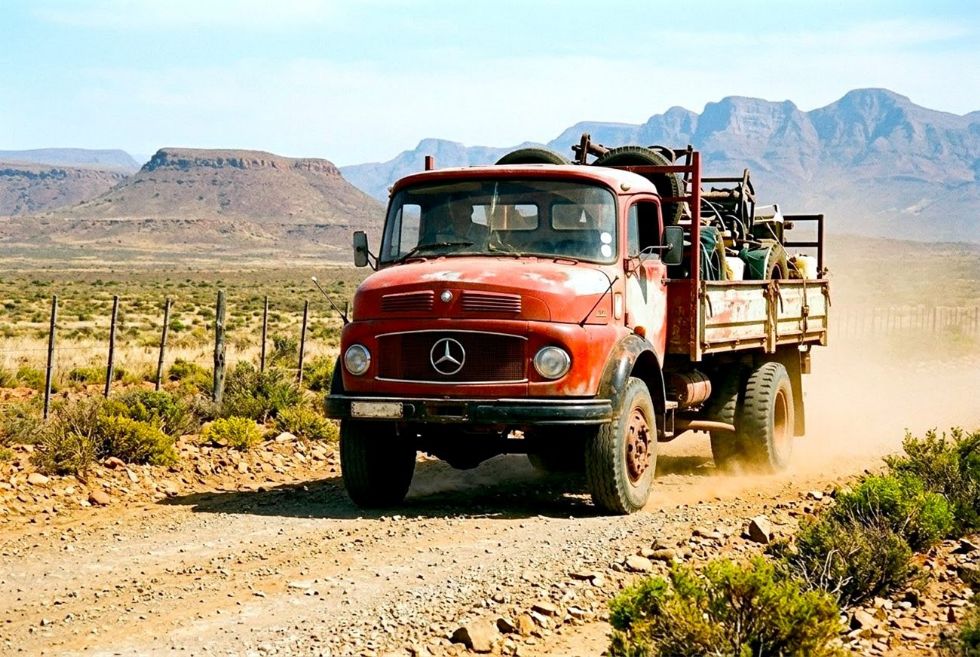
That same year, East London expanded its remit from saloons to heavy commercial transport. The first locally assembled Mercedes-Benz commercial truck rolled off the line in 1962, sparking a Mercedes commercial vehicle boom that would underpin the country's logistical growth.
From forward-control haulers to those endemic indestructible ‘Kurzhauber’ short-nose bonneted workhorses, Mercedes trucks became the literal muscle of the country. They built roads, hauled timber, and serviced the mines, establishing the Three-Pointed Star as an industrial icon long before it became an executive status symbol. Many still do daily duty today
FINTAILS, STROKE-EIGHTS, AND DIRECT CONTROL
1960s Government Phase II Local Content programmes then penalised imported car components, requiring manufacturers to integrate local steel, glass, and trim. Daimler-Benz AG responded in 1966 by buying a 26.7% direct stake in UCDD, which promptly bought CDA outright to unify the entire operation.
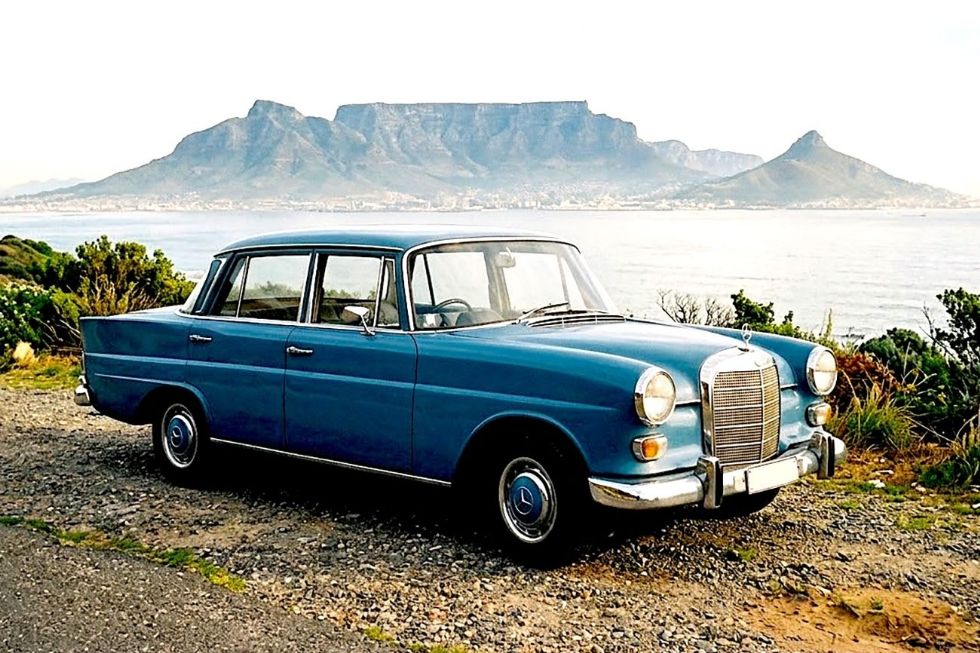
East London quickly evolved into one of the most sophisticated Mercedes-Benz assembly plants outside Germany. The Fintail W110 and W111 defined South African executive transport in the 1960s, proving that local assembly matched Sindelfingen’s fit-and-finish obsession.
Next came the legendary Paul Bracq-styled /8 Stroke-Eight W114 and W115 series, dominating the luxury four- and six-cylinder segments with locally sourced materials. By the early 1970s, the plant was even entrusted with building the flagship W116 S-Class, proving local assembly could deliver the most complex car in the world.
A STAR AT HOME
Those two formative decades of contract assembly and corporate consolidation set the stage for total local integration. In 1984, Daimler-Benz AG took majority 50.1% control of UCDD, officially renaming the entire manufacturing and sales operation Mercedes-Benz of South Africa.
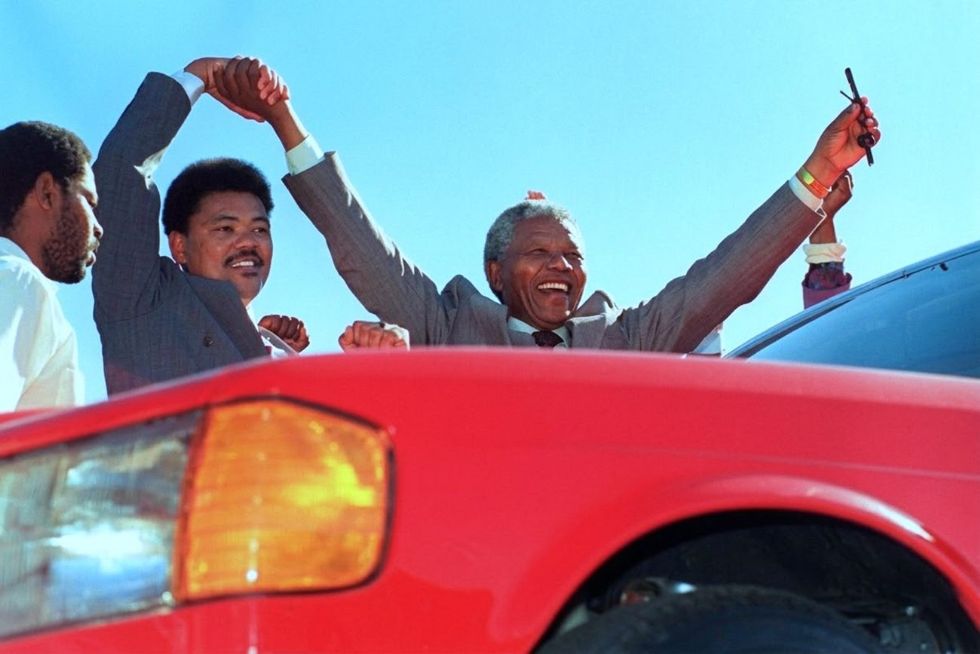
The company was no longer an overseas outpost. It was a national industrial pillar. From that foundation, East London would later build Nelson Mandela’s famous red 500 SE in 1990 and soon grow into a world-class export hub
The pivotal shift for the modern MBSA arrived with the advent of the Motor Industry Development Programme. Seeking export-driven scale over fragmented domestic assembly, Daimler-Benz integrated East London directly into its global production grid, establishing the Eastern Cape as a premier right-hand-drive source for the W202 C-Class.
THE GLOBAL C-CLASS EXPORT ENGINE
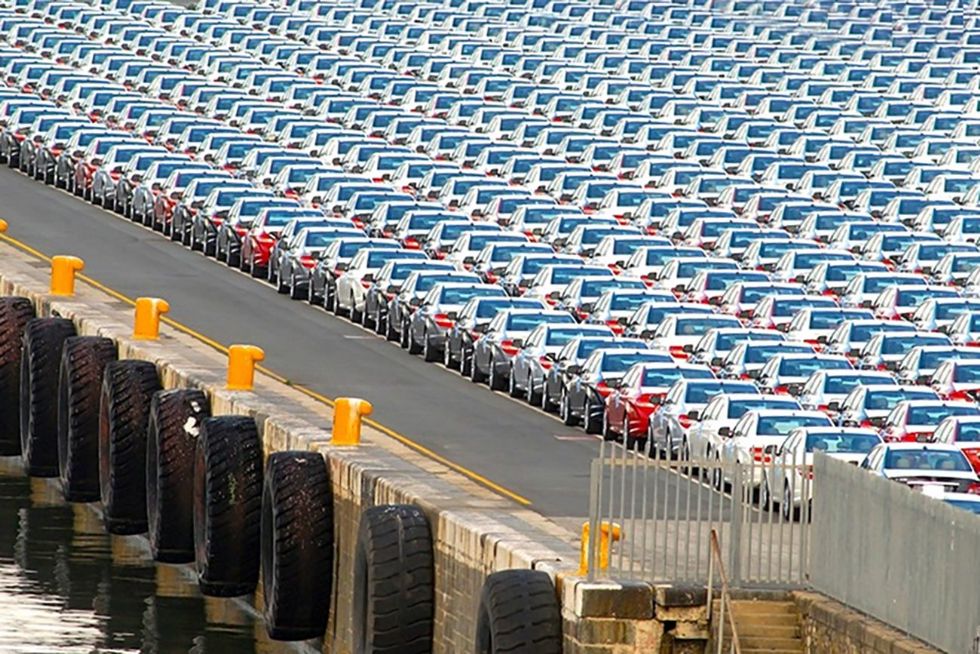
By the time the W203 and W204 C-Class arrived, East London had built an unassailable global reputation for assembly quality, regularly outscoring Sindelfingen and Bremen in factory audit metrics. That operational excellence culminated in massive multi-billion-rand expansions, including a R13-billion retooling investment to anchor production for both right- and left-hand-drive W206 saloons for world markets, notably including the United States.
Yet relying entirely on a traditional three-box saloon in a global market obsessed with SUVs has had its headwinds. Plunging international appetite for four-door passenger cars leaves Stuttgart re-imagining East London’s next era,
What began in 1897 as a lone Benz Velo puttering across a Pretoria sports field had come full circle. Through the tenacity of CDA and UCDD, the Three-Pointed Star built deep roots on the banks of the Buffalo River turning East London into one of the proudest chapters in Mercedes-Benz’s great history.
The Three-Pointed Star and its plant beside the Buffalo River meantime gears for the next 140 years of a momentous saga. Long may ot continue