A Benz Velo first came to South Africa 130 years ago

Mercedes-Benz is celebrating 140 years of the car, since Karl Benz and Gottlieb Daimler first demonstrated their horseless carriage to the German public in 1886. Saluting that momentous occasion, this first of a few Auto features covering Mercedes-Benz’ local history kicks off with the story of South Africa’s first ever car.
You guessed it… it was a Benz! Life was different 130 years ago. Like the motorcar, Johannesburg was just ten years old in 1896 (below). The Dark Continent remained primitive in other respects. Sleeping sickness and malaria still made travelling to the Bushveld a life challenging trek.
Yet the Gold Rush advanced the country in many ways and a number of the inventions of the latter 19th century were already part of everyday life. Thousands of miles of railroads for instance already traversed the country. Telephones were common, the telegraph reached the remotest villages and people played music by phonograph.
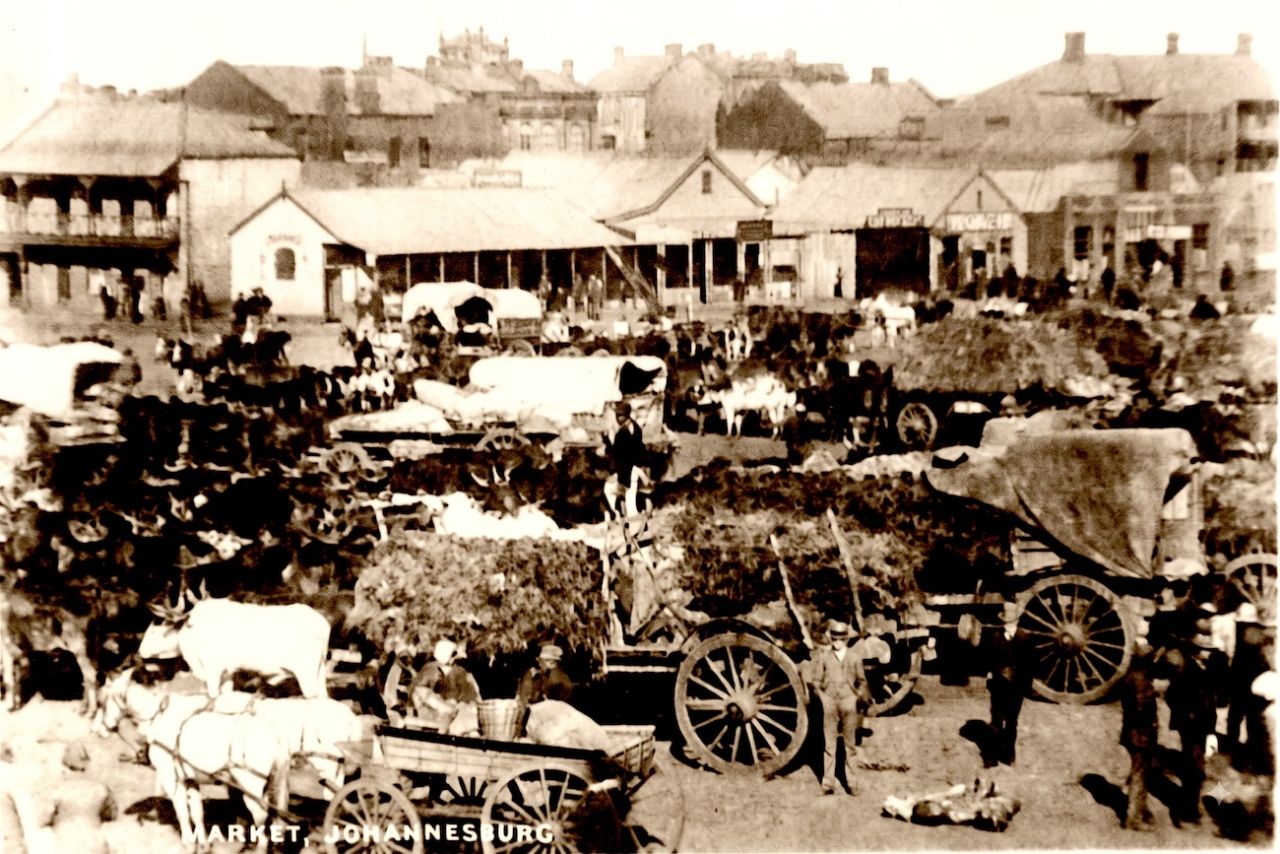
Johannesburg was also just ten years old…
The Western Cape in particular, had a few advanced roads, thanks to the pioneering efforts of Bain, Michell and White. Cyclists and horse drawn carriages could maintain reasonable speed over a rapidly advancing network of easily passable, if dusty and manure strewn streets around the major cities.
The roads however deteriorated rapidly into increasingly treacherous tracks, the further one travelled out of town. Back then, rural people lived and died more or less where they were born. If they wanted to travel, they walked. Or rode an ox.
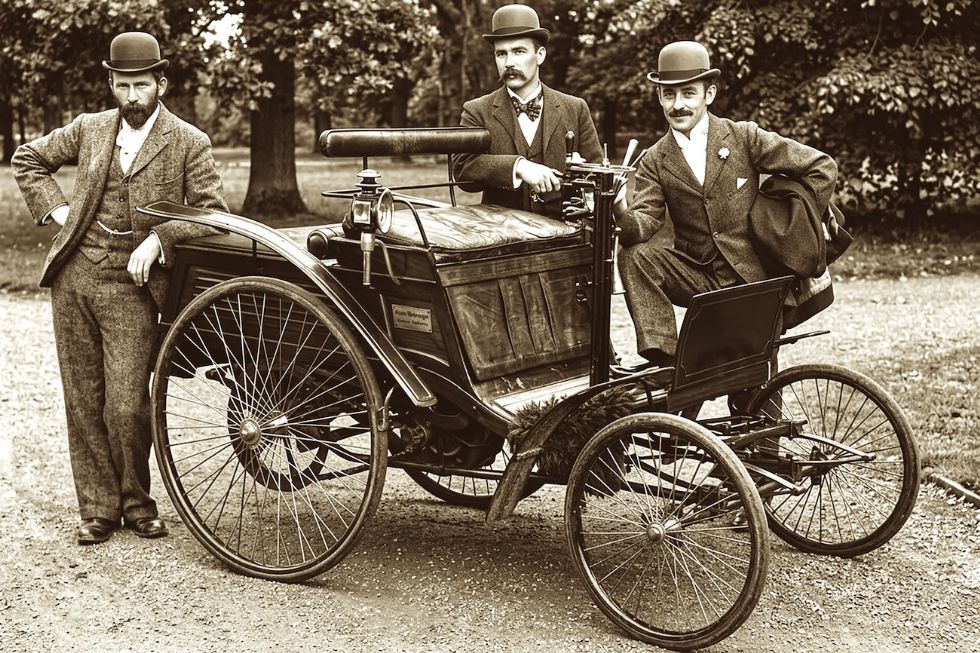
Although steam traction engines were already common, it was not until 1896 that plans came together to finally import South Africa’s first car. Pretoria entrepreneur John Percy Hess visited England to purchase a horseless carriage. Finding that the British never yet made such a contraption, he travelled on to Germany.
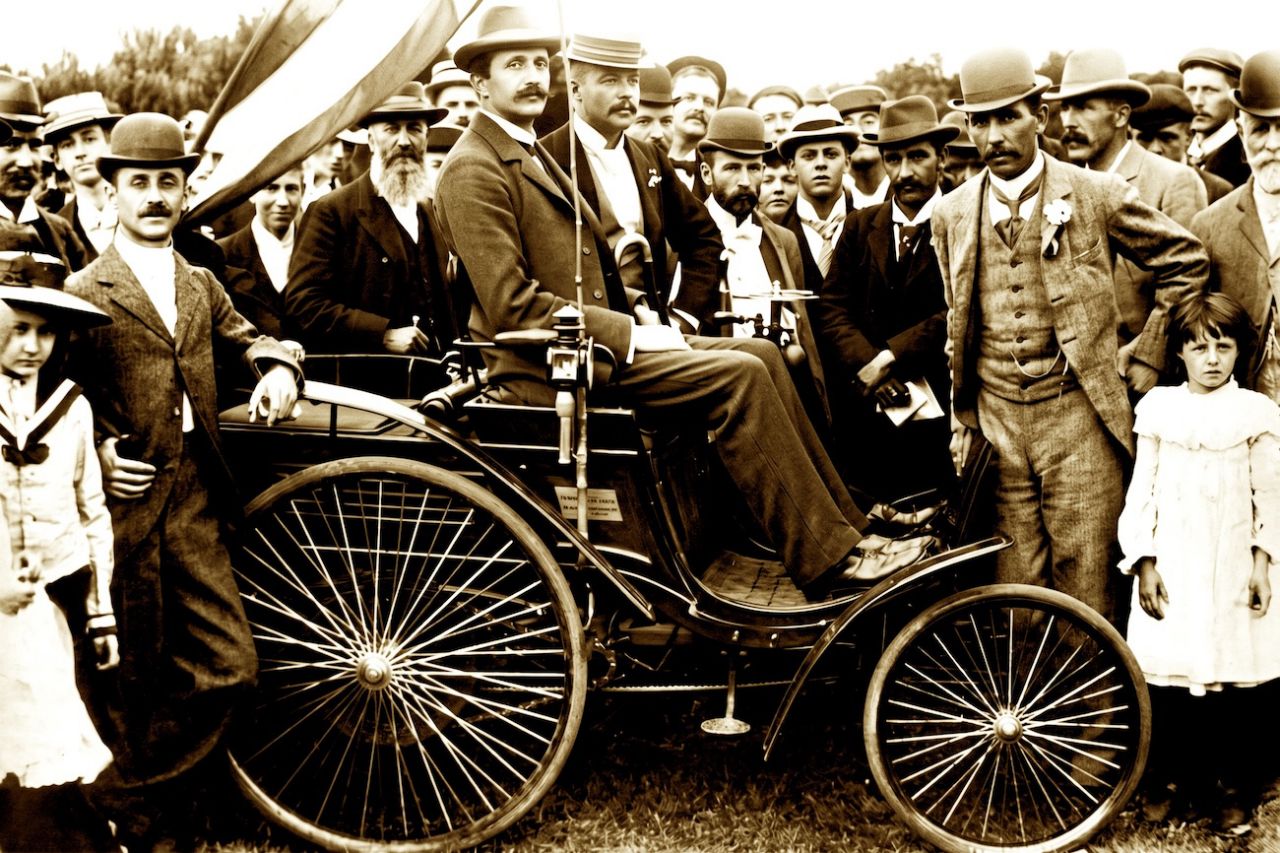
Hess went to Mannheim top buy his Benz
Hess visited Benz & Cie. where he not only purchased a Velocipede, more commonly known as the Velo, the world's first standard series-produced automobile, but he also tied up the sole Transvaal Benz agency. Powered by a modest 1.5 horsepower litre, single-cylinder engine good for 20 km/h, Benz built 201 Velos between 1894 and 1895.
The car was shipped from Mannheim to Port Elizabeth and then railed to Pretoria for a planned reveal late in 1896. Unable to find suitable fuel in time, Hess delayed the event and finally unveiled his Velo at a momentous occasion at Berea Park in Pretoria at 4pm on Monday 4 January 1897 (above).
With public admission at the equivalent of R500 today, special guests included President Paul Kruger, who politely refused the first ride on the Benz: “What happens if a dog barks, and this thing takes fright?” he joked. Kruger however presented Hess with a minted gold coin in recognition of the event.
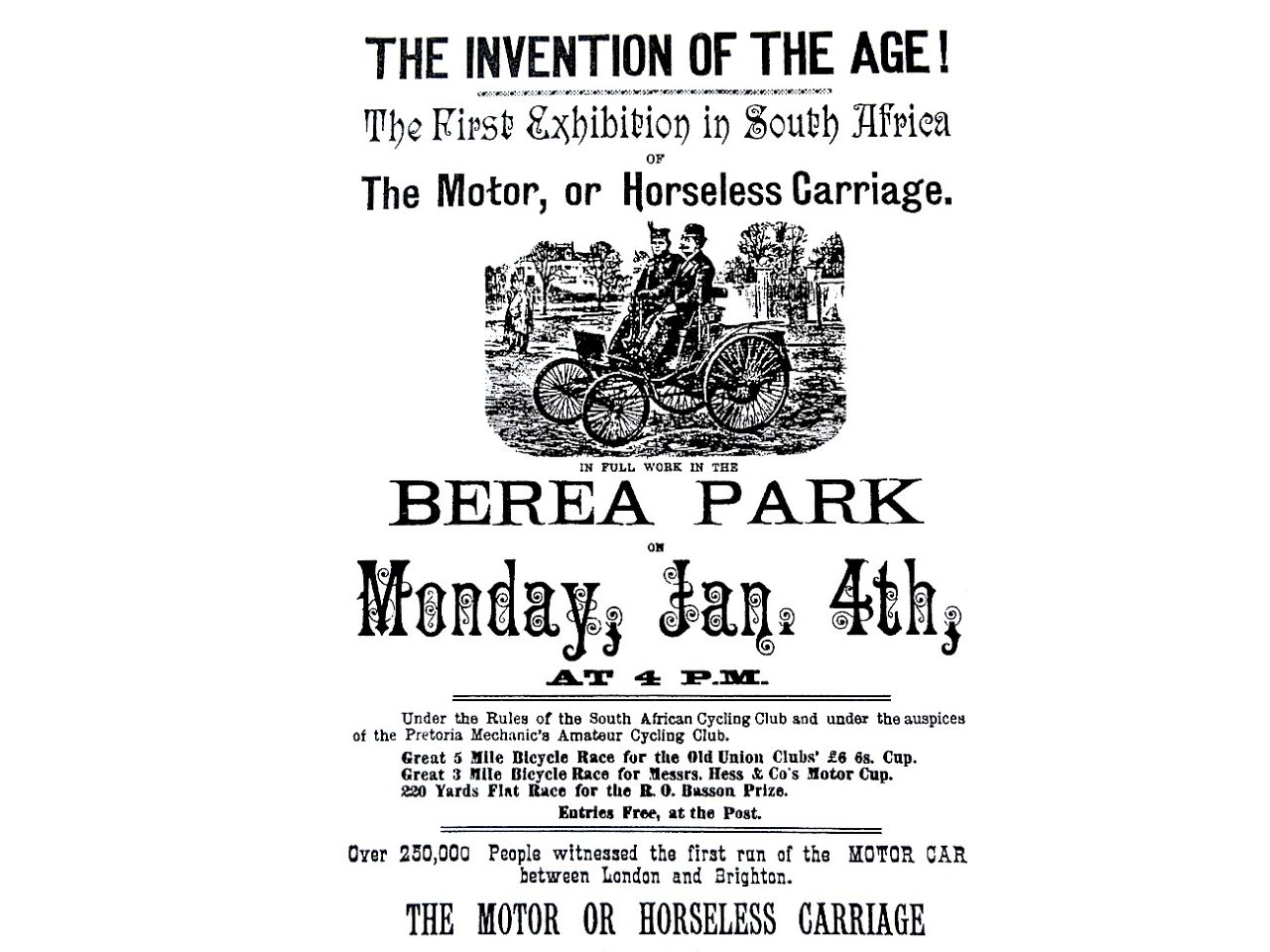
President Kruger understood the importance
“Presented by the right honourable Paul Kruger, State President of the Zuid-Afrikaansche Republiek to Mr. JP Hess On Monday 4 January 1897,” it was inscribed. “In commemoration of his introduction of the first motor car to South Africa.” Kruger clearly appreciated the gravity of the affair.
State Secretary WJ Leyds thus took the opportunity to be the first passenger on that momentous run around the arena. He accompanied South Africa’s first driver, Pretoria News newspaper owner AE Reno. With the main road in poor condition, the Velo was railed to Johannesburg for another demonstration on the Wanderers, a week later.
Hess continued to show the Velo before selling it to ‘Coffee’ Jacob, who used the car for publicity. Buy a pound of coffee and you could take a look at the car. A ten pound coffee purchase entitled you to a short ride. Sadly South Africa's first car was destroyed when Jacob's premises burned to the ground.
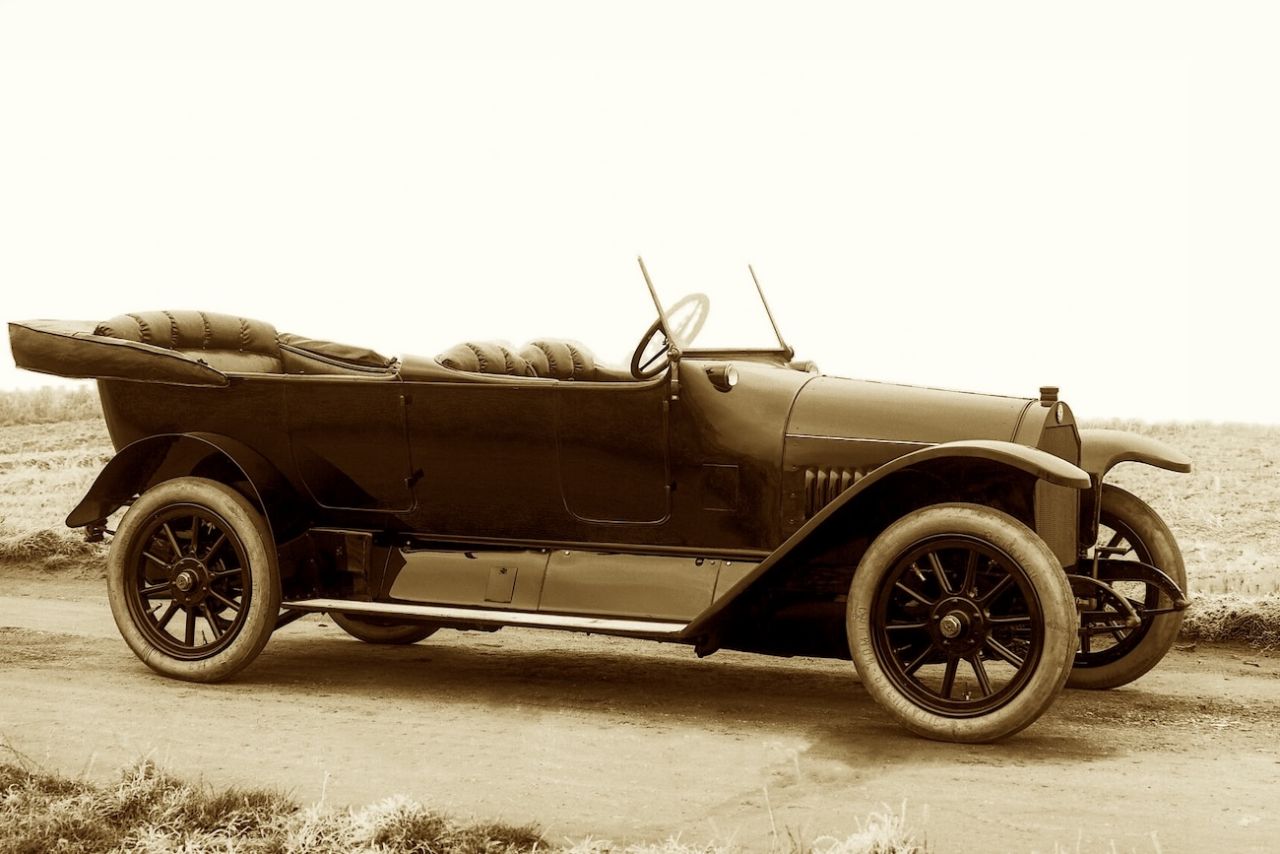
Benzes were a big part of early SA motoring
Cape Town’s Koenig & Company also imported three Benz Velos, one of which was allegedly sold to the country’s first taxi operator, Mr Glen of Johannesburg. Another motoring pioneer was Georges Chapart, who could hardly speak English when he arrived in Durban to set up a car dealership in 1902.
Chapart imported a Benz and drove it from Durban to Amanzimtoti. When the road ended just outside Durban, Georges defied both the odds and his critics. Progressing slowly as his ‘sturdy’ passenger pushed the car up hills to ‘Toti, they averaged six miles an hour and even returned to Durban the same day.
Still separate brands at the time, a number of Benz and Mercedes cars came to South Africa through the early 1900s. Several wealthy motorists imported robust 4-cylinder Benz 10/30hps (above). Built to survive rough, undeveloped colonial roads, the cars often arrived as rolling chassis with bodywork finished by local coachmakers.
Still, only about 100 South Africans owned a new vehicle by 1914, when that first era of Benz in South Africa ended with the outbreak of World War 1. German carmakers shifted production entirely to the war effort and it would only be in the mid 1920s after Mercedes and Benz unified, that their cars would return.