

The puzzle of the similarly different Jaecoo, Leapmotor
One of the most intriguing, and topical tests we've done for a while, this hybrid shootout uncovers some surprising new technology, as much as it asks a few most pertinent questions about the cheap Chinese cars and brands flooding the South African market. While they go about it in totally different directions, the new Jaecoo J7 SHS and Leapmotor C10 REEV Design also share an intriguing level of tech and features. Some we love. Some we abhor. Leading or a pretty controversial conclusion.
Part of Stellantis’ portfolio alongside among others, Fiat, Alfa Romeo, Peugeot, Citroen, Opel, Chrysler and Jeep, Stellantis owns a 20% share in the Leapmotor International company established in 2015. Launched in South Africa last year, the brand sits among Stellantis’ elite cluster alongside Alfa Romeo and Jeep in this market. An anagram of the German word Jäger, or hunter and cool in English, China’s Chery Automobile established Jaecoo as a new premium-focused export brand in 2023.
The Leapmotor C10 Range-Extended Electric Vehicle, or REEV takes a leaf out of the old BMW i3 range extender and Chevrolet Spark or even Dakar Audi book. Basically an EV with an onboard combustion generator to keep the battery charged en route, it bridges the gap between full electric cars and traditional hybrids. Boasting a 145 km all-electric range between charges, its 1.5-litre 63 kW 4-cylinder Atkinson-cycle petrol generator allows 970 km on a tank of gas. So it eliminates range anxiety. By burning petrol.
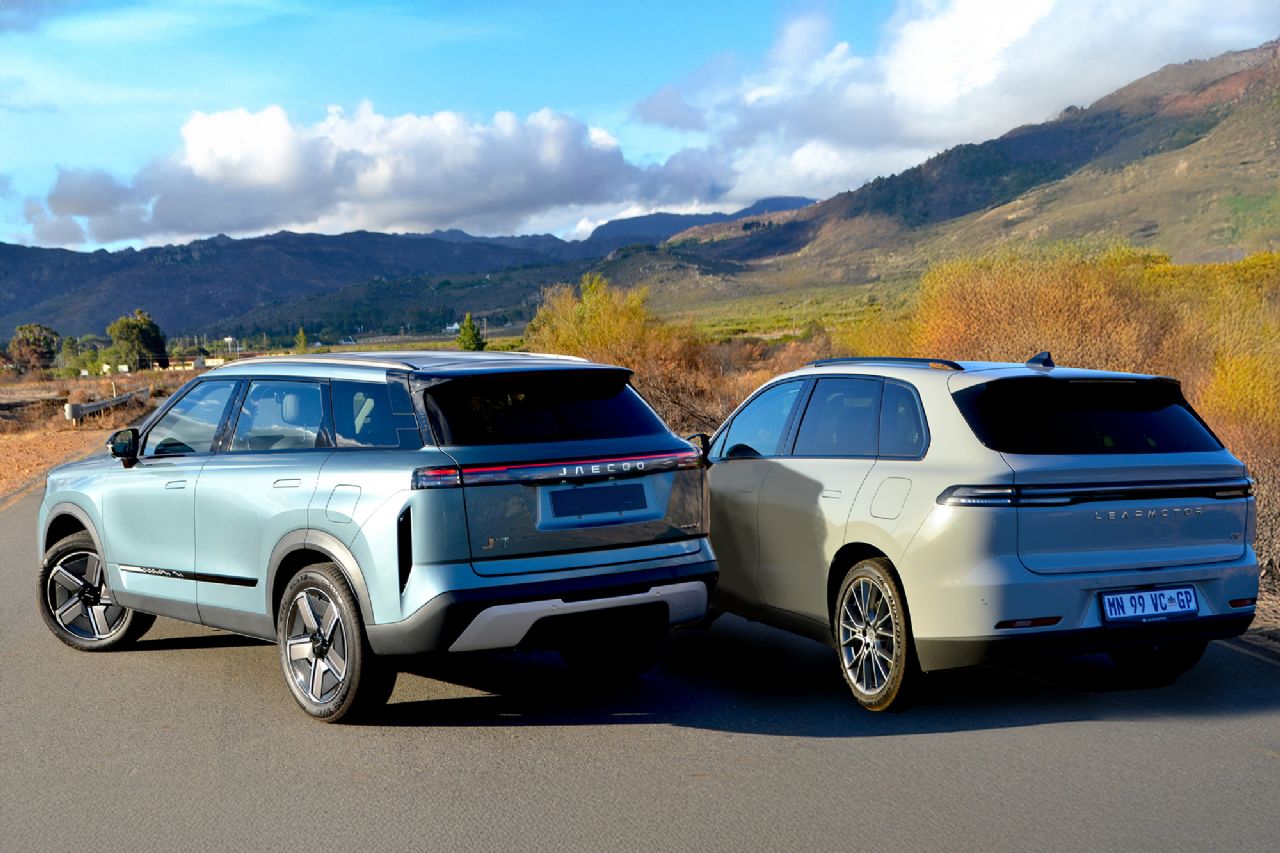
Jaecoo & Leapmotor: Different. But the same.
Still, it’s an EV at heart. Its actually driven by its 158 kW 320 Nm electric rear motor powered by a 28.4 kWh lithium iron phosphate battery, charged by the engine. The battery DC fast charges (good luck finding a fast charger in SA!) to half in 18 minutes. Or 80% in half an hour. It will charge full overnight on an AC charger. The petrol generator does most of the charging, firing up at optimal revs when the battery level drops Or perpetually with ‘extended range’ selected.
The Jaecoo is on the other hand a more conventional plug-in hybrid. Its 105 kW 215 Nm 1.5-litre turbo four-cylinder petrol lump assisted by 150 kW 310 Nm electric motor for a combined 255 kW 525 Nm. Driving the front wheels through a dedicated hybrid transmission with four drive modes, its powered by an 18.3 kWh lithium-iron phosphate battery. With 90 km electric and over 1200 km combined driving range, charge rates are quicker than the Leapmotor’s bigger battery.
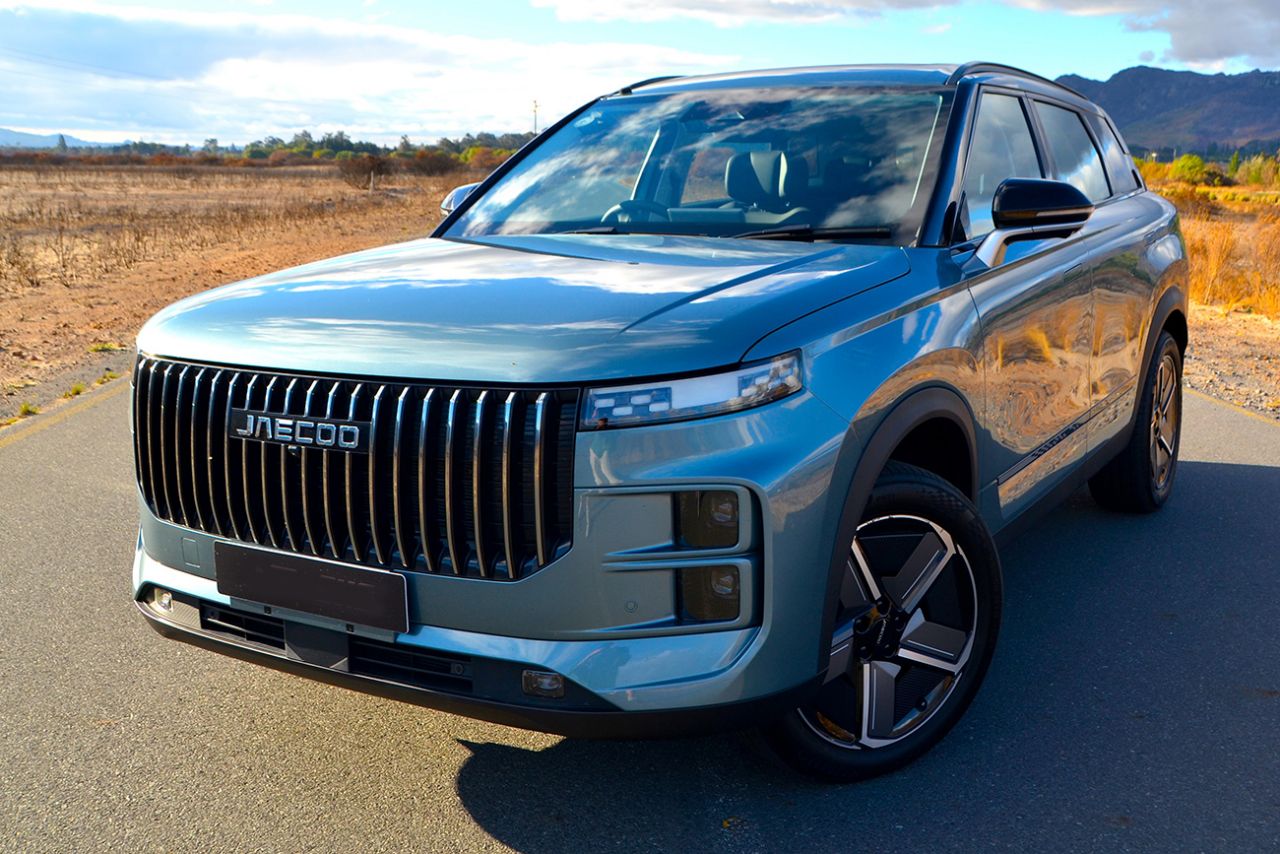
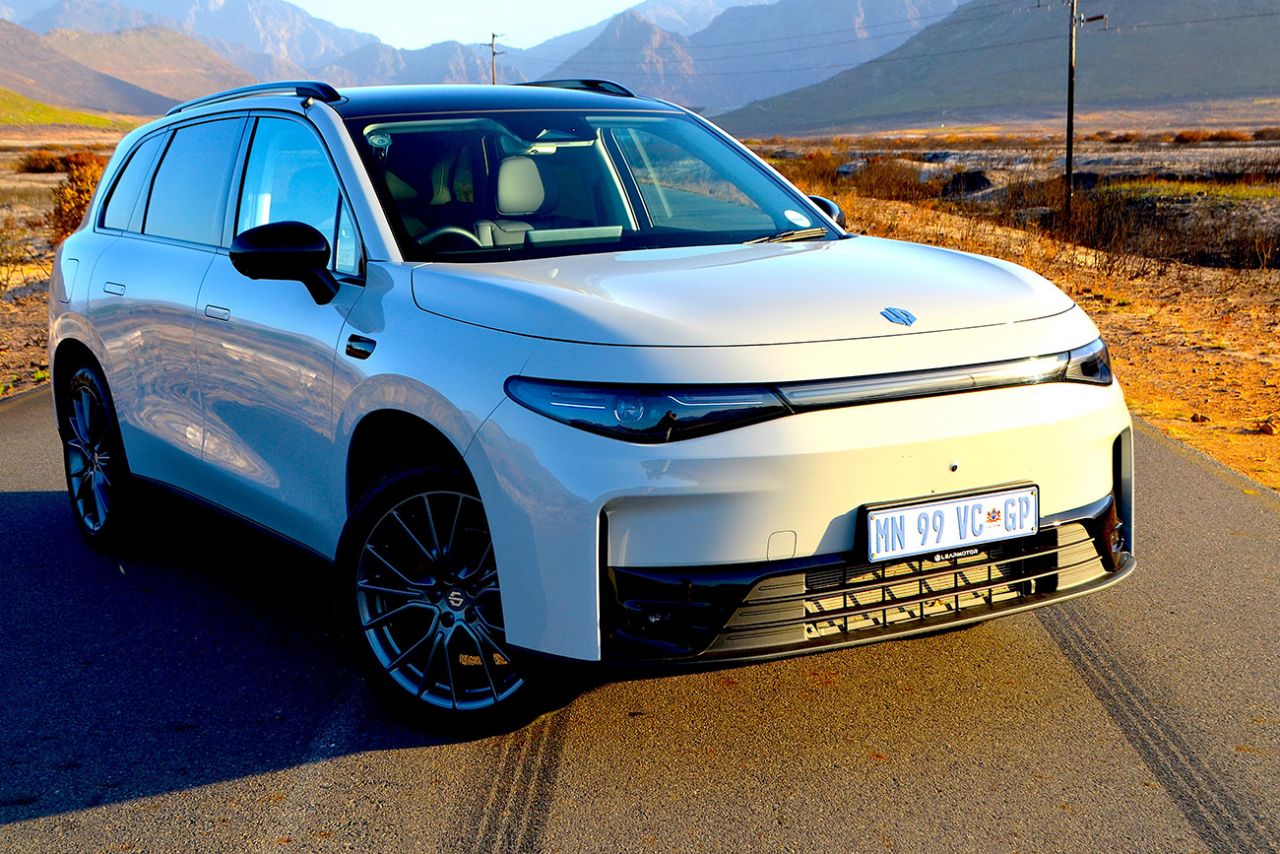
We made no bones of our admiration of the Jaecoo J7’s styling when we drove the straight petrol version. The SHS benefits the same Evoque like looks, LED head and taillights but gets a standard panoramic sunroof and its own, really cool 19-inch alloys. We also enjoy the look of the Leapmotor. It takes its own direction, which is neat. Aerodynamic, efficient and premium looking with intriguing China-eyes and an upscale presence, it features flush door handles, lovely 20-inch alloys and adaptive LEDs too.
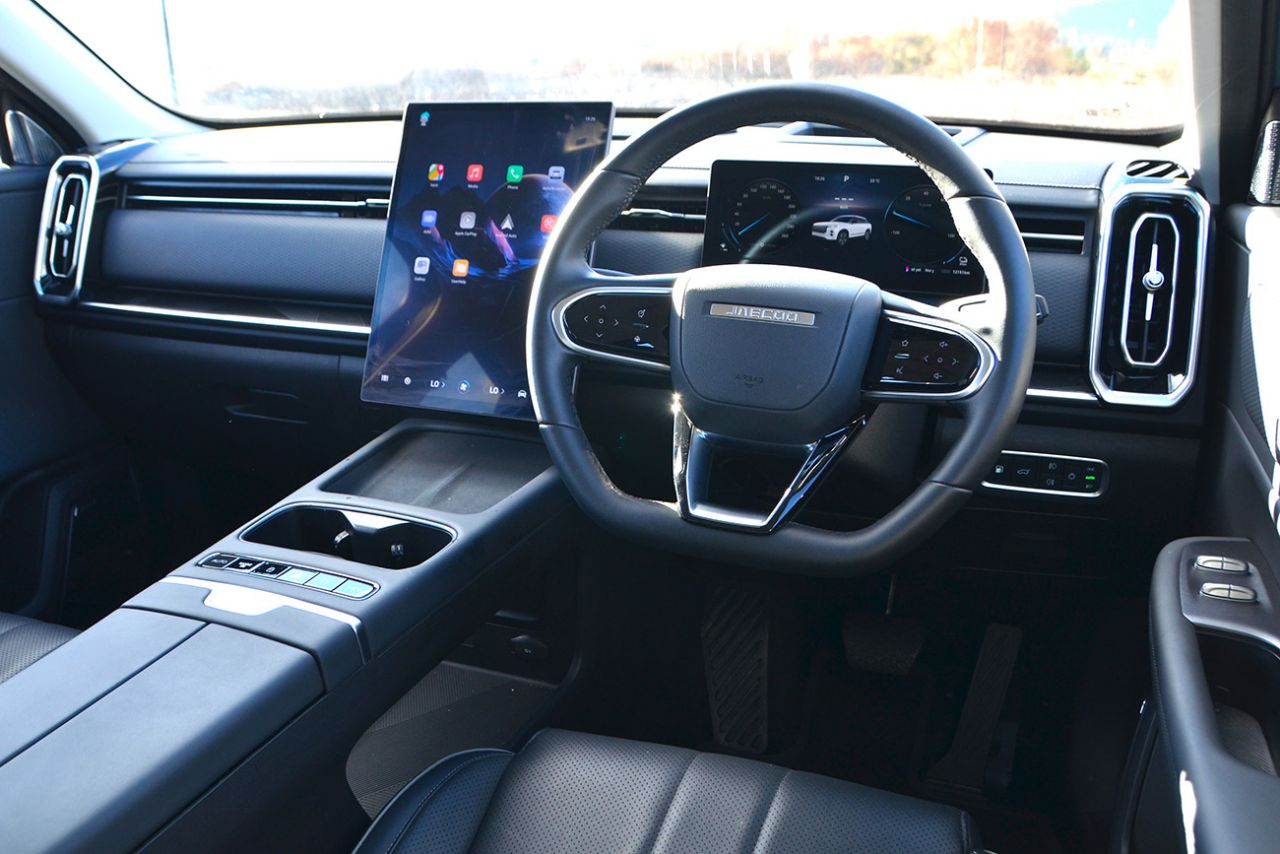
Quality SUV cabins. And tech.
Although they come in from completely different angles, it’s clear that these two vastly technically different cars share a great deal of under the skin tech. While not quite identical, there’s an uncanny air of similarity between their ambient lit dual-zone climate control cabins with heated and ventilated and power memory seats. The Leapmotor’s flat floor sets it apart. But for the rest, these quality five-seater SUV cabins offer a premium blend comfort. And tech.
The Leapmotor (below) benefits subtly superior build quality, fit and finish. It has a card access system, while the Jaecoo (above) is keyless. Neither is ideal. In fact both are beyond annoying in their own peculiar ways. Which is where the trouble only starts. Both cars get the very latest in Chinese infotainment. From wireless CarPlay, Auto and Bluetooth connectivity on mesmerising screens, to over the air updating. Alarmingly similar in concept, execution and operation neither has a nary button or a knob to be seen.
Which is a huge concern. The driver must fiddle around deep in cyberspace to do as menial a task. Like simply adjust the fan or temperature, select auto climate or recirculation. And the rest. And we defy you to try align the wing mirrors without referring to YouTube. Voice control makes little difference. It doesn’t understand the South African accent. Three times out of four.
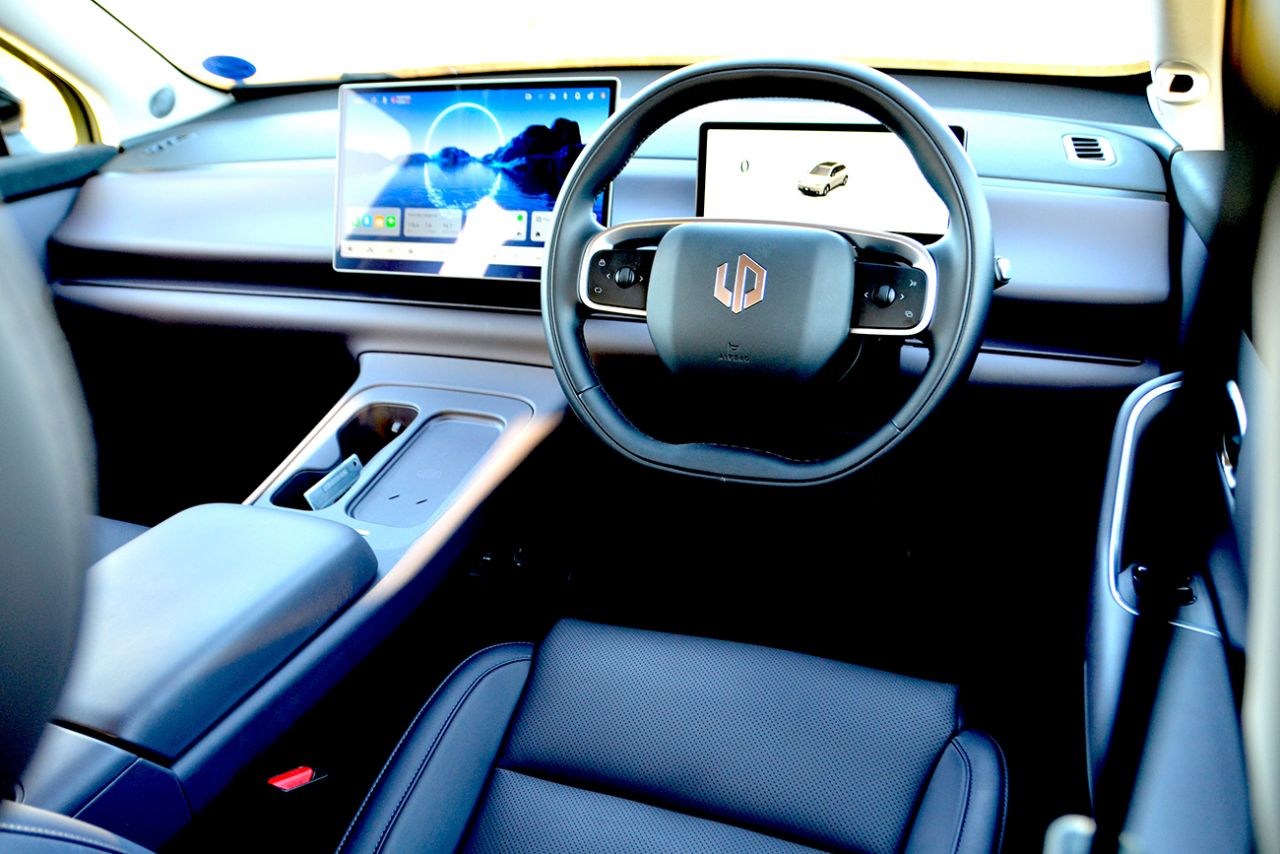
Jaecoo, Leapmotor lose knobs, buttons
So whatever you do in these cars, you must divert your attention well away from driving and the dangers of the road ahead. To concentrate simply on finding, let alone adjusting functions that buttons did so well for decades. All most disconcerting, considering that mobile phones are banned when driving. So how the hell do carmakers get away with forcing drivers to use idiotic control systems that are en main way inferior to operating that cell phone? The mind boggles!
Concerned by this, we let a User Interface designer loose in both cars. She returned aghast. Complaining that the loss of physical buttons, instrumental in using a product without looking at it, make communicating with these cars untenable and inaccessible. Our expert pointed out that established patterns in design determine how humans interact with machines. And that radically changing that flies in the face of logic and common sense.
The Jakobs Law design principal applicable to digital interface, concurs. Innovation should never outweigh the burden of the user learning new a pattern. Both these cars have reinvented the traditional interface to the extent that the systems are compromised and counter innovative enough to make them unbearable to operate and live with.
Driver monitoring… enough already
The few buttons that do remain, like the power windows, are also counter intuitive. Why reinvent the wheel? Moving on to safety, both cars get full suites of surprisingly similar standard features. Including seven airbags, ISOFIX child seat anchors, intelligent autonomous emergency braking, adaptive cruise control, lane centring and departure warning. And the kitchen sink.
Both also get daft and oversensitive driver monitoring systems. These are so dire and infuriating in the Jaecoo that it’s probably a deal breaker. Never mind the J7 also demands you make full stop and push the brake hard to just select gears… enough already!
Moving onto the road, the Leapmotor clearly benefits its Western Stellantis genetics. It feels well enough sorted. Even planted. Refined and quiet, it offers strong traction and impressive performance in natural rear wheel drive balance. Like in the Jaecoo, performance is brisk when pushed, and we also did better than claimed on fuel with both cars. The Leap’s throttle, steering and brakes also do what you expect them to. Especially when compared to the Jaecoo.
Jaecoo, Leapmotor worth their discount?
While we enjoyed the straight petrol J7, Jaecoo has lost its way on the SHS. Maybe it’s to do with Chery and its growing band of affiliates trying too hard to launch too many cars too quickly. But this car is woefully under-developed and clearly lacks a few hundred thousand kilometres of per-production testing. Something that’s becoming more apparent the stronger the tsunami of new yellow cars and technology surges in. The J7 SHS’ brakes are ridiculously over-sharp, the accelerator nervous and jumpy and the steering way too sensitive.
Wholly unacceptable, all this casts yet another slur on Chinese cars. Which is a pity. Because properly sorted, this Jaecoo J7 SHS would be a pretty good proposition. Still, both these cars are also blighted with that ridiculous obsession to rid cars of any semblance of sensible interface and control. No knobs and buttons make them impossible to operate. Their senseless inadequately Mandarin translated and far too small-font and icon displays are ridiculous. Which makes then even worse than the already abysmal industry infotainment norm.
Of course these cars come at that Chinese discount. The Jaecoo sells at a snip under seven hundred grand. And you can get your Leap for about a hundred grand more in this top trim. Yes, they bring some most interesting, great modern tech. Indeed, they look the part. And that price is more than just appealing. But then there are traditional cars form century old brands. Some from Leapmotor’s own Stellantis stablemates, for not a hell of a lot more money, that do most things right. Not just some of the things right some of the time.
Which leads us to conclude that Chinese cars are worth every cent of their discount. Overly ambitious, with systems that are plain and simple impossible to get on with and graced with overambitious tech. That’s often frightfully under developed and rushed into production. Which is why you’d probably also lose out more in the long term in resale value versus an established brand product. We’re not saying that they’re not worthy propositions. But be warned, these Chinese cars certainly are a compromise. – Michele Lupini
Images & Testing: Giordano Lupini
Shootout:	 Jaecoo J7	 Leapmotor C10
                 SHS 		 REEV Design
Engine		 105 kW 215 Nm 	 63 kW generator
                 1.5-litre       1.5-litre
                 turbo petrol    petrol
Motor: 		 150 kW 310 Nm 	 158 kW 320 Nm
System output: 	 255 kW 525 Nm 	 158 kW 320 Nm
Hybrid:  	 Petrol electric Range extender
Drive: 		 DHT auto FWD	 Direct RWD
Battery: 	 18.3 kWh        28.4 kWh
                 lithium-iron  	 lithium-iron
                 phosphate       phosphate
TESTED:
0-60 km/h: 	 3.39 sec	 3.27 sec
0-100 km/h: 	 7.10 sec	 7.21 sec
0-120 km/h:  	 9.71 sec	 10.52 sec
0-120 km/h:  	 19.70 sec	 20.65 sec
400m:         	 15.1 sec 	 15.4 sec
                 @ 148 km/h	 @ 141 km/h
80-120 km/h:  	 4.67 sec	 8.42 sec
120-160 km/h: 	 9.98 sec	 11.45 sec
CLAIMED:
VMax:         	 190 km/h	 170 km/h
Fuel (combined): 4.7 l/100 km	 5.5 l/100 km
CO2 (combined):  31 g/km	 21 g/km
Range (EV):      90 km		 145 km
Range (combined):1200 km         970 km
Warranty: 	 7y 200K	 5y 100K km
Service Plan:	 5y 75K		 5y 100K km
LIST PRICE:   	 R689K		 R799K

How do they compare?
Check with Auto's Test Data right here