New Puma has been around. But that’s a good thing
It may seem new to you, but the Ford Puma has actually been around for a while overseas. Five years, to be precise. But that’s a good thing. Confused? Allow us to explain. A little like good wine, the Puma is ageing gracefully, helped en main by the car industry taking a wrong turn in the time elapsed since this Ford was first launched.
Compared to a brand new small SUV, like its many new Chinese rivals, bottom feeder BMWs, Mercedes, Volvos, and even some more premium Volkswagens, a human being can still operate the Puma and its old fashioned systems. You need to be some other, far more advanced being to operate those cars with any level of competency.
So while its age shows in some perhaps Tupperwareish tacky plastic finishes here and there, like the auto shifter that remains me of an old Sierra GLE, the rest of this Ford is pretty darned impressive. The majority of its ‘dated’ tech is far easier and better to use and operate than those impossible to operate ‘current’ rivals.
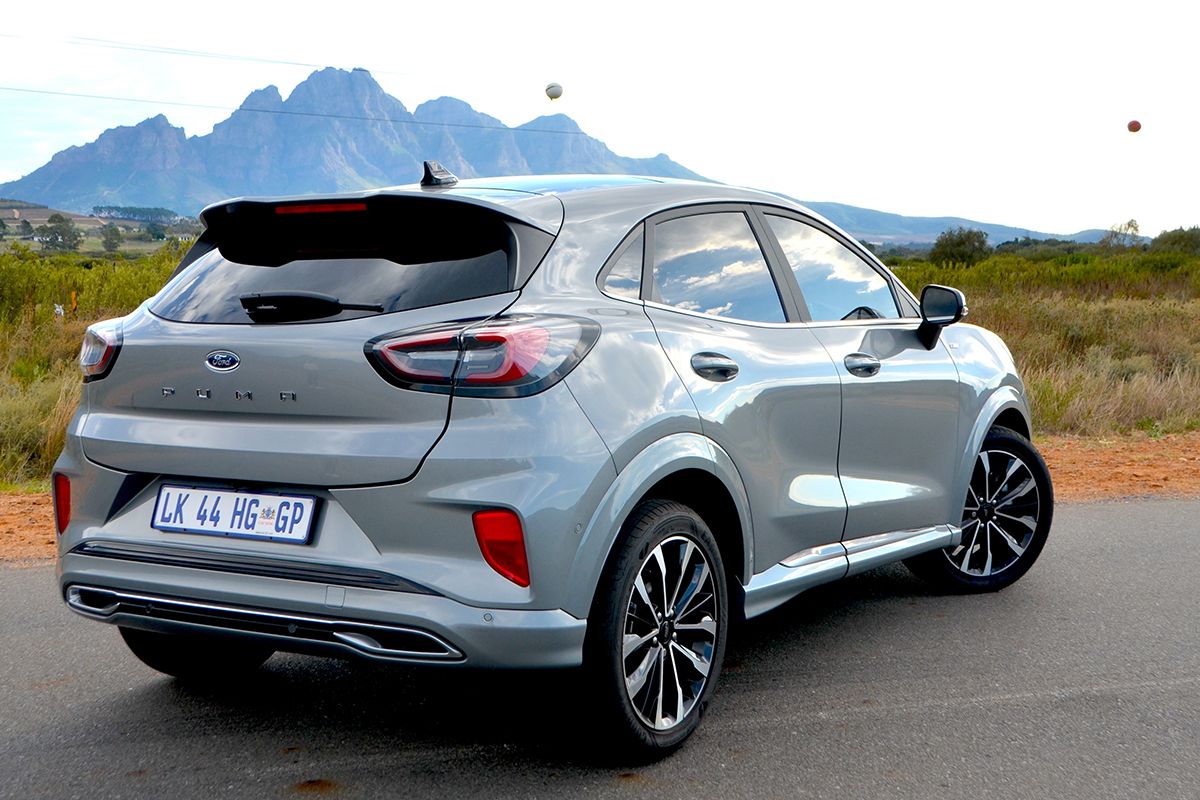
The Ford Puma is not a hatch. It’s a SUV
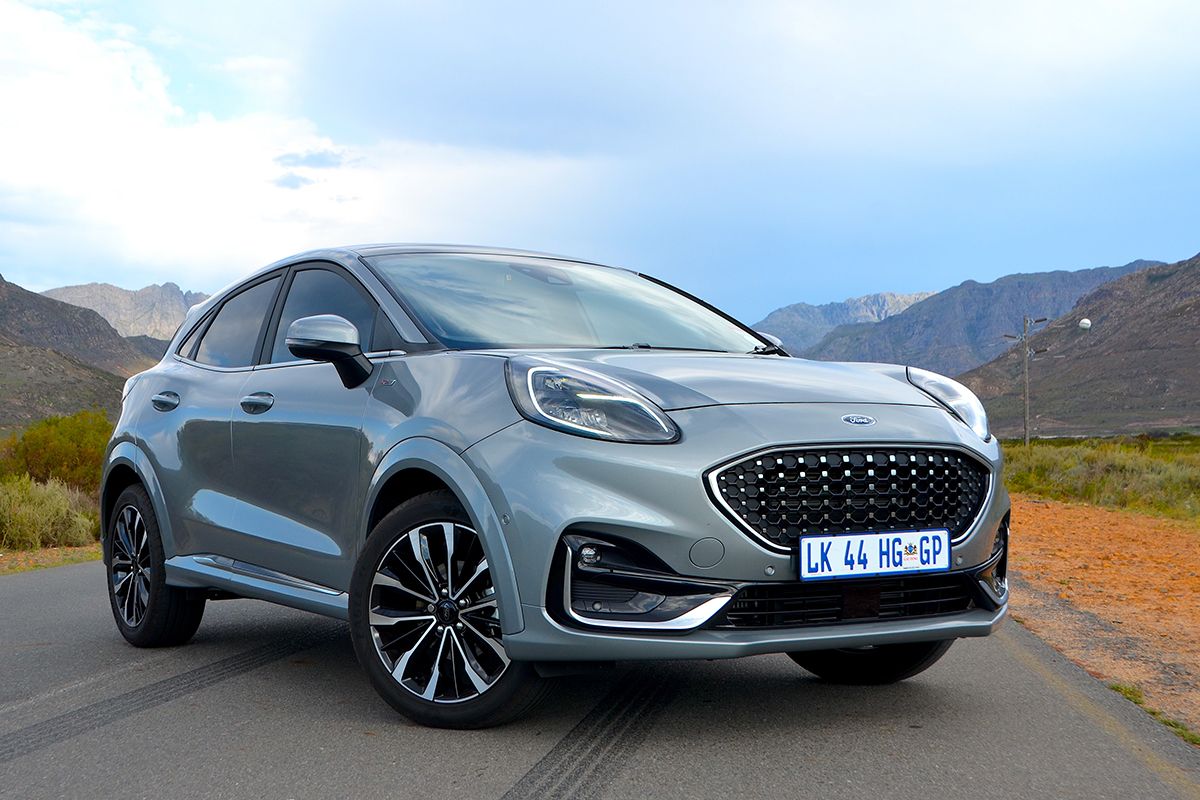
So, as you’d have worked out by now, the Ford Puma came to South Africa pretty late in its lifecycle. It’s also not just a hatchback as you may think at first. Clever styling makes it appear slighter than its prominent actual proportions. And oh yes, it’s the car that Ford’s World Rally Championship cars are ‘based’ on.
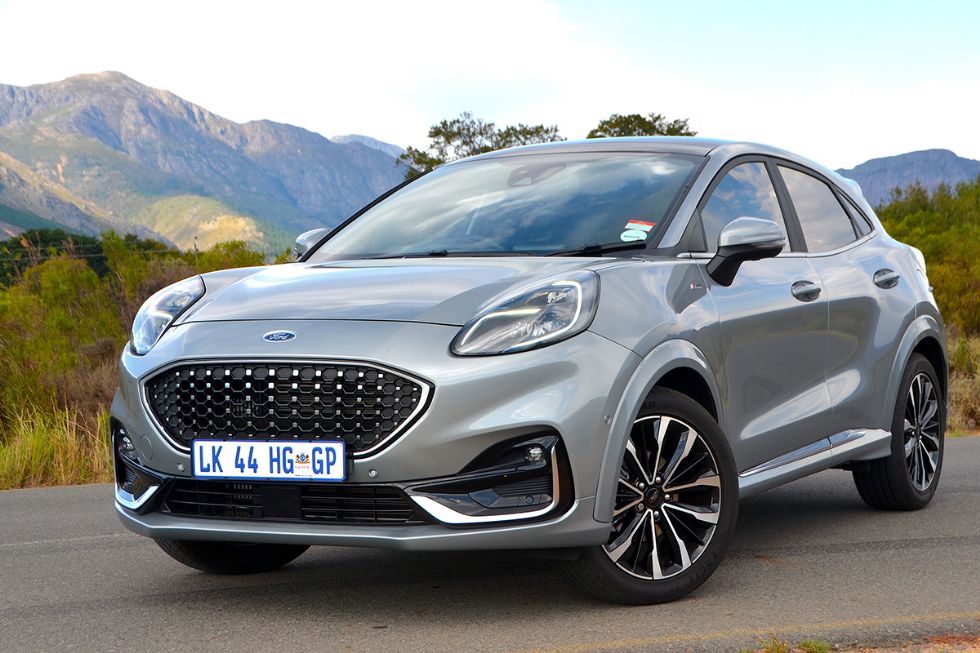
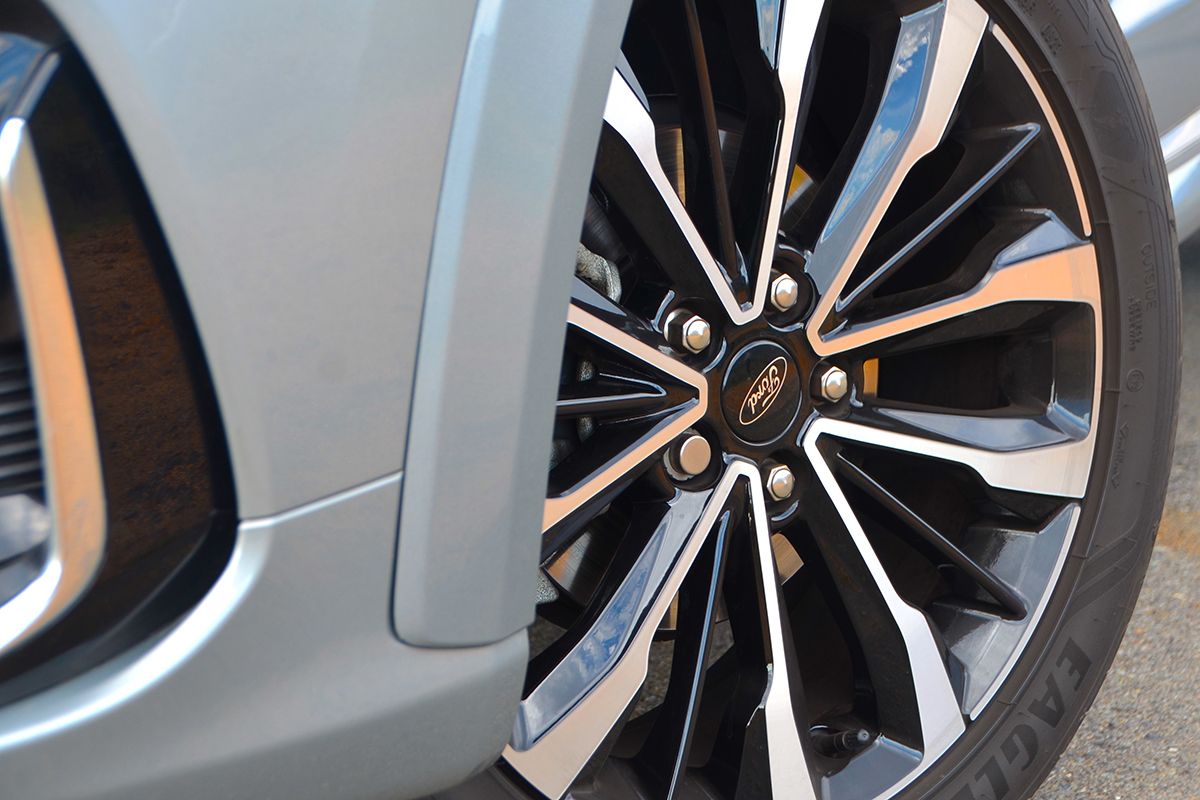
Our bold grey matter (the colour!) flagship tester had sporty 18-inch machined black alloys. Distinct high mount DRL adaptive LED headlamps and a grille to draw Hypercar comparison set the tone to a sensually surfaced stance. Ford calls its styling vibrant. Some say it’s a bit bulbous. Others contend it looks like an Aston Martin. Gorgeous.
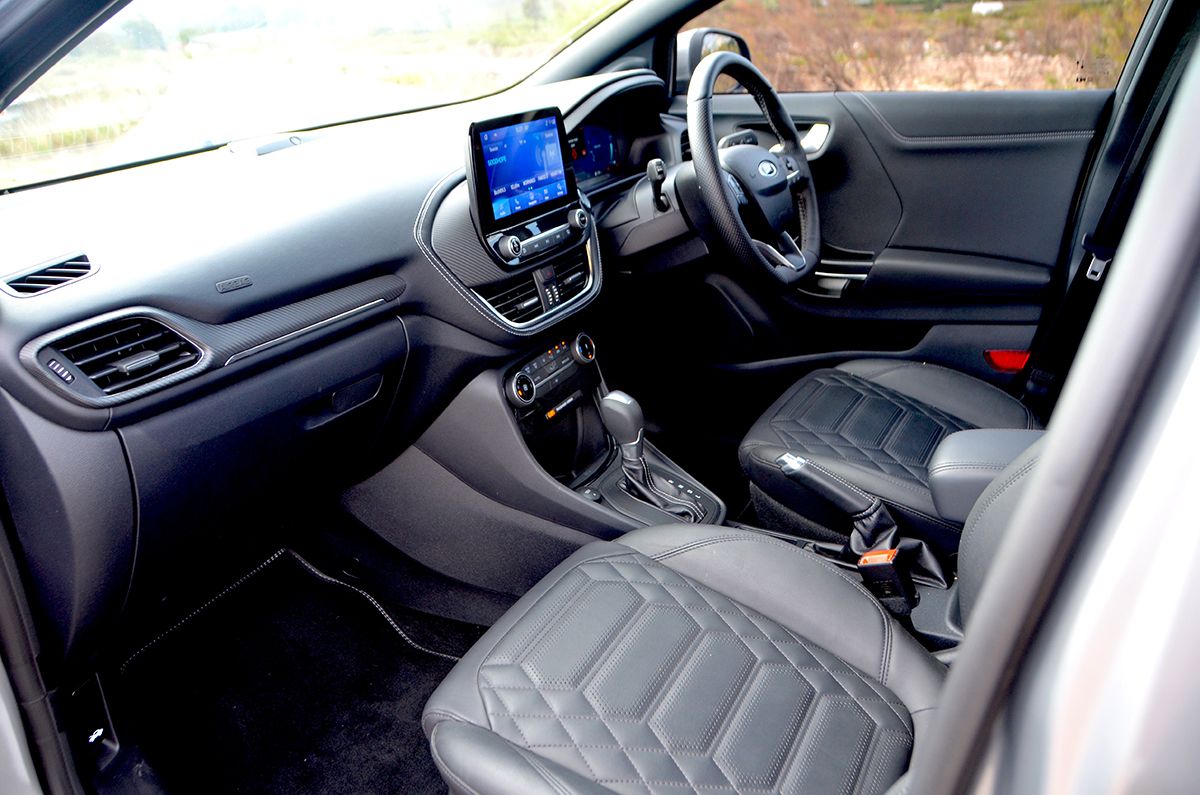
Ford also boasts that Puma brings exceptional practicality and advanced tech. That’s no lie. Step aboard over those Puma puddle lights by night to access a most compelling space. This Vignale has splendid patterned black partial leather massaging sculpted sports seats, alloy pedals and a sporty flat-bottomed steering wheel.
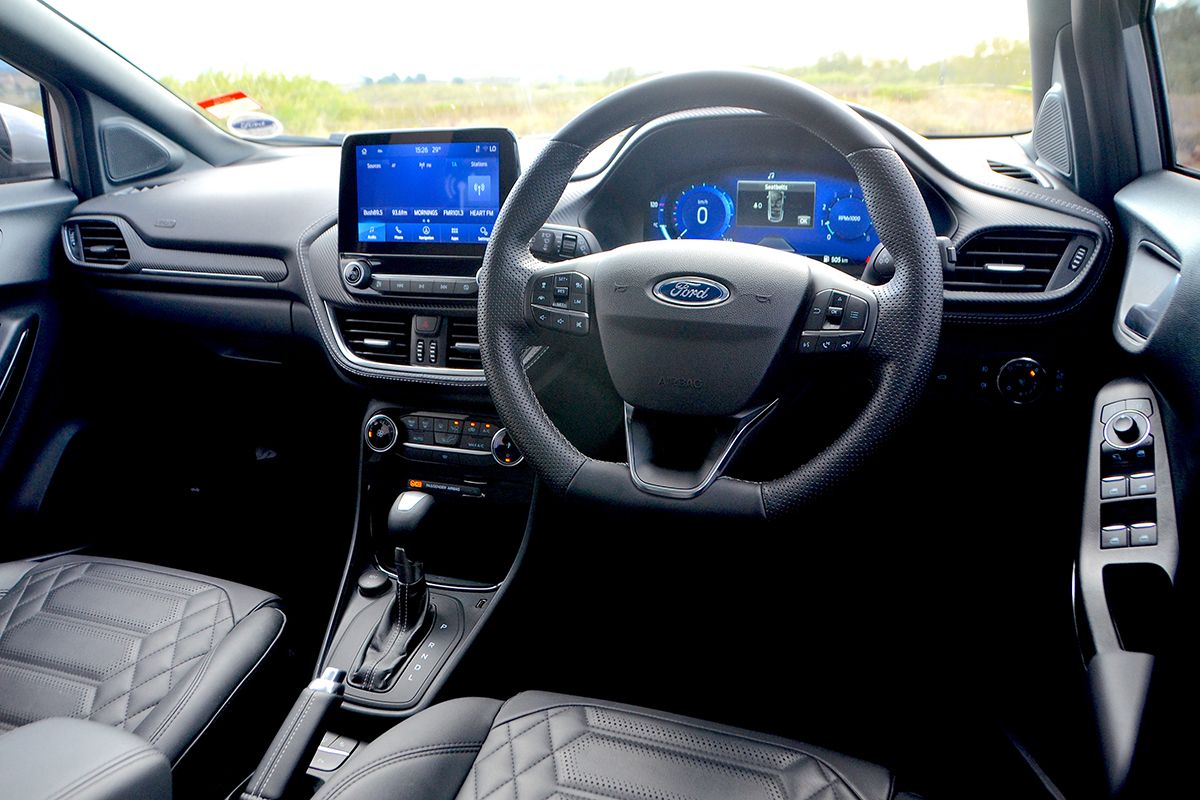
Old school infotainment a new world plus?
The multifunction tiller frames 24‑bit true colour form tech 12.3-inch digital dials. All very blue. Perhaps too blue. But cool blue. All to the sounds of 575-watt10-speaker B&O Surround Sound, under a full-length opening panorama glass roof framed by a sporty black headliner.
Puma’s eight-inch CarPlay and Auto SYNC 3 infotainment touchscreen sits centre stage. As noted up front, this older tech system stands the Puma in great stead in a motoring arena where so many have since wandered astray. While it indeed features pinch and swipe touchscreen control, that’s not the only way to interface with this car.
It has knobs and buttons too. For those of us who remember that we’re just human after all. It also means that Ford won’t have to re-engineer this car to save those stars that Euro NCAP will soon dock from rivals with idiot systems. It has two USBs and a charging pad. It works, but my iPhone took its time to gain juice and got quite hot sitting there.
Multiple Engine of the Year litre turbo triple
Further back, a hands-free tailgate accesses Puma’s hugely versatile load-adjustable 456 litre boot. It will comfortably gulp up two upright golf bags. And even more extraordinary size loads in a so-called Megabox, with the second row seats folded flat.
Moving under the bonnet, Ford’s venerable yet still advanced multiple World Engine of the Year 92 kW 70 Nm litre turbo triple has a seven-speed dual-clutch automatic turning the front axle. No, it’s not all-wheel drive, but this SUV has five normal, eco, slippery, sport and trail drive modes if you want to take it on the sticky stuff.
A shocking majority of SUV owners never wander off the tar anyway. MacPherson strut front and twist-beam rear suspension features sport tuned springs and large-diameter dampers. These sport underpinnings bring confidence-inspiring driving on surfaces where this car will spend the vast majority of its life.
Puma has limousine level spec, safety
That said, it’s pretty decent off the road. It even had some people comparing it to a Range Rover. One friend recently drove a Puma on a road trip that included a fair amount of dirt driving. Her husband was ready for the complaints. Instead, he got compliments about how solid the Puma is, and how it drives like a big car.
Puma safety includes a lane-keeping alert with departure warning and road edge detection that interferes with the steering. We drove ourselves batty trying to switch that bit off. It’s easy when you know how though. Just tap the end of the right steering stalk. We’d prefer it stayed off, but its’ simple enough to extinguish every time.
There are also comprehensive standard pre-collision and post-collision braking systems. This flagship even adds an optional Driver Assistance Pack with stop & go adaptive cruise control. It uses radar and a camera to automatically maintain a safe distance from vehicles ahead, stop and even get going again.
Late Puma much better than never
Don’t forget all the safety regulars from ABS EBA braking to electronic stability control, driver fatigue monitor, blind spot info with cross traffic alert, and even a straight and perpendicular active park assistant. Add hill launch assist, tyre pressure monitoring, auto high beam, and central locking with a Thatcham alarm immobiliser.
So yes, the Ford Puma did come very late to this market. But while that would usually be something of a disadvantage versus its freshest rivals on the market, this time the converse is true. Most recent car tech is crap. So being old school, the Ford Puma all of a sudden has its own, in this case, significant advantages.
So while this car’s natural standard of spec and quality trim surprised, it was its buttons and simplicity that made it a star. And that can only be a good thing in this rapidly evolving and hugely significant motoring segment that’s fast becoming the go-to option for most South African car buyers. – Michele Lupini
Images: Giordano Lupini
ROAD TESTED: Ford Puma ST-Line Vignale
Engine: 1-litre turbo petrol I3
Drive: 7-speed double clutch auto FWD
TESTED:
0-60 km/h: 4.47 sec
0-100 km/h: 9.88 sec
0-120 km/h 14.08 sec
0-160 km/h 27.17 sec
400m: 17.2sec @ 132 km/h
80-120 km/h: 7.14 sec
120-160 km/h: 13.09 sec
CLAIMED:
VMax: 185 km/h
Fuel: 5.3 l/100 km
CO2: 121 g/km
Range: 735 km
Warranty/Service: 5y 120K km/opt.
LIST PRICE: R614K


How does it shape up?
Check Auto's Test Records now!