The Chinese make have grown. But so have the rest
September’ NAAMSA new car sales numbers are most impressive. But comparing them to the last five Septembers makes for even more interesting reading. It’s been that long since normality returned after lockdown lifted, which makes this a perfect opportunity to take a far closer look at the car market in general.
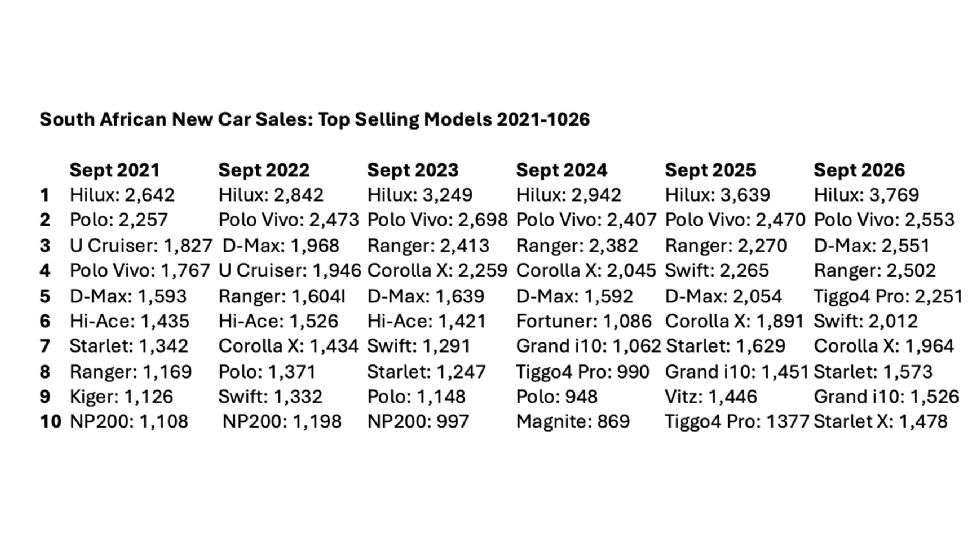
Starting with last month, Toyota remains in complete control on a record 15,366 sales topped by King Hilux selling a monster 3,769 units in September. Suzuki is a distant second at 6,688 units. But pretty impressive considering those brands' backroom dalliances. So you may as well combine then for a 22 thousand odd total.
Volkswagen follows off its best passenger car Polo Vivo, from Ford, Hyundai and Isuzu. But what about those disruptive Chinese? Well the best of them, Chery, GWM and Jetour follow in seventh, eighth and ninth. Ahead of Kia in tenth. But that’s just part of the story. Looking back September by September to 2021, reveals a few fascinating trends…
 Toyota is the undoubted market leader
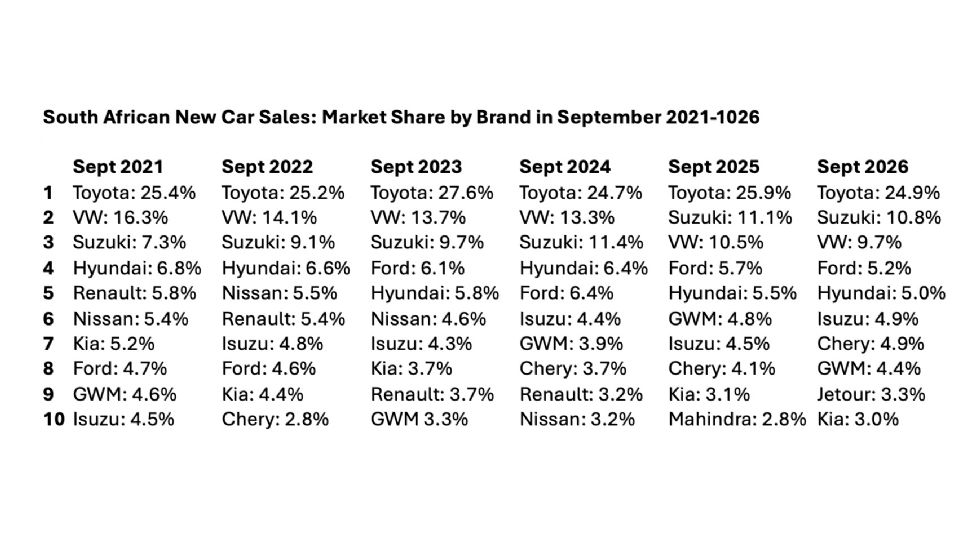
Let's look at market share in the table below. While Toyota showed remarkable stability, hovering at 25% throughout that five period, share percentages have fluctuated behind the market leaders. Like Volkswagen, which eroded steadily from 16.3% in ‘21 to below 10% now.
Suzuki absorbed most of that volume to become the new number two. There was trouble further back. Globally challened legacy duo Renault and Nissan comfortably commanded more than a combined eleven percent back in ‘21.
Yet Chinese badges Chery, GWM and Jetour today collectively control most of that chunk with north of 12% share. Write the rest of the traditional brands off at your own risk, however. They’ve mostly gained in their own right over those past five years.
The Chinese market share charge
Looked at from a market share point of view, Suzuki more than doubled its sales volume since 2021. Yet its market share only rose from 7.3 to 10.8 percent as it toppled Volkswagen from its traditional silver ranking last year.
The anomaly between actual unit and percentage of market sales is courtesy of the Chinese. Only GWM ranked among South Africa’s top ten in September 2021. Today GWM is joined by Chery and newcomer Jetour, with several others bubbling under just outside.
Of course this growth comes against Renault and Nissan’s troubles, the Polo’s slip and the demise of the Nissan NP200. But the rest of the legacy brands also grew. And Hilux, Ranger, and D-Max; Vivo, Swift, Corolla Cross, Starlet and Grand i10 remain top ten sellers see to the Chery Tiggo 4 Pro remaining the only Chinese model to join them.
Still, the Chinese Share is growing fast
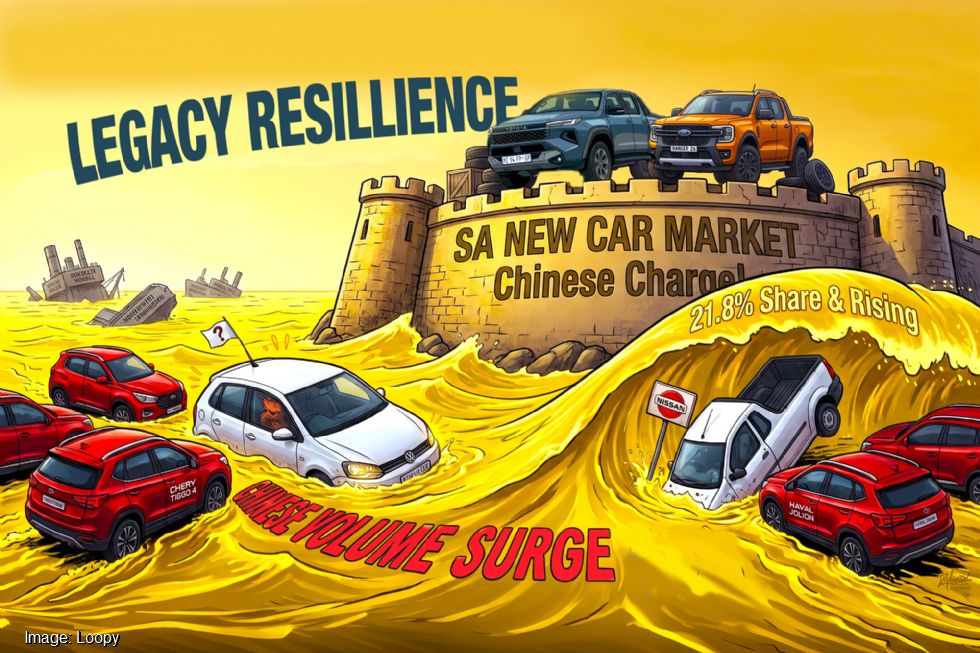
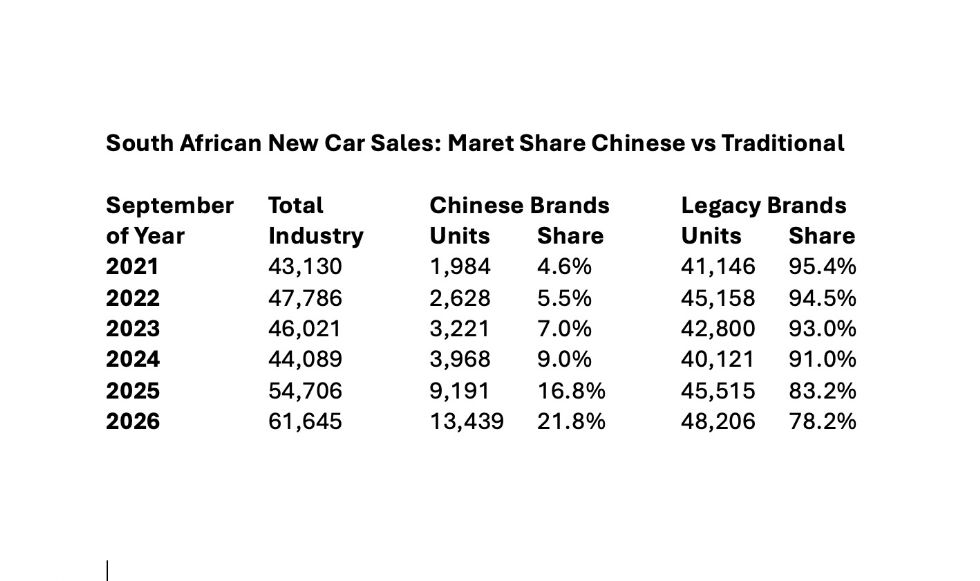
That’s not the whole picture, however. There’s another metric that shows the true Chinese effect. Back in September ‘21, when the entire industry amounted to 43,130 units, Chinese cars only accounted for 1,984 of those sales. Or 4.6 percent of the market.
By comparison, South Africa sold 61,645 new vehicles last month. Of which 13,439, or 21.8 percent of those, were Chinese. So while traditional brands have dropped from 94.8 to 78.2 percent of the market, those legacy brand unit sales at the same time grew from 41,146 to 48,206 units. In spite of yielding volume to the Chinese.
While their market share was greatly dependent on GWM for just 4.6% in 2021, Chinese vehicles today account for an impressive 22% of all South African passenger and light commercial vehicle sales. And that excludes some newer brands that are yet to report to NAAMSA.
Buyer’s market makes it a win-win
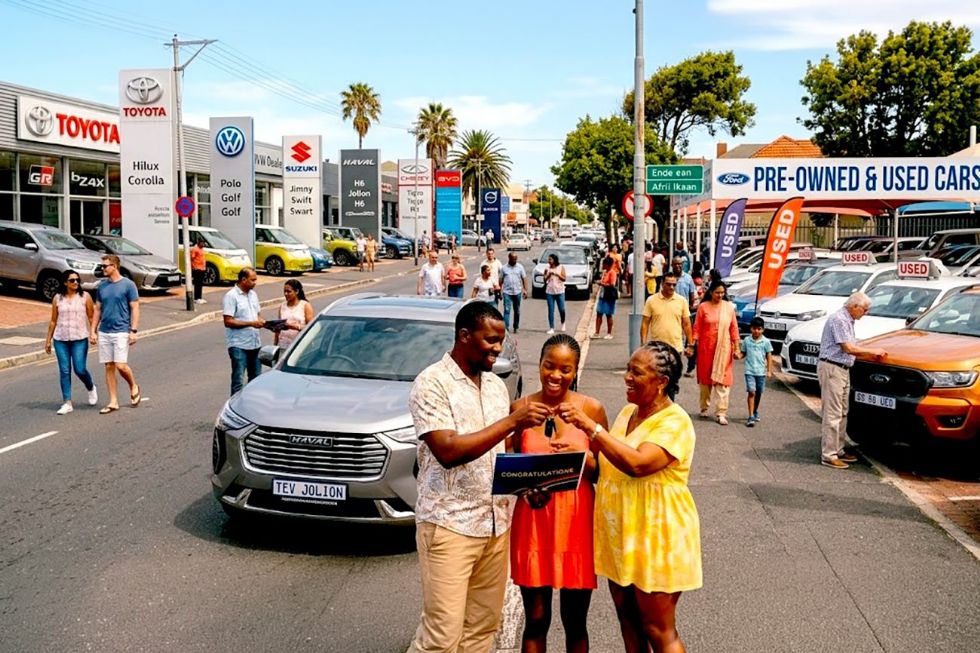
So yes, the Chinese have indeed captured basically a quarter of the South African car market, and a mighty two thirds of all actual growth since normality returned post lockdown in 2021. But by the same token, legacy brands have also grown by 7,060 unit sales per month in that timeframe.
Which means that the Chinese have indeed made a huge impact in terms of market share. But that was not at the expense of the traditional brands' record volume sales in this ever growing South African new car market.
This South African scenario is also unique. Chinese vehicles have traditional brands under pressure in new energy hungry Australia and New Zealand. Even traditional brands in Chile source many models from China for a 40% share. And growing Brazilian EV demand makes it among China’s top five export markets.
Yet back in Msanzi, if anything, Chinese brands appear to have unearthed a previously untapped market niche across the entire market, in the nether land between the traditional new and used markets. Even if the used market continues to grow, albeit on diminished resale values.
But unlike elsewhere, while South Africa's traditional carmakers’ may have yielded market share to their bargain new Chinese rivals, legacy brant sales volumes have actually also grown. Which makes this a buyer’s market a win-win for everyone right now. Enjoy it while it lasts! – Michele Lupini