Perfect far away, does this EV have a place in Msanzi?
Norway is a land of contrasts. In many more ways than one. But if you like EVs, contrary to where we live, there’s probably no better place to drive an electric car. But before we get into Norway’s EV specifics, let’s first take a closer look at those tree hugging Vikings.
Did you know that Norway is Europe’s largest oil producer? The country pumps 2 million barrels of crude per day to supply fellow European countries with petrol, diesel and natural gas to burn as they please. Norway plans to continue supplying this level of its North Sea carbon source for the next half century at least. Ironically, Norway is at the same time so hell bent on electric vehicles that it’s on the verge of achieving its impossible dream of 'passenger car zero-emissions'.
A world record 97 percent of all new cars sold in Norway in 2025, were EVs. Norwegian EVs are exempt from stringent import duties and the stiff 25% VAT rate. They benefit aggressive government incentives from half price tolls to parking and ferry charges and dramatically preferential electricity rates from its principally very clean hydro powered grid. 80% of owners charge at home, but Norway also has 30,000 public fast charging stations.
Norway looks after EV owners very well
Combustion car owners on the other hand pay full, draconian tax, customs and the rest. They’re also subject to Norway’s killer additional carbon taxes and among the world’s most expensive fuel prices. Approaching R50 a litre. What they fail to tell you is that the majority of Norwegians have kept their gas guzzlers as second cars. Still, you’d swear that Norway never produced an ounce of crude, wouldn’t you?
Outside of squeaky clean crude pumping Norway, Nepal is second best at EV adoption at 76% ahead of Hong Kong, Denmark, Sweden and Ethiopia. Which banned ICE imports in 2004. The Netherlands, China at 53% but the world's largest EV market by volume, and Finland follow at over 50% battery cars among all sales last year.
Belgium and the UK sell around a third EVs, and Germany, Austria and France a quarter. Italy, Canada and Australia sit below 20% and in the United States, Brazil, Mexico, and South Korea get down to less than ten percent EVs among all new cars sold in those markets. Japan, New Zealand and India clearly have an aversion to battery power. Less 5% of cars sold there are EVs.
EVs simply don't figure in South Africa
So what about sunny South Africa? Well, zero-point-two percent of all new cars sold right here in Msanzi in 2025, were full EVs. Yes, you read that right. We bought two EVs for every thousand cars sold here last year. And no matter what anyone ever tells you, that will probably never change.
There are many reasons why EVs cannot make it in SA. Total regime apathy for starters. Never mind, we only have 500 charging stations. Of which less than 20 are 150 kW or better ‘fast chargers’ capable of juicing it up in half an hour. Yip. 20 fast chargers to service 65 million people across our beloved country’s 1.2 million square kilometres.
To put that into better context once again, 385,000 square kilometre Norway’s 5.5 million people on have over twenty thousand 150 kW or better chargers to literally boost their battery cars up in minutes. Has the penny dropped yet?
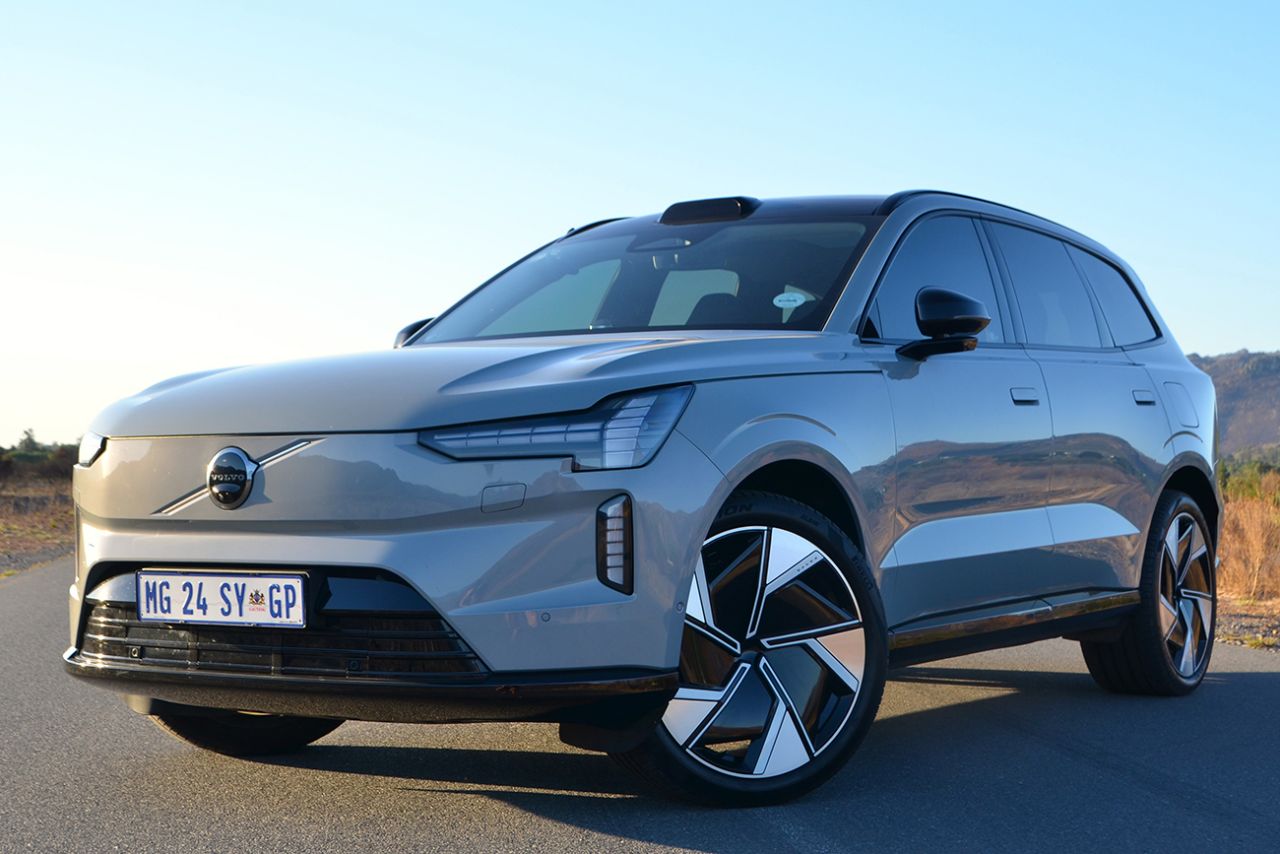
Took a day to add 150 km on a local charger
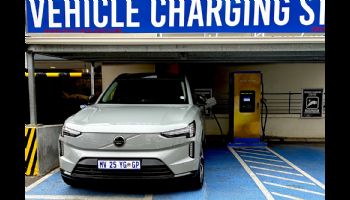
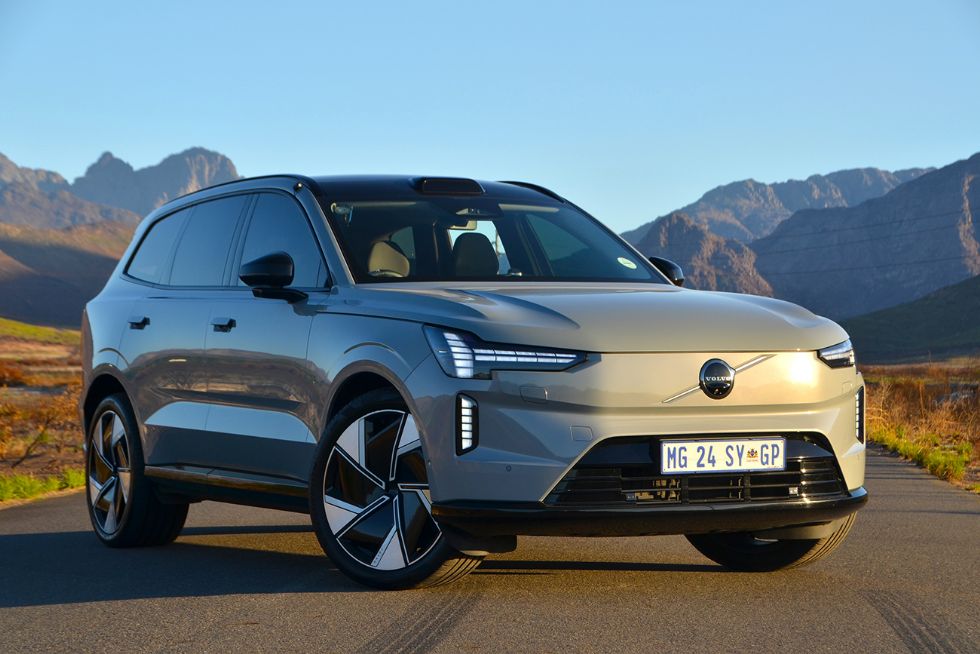
So, let’s start with charging then, as we take a peek, or rather a poke at this stunning looking monster R2.6-million EV Volvo EX90 that prefers a 250 kW DC fast charger. Of which we understand that there are presently none in South Africa. Speaking of which, we have one EV charging point in our little village. An average South African 20 kW device sitting under some shady trees adjacent to estate vineyards.
Needing juice, we left the Volvo on charge there for the entire fourteen hour day. And we came back to princely 150 km more range than when we left it there. For context, to add 150 km range to a Volvo XC90 requires about 15 litres of petrol. Our local BP pumps at 50 litres a minute. So it takes around three seconds to do what our EV network took a day to achieve...
Of course the die hards will tell us that they have their own solar and a wall box, bla di bla di bla. Ja. They conveniently forget to mention that their solar rig cost well over a million bucks to install. Or that won’t work properly, and often at all for most of our dark winter. And did we mention loadshedding? You’d already forgotten about all that already, hadn't you?
Sadly for the otherwise stunning Volvo EX90, South Africa’s diabolical EV environment is not its only challenge. This car is totally devoid of buttons or knobs. It even demands you first select the window you want to drop before actually dropping it. To adjust the mirrors, up the fan or do any other function your human brain is wired to do by twirling a knob or fingering a button, you must delve deep into virtual layers and and hidden tabs to achieve that.
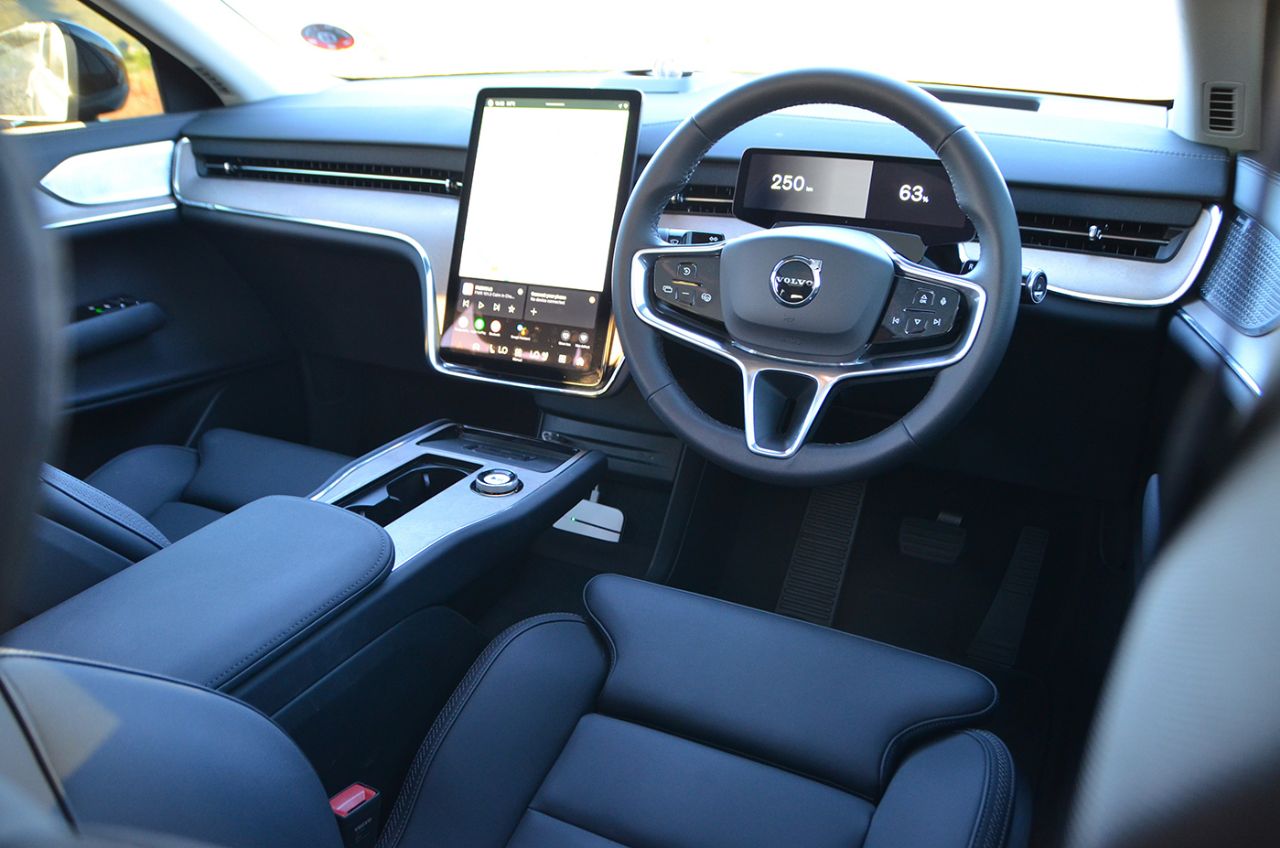
Someone forgot about the knobs!
Not that you’ll get anything right. Especially motoring on an average, bumpy South African road. To do so without mowing down a few pedestrians or wandering into the oncoming lane while this idiot buttonless system demands all your attention and more, you must pull up who the hell knows where to figure its impossible rote.
Really and truly, this is the most ridiculous, most dangerous and illogical interface we’ve ever come across in a car. Makes as much sense in a ‘safe as houses’ Volvo as those squeaky clean Norwegians do driving EVs while crudely pumping billions of barrels down to their European neighbours to burn.
Which also makes all this car’s immense safety benefits pretty well irrelevant. Except of course that it incessantly tells you to pay attention while you desperately search for the faux glove box deep in cyberspace or try figure out how to alter a wing mirror angle. Volvo safety? Yeah. Pull another one!
Not a great South African motoring solution
But wait. There’s another most puzzling aspect about Volvos in South Africa. For whatever reason, they do not connect seamlessly to the internet in order for most functions to even operate. They use an aftermarket dongle hanging off the dash to connect. Three times in our week with this car, its dongle hung and had to be yanked out its USB to reset. Is that something you need in a two and a half bar ride?
Anyway, utterly frustrated by our inability to interface with the car, or gather enough energy in it to drive anywhere worthwhile once the battery sapped far quicker than Volvo wants you to think it would, we tried our best to find some redeeming features. And sadly, most of the rest of it is brilliant.
We say sadly, because with its combined failings of being an EV in Africa and practically impossible to effectively operate, we’d never bother wasting our time with a car that simply doesn’t fit any part of our South African lifestyle. If you want a big Volvo that gets it half right, save the million. Get a petrol XC90. Or move to Norway. Maybe this one will work there. – Michele Lupini
Images & test data: Giordano Lupini
ROAD TESTED: Volvo EX90 Twin Motor Performance
Total output: 380 kW 910 Nm electric
Front Motor:  180 kW 420 Nm
Rear Motor:   200 kW 490 Nm
Motors Type: Permanent magnet synchronous
Drive: Direct AWD
Battery: 400V 111 kWh lithium iron
TESTED:
0-60 km/h:        2.22 sec
0-100 km/h:       4.37 sec
0-120 km/h:       6.01 sec
0-160 km/h:	  10.54 sec
400m:             12.7 sec @ 173 km/h
80-120 km/h:      2.85 sec
120-160 km/h:	  4.53 sec
CLAIMED:
VMax:             180 km/h
Energy:           20.7 kWh/100km
CO2:              0 g/km tailpipe
Range:            615 km
Warranty/Service: 2y unl./ 5y 100K km
LIST PRICE:       R2.65M

How does it shape up?
Check Auto's Test Records now!