48V toe in water a sign of Hybrid Hilux things to come?
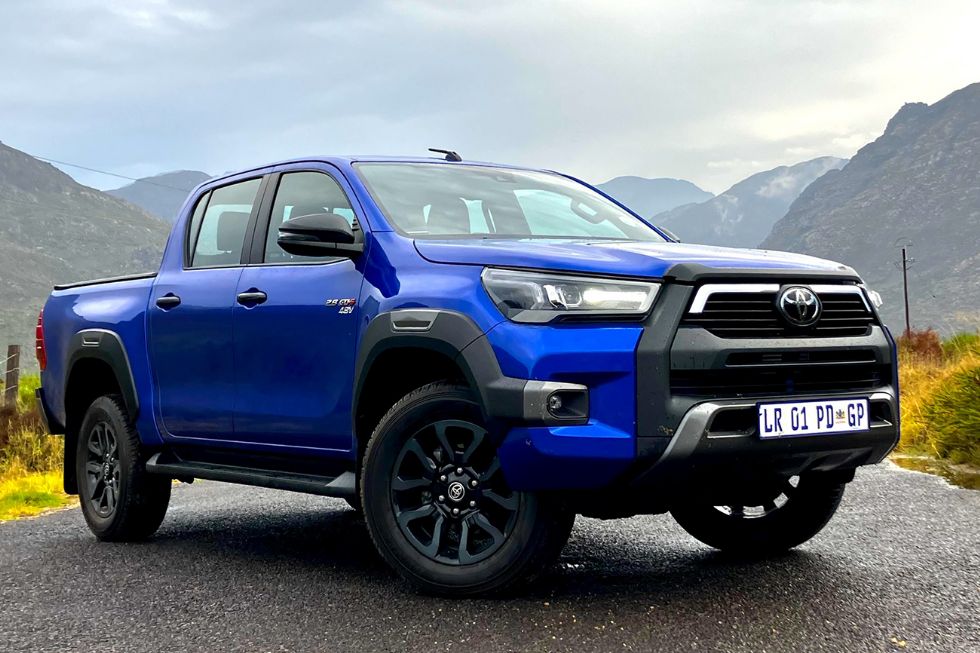
Looked at with a cursory glance, this Toyota Hilux looks quite the part with its most recent Raider facelift. But as they say, never judge a book by its cover. This one is a little different. Its the diesel electric Hilux 48V.
Toyota doesn’t call the electrified Hilux a hybrid, however. The 48V is rather a beefed up start-stop system. Its 12 kW and 65 Nm of electric power comes courtesy of a starter-generator mounted to the 2.8-litre turbodiesel four-pot that’s all the rage in Toyotas across the range right now. It works in the background to secretly harvest braking energy through a belt-driven motor generator.
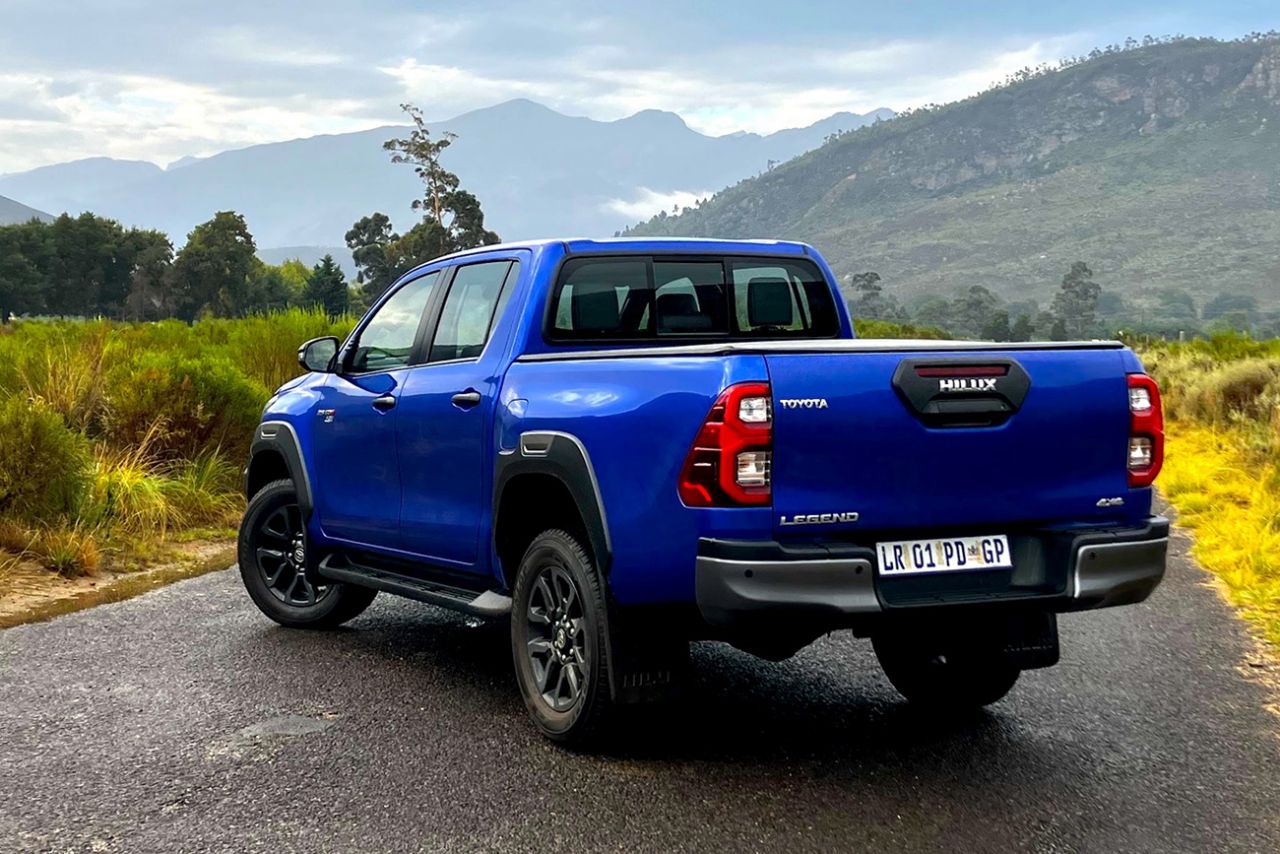
Seamless 48V electrification works in secret
More a helper than a hybrid per se, it cannot power the bakkie on its own. Or even take over when running. But it seamlessly gets on with business. And it’s likely the first tiny toe in the water of far more extensive future Toyota Hilux electrification.
The 7.6 kg 48V battery sits under the rear bench. In typical Toyota hybrid style, the lightweight cell charges up under deceleration and braking and deploys a 5% efficiency boost under power. Added to Hilux’s 2.8 GD6 turbodiesel, the 48V motor ups total power to 162 kW and 565 Nm. In reality, it’s among the better start stop systems out there and works quite intuitively. You hardly even know it’s there.
Toyota says it makes Hilux more comfortable drive in traffic, with quicker throttle response and a quieter stop-start-up, but it also improves off-road ability. That’s thanks to electric power delivering smoother acceleration on tough terrain and the regenerative braking system improving stability on hill descent. Can’t argue with that.
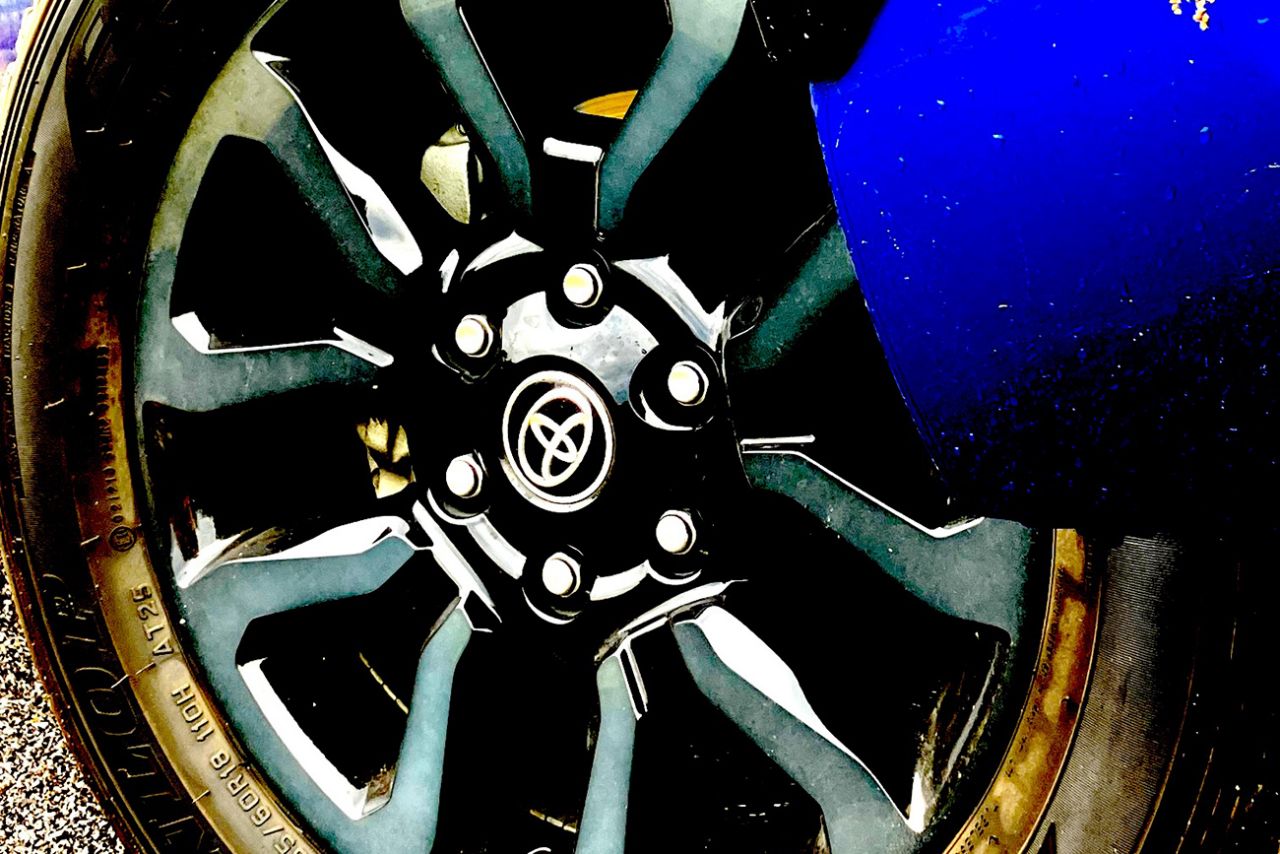
Toyota claims 7.4 litres per 100 km
On the road, it may be slight, but you feel that electric 12 kW and 65 Nm at work, especially on pulling away, and also when driving slowly. More so while doing a little off-road work. 48V was also quicker than the last Rader we tested back in 2019. For the record, that bakkie ran to 100 km/h in 10.19 seconds, did the quarter-mile in 17.1 seconds at 130 km/h, and pulled from 80 to 120 km/h in 7.83 seconds.
Compare those numbers to what 48V achieves in the block below. And also consider. So is the new 48V system in the Hilux? We’d say definitely so. So technically, the good old Toyota Hilus remains petty well competitive. And as noted up top, it looks quite the part in spite of its growing length of tooth.
Hilux 48V hauling ability remains unchanged. Toyota also claims an unchanged 7.4 litres per 100 km and 195 grams per kilometre CO2 for the 48V. But we think they’re just being coy on that.
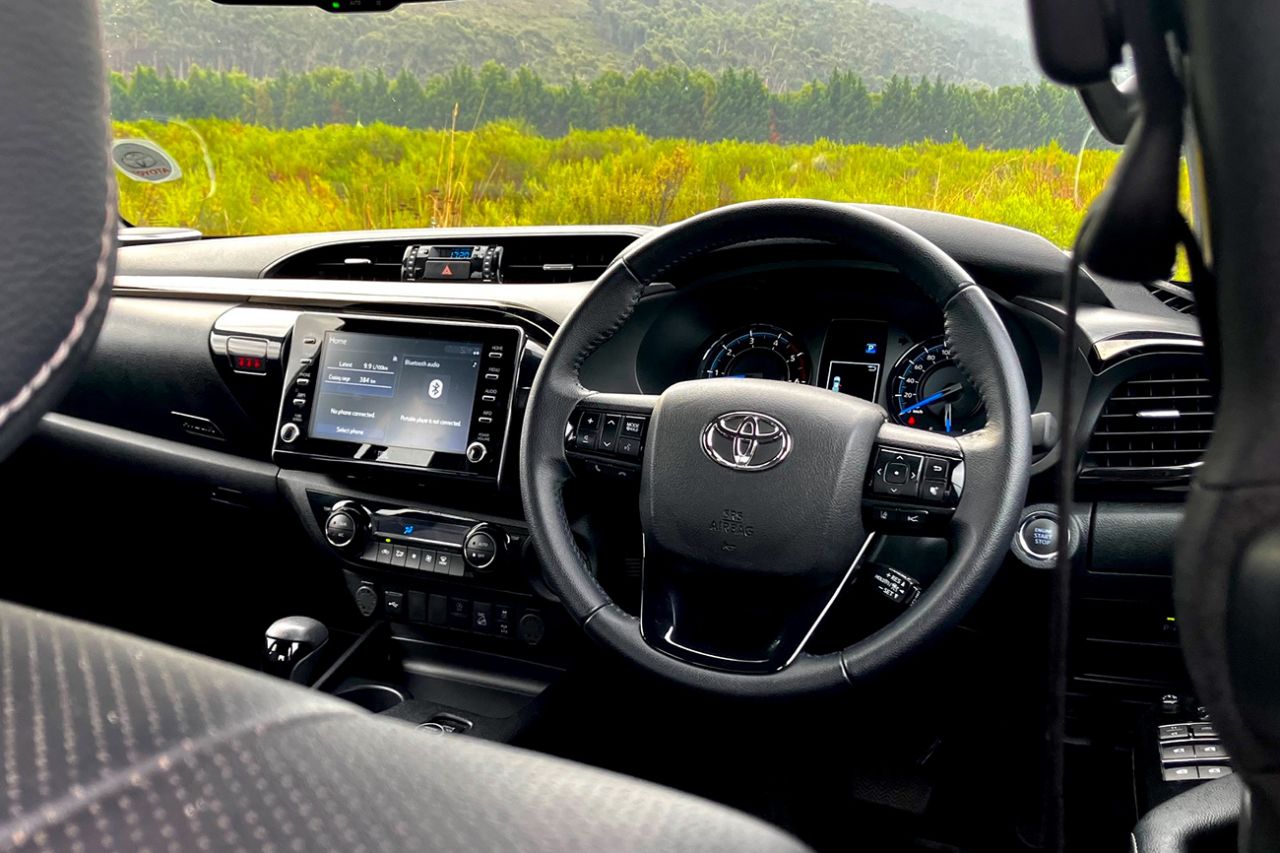
Raider spec looks great. what about the rest?
improvements to allow wading at depths of up to 700 mm. And if this Raider looks different, you’re right too. This is the recent facelift. We quite like it. Set apart by a handsome face with sculpted headlamps and an edgy trapezoidal grille and bumper, the Raider has its own signature look. More practical graphite-coloured 17” alloys running pliant 265-65-R17 rubber. All good.
But what about the rest of it? Nothing much has changed inside. Packing Toyota’s most recent seamless 8-inch floating screen centre stage, it boasts CarPlay and Auto mirroring infotainment. It also packs Google Maps and Waze, as well as Apple Music, JOOX, Spotify, and SoundCloud music streaming, and a reverse camera too. Wireless telephony is supported via Bluetooth with a USB input.
But in this day and age, ‘most recent’ just doesn’t cut it anymore. That comfy, all too familiar Hilux cabin is but dated and some of its systems quite annoying in the long run. For instance, you cannot use CarPlay without a cable. We also wish we could find a way to have all four doors unlock at once, without having to delve deep into some dark cyber cave. And the rear tailgate really should be part of the remote central locking .
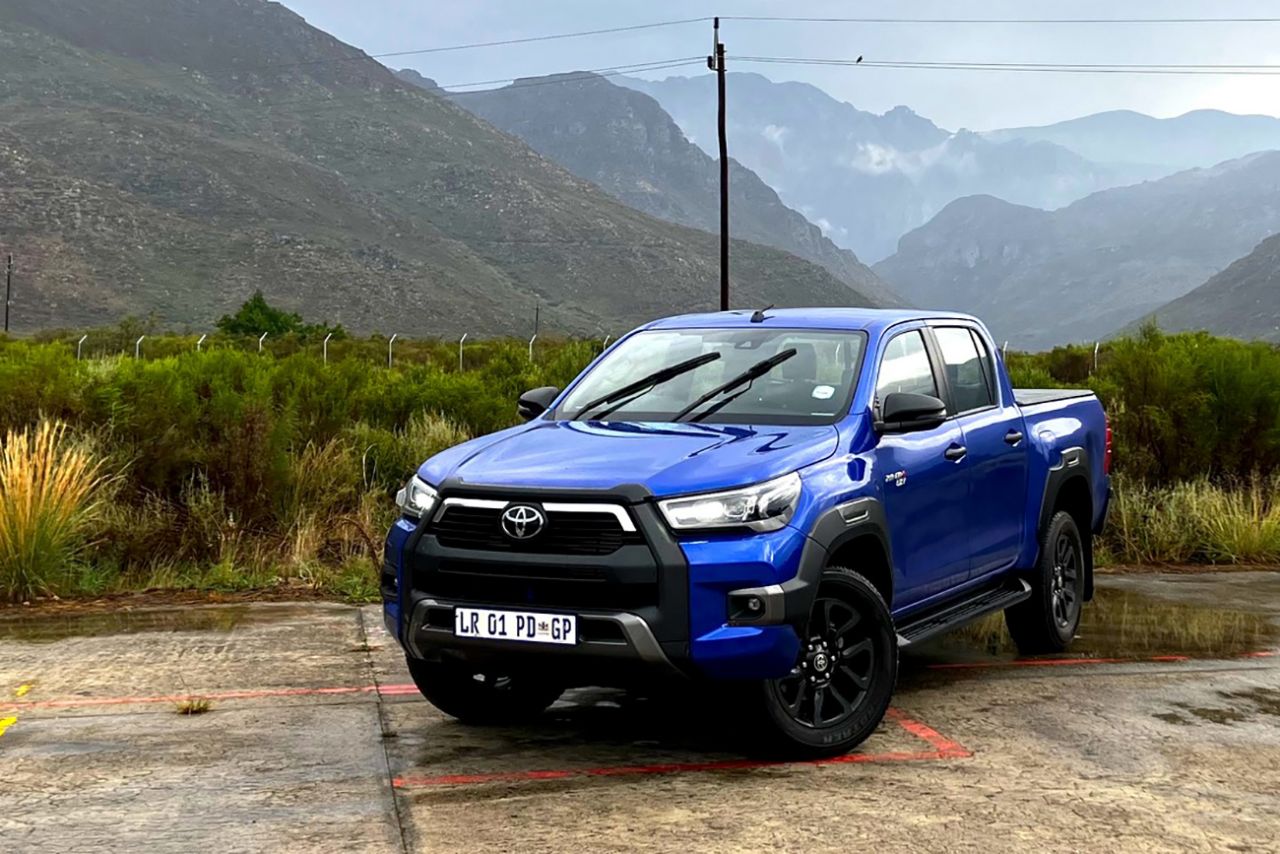
Efficiency, performance keep it interesting enough
We trust all of that, and a lot more will be resolved when the New Hilux arrives, plausibly for an early 2026 SA release. In the meantime though, this 48V Hybrid Hilux Raider toe in the water should suffice very well as a stopgap. It adds a little efficiency and a performance to keep it interesting enough for now. – Michele Lupini
Images & test data: Giordano Lupini
ROAD TESTED: Toyota Hilux 2.8GD-6 48V DC Raider
Engine: 162 kW 564 Nm 2.8-litre td I4 mild hybrid
Drive: 6-speed automatic RWD
Payload           865 kg
Braked Towing     2750 kg
TESTED:
0-60 km/h:        4.09 sec
0-100 km/h:       9.75 sec
0-120 km/h        13.46 sec
0-160 km/h        26.29 sec
400m:             16.8 sec @ 134 km/h
80-120 km/h:      6.89 sec
120-160 km/h:     12.83 sec
CLAIMED:
VMax:             175 km/h
Fuel:             7.4 l/100 km
CO2:              195 g/km
Range:            1075 km
Warranty/Service: 3y 100K/3 service 90K km
LIST PRICE:       R785K

How does it compare?
Check with Auto's Test Data right here