Square Triton looks come with a performance penalty
The old Mitsubishi Triton stunned us. It was the quickest diesel double cab we’d tested. Its Italian Fiat twin verified that fact. And the newer Triton defended that crown too. That made it our Best Bakkie against some pretty heavy hitters, so we have always liked the Mitsubishi Triton.
But that also means that this squared off now one, which arrival we have long trumpeted, has some big shoes to fill. Does it? Well, read on… Drawing on a 46-year legacy, this all-new sixth generation Triton is completely redesigned from the ground up.
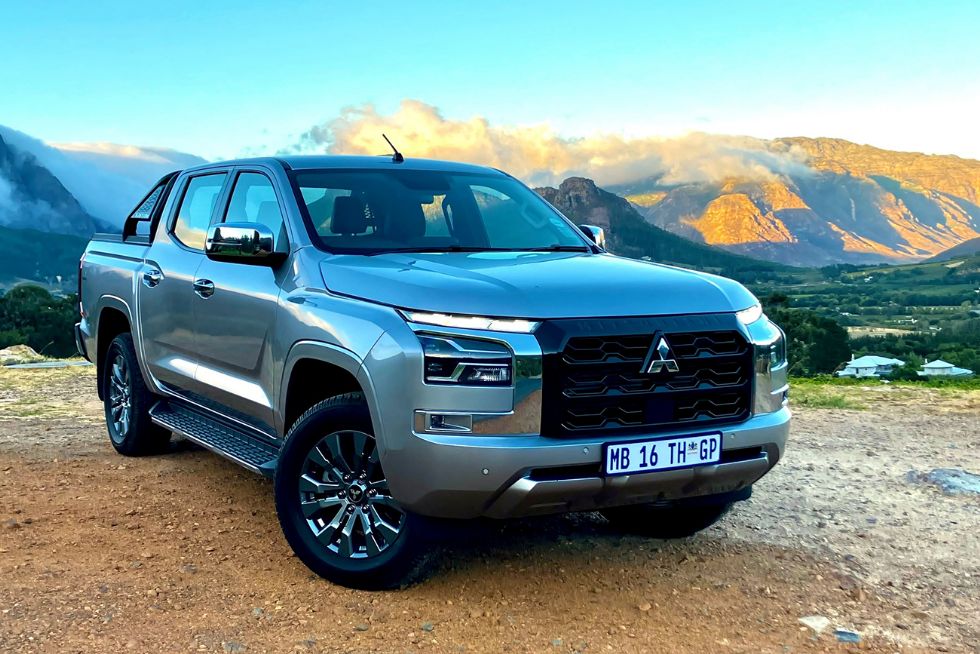
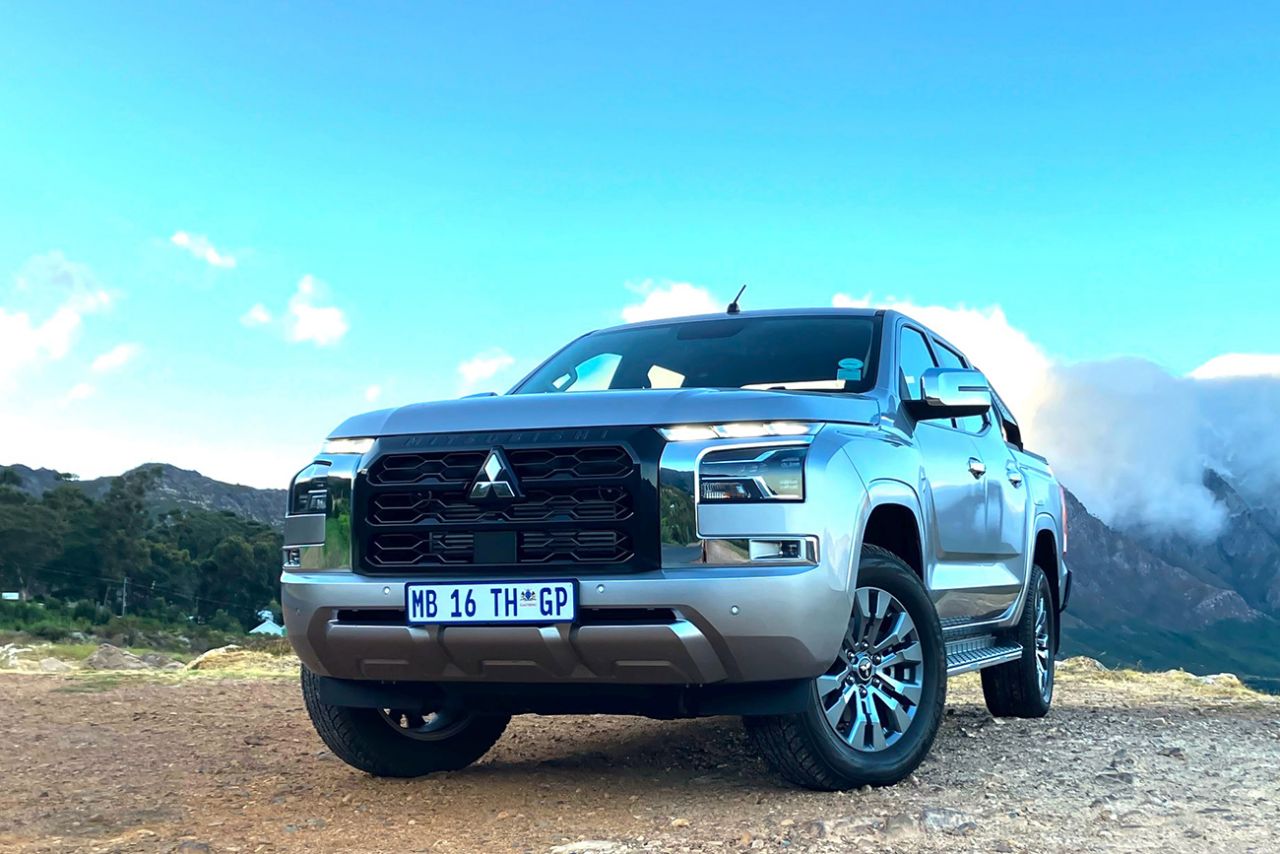
It looks pretty cool and different. Squared off versus the old one, new Triton’s cubist cues are quite different, advanced in this new bakkie world. Based on Mitsu’s Beast Mode design concept incorporating its latest take on Dynamic Shield theme, that a robust 3D grille and triple-L shape DRL LED headlamps deliver a commanding enough presence. With a definite oriental feel.
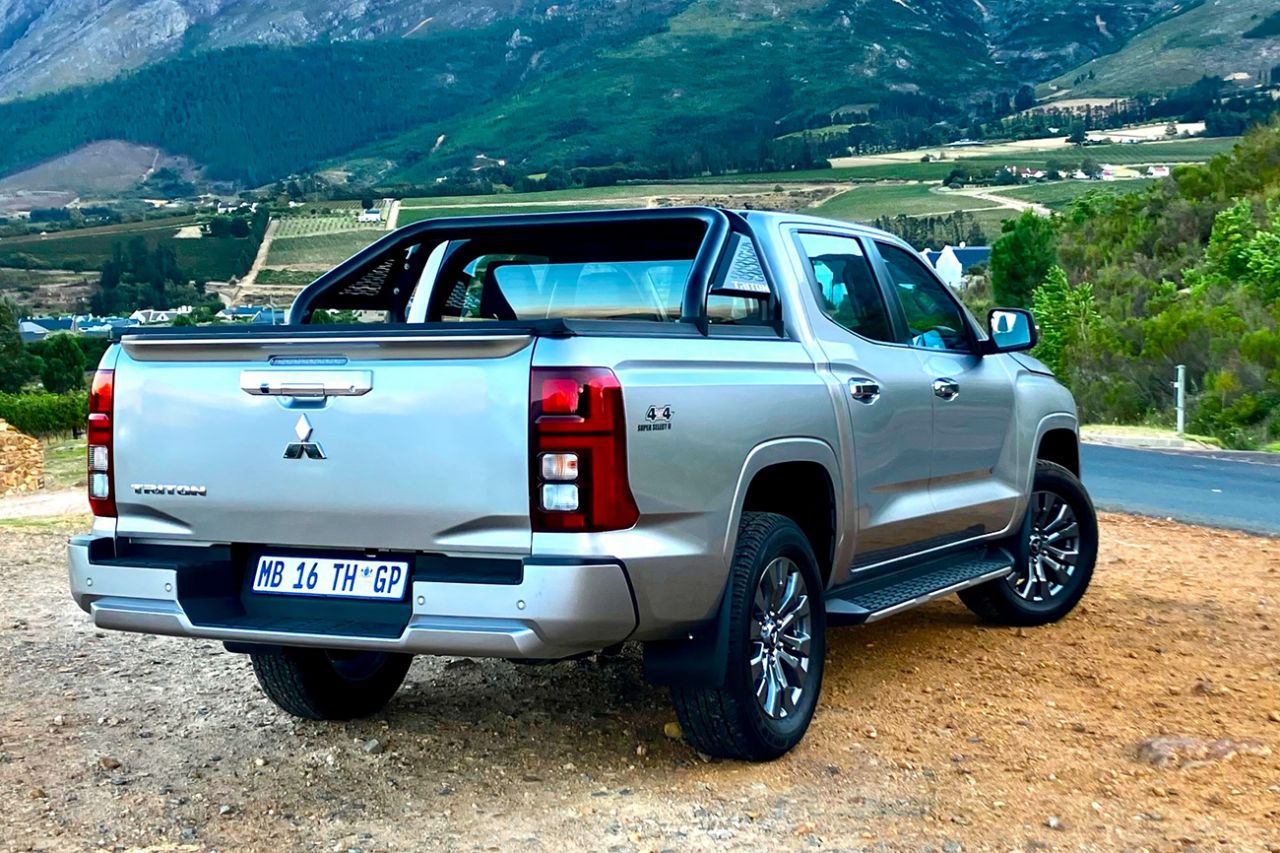
Triton Better at the business end
Improved at the business end too, Triton has a 45mm lower 820mm deep load bin and finally, a market-standard 3.5-ton towing capacity. A practical foothold integrated to the rear bumper eases access to the bak too. Available in eleven derivatives, in single and double cab, 4x2 and 4x4 options, Mitsubishi offers a full range of approved accessories too.
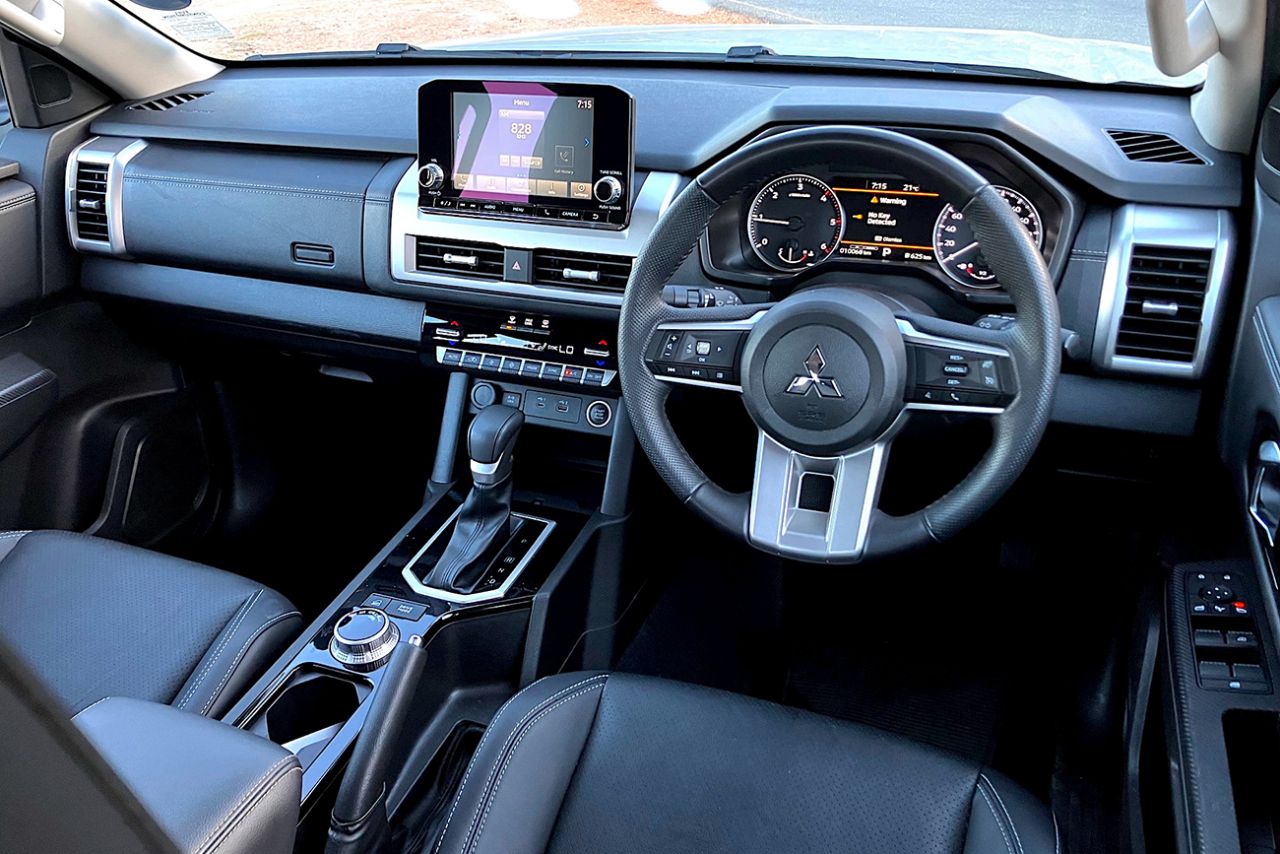
Step aboard and the squared cubist feel continues in a handsome and quite welcoming cockpit. All the right bits are there, not least lots of nice, big, easy to hit buttons and knobs. They in part operate easy-to-read CarPlay and Auto smartphone connective central display screen, while the driver gets bright dials and a seven-inch multi-display.
50mm wider than the previous Triton means more people room and we enjoyed the therapeutic design seats and XXXL cup holders too. The company tells us that Triton’s geometric, spacious and refined cabin uses high-quality materials and advanced noise-reduction technology and features comfy and sturdy Mitsubishi Touch controls to get all basic tasks done.
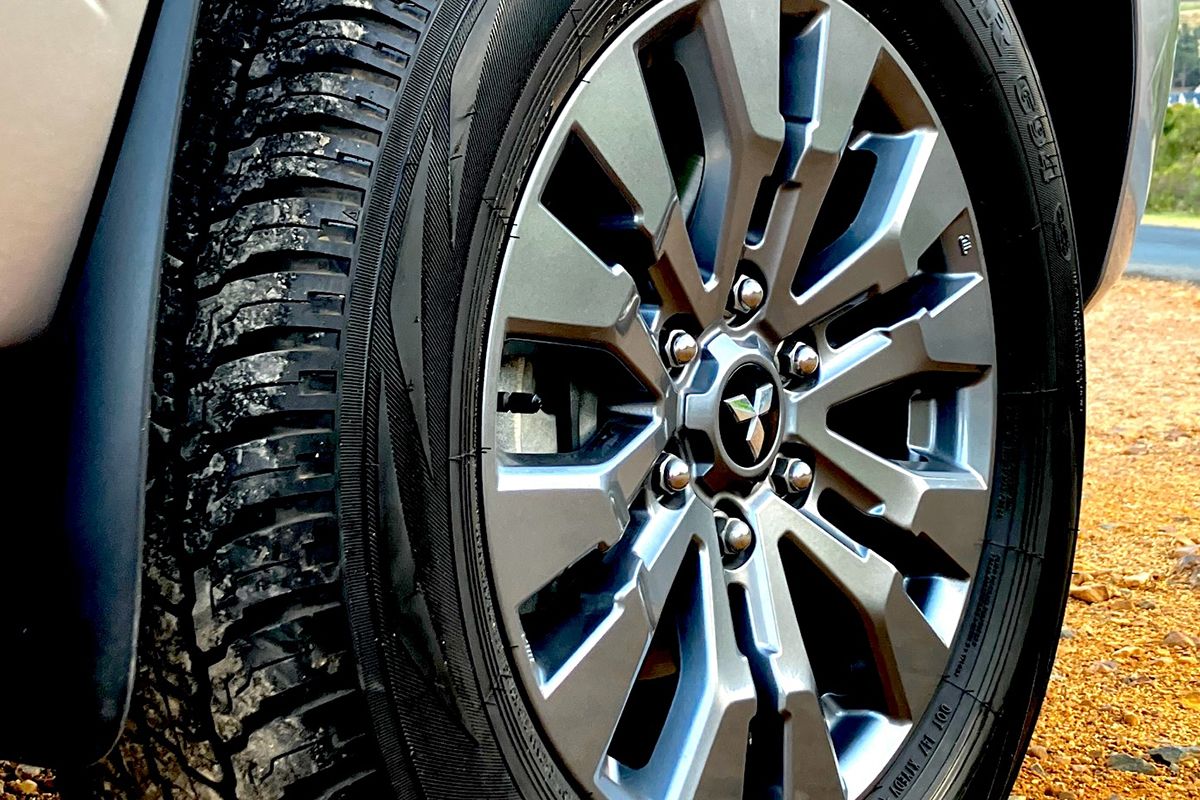
Don’t let familiar 135 kW, 430 Nm fool you
Under the bonnet, that 135 kW and 430 Nm may seem familiar, but there’s a new 4N16 DI-DC variable geometry turbodiesel in there. It promises improved environmental performance and turns the familiar 6-speed automatic. Good old four-mode Super Select 4WD-II four-wheel drive now has seven drive modes. Just in case the previous four never confused you.
There’s also WRC derived active yaw control with active stability and traction control, as well as hill descent and start assistants. Aah, remember Mitsubishi in the WRC! What was it, twenty years ago? RISE chassis architecture carries 20 mm longer stroke high mount double wishbone front and enhanced leaf sprung solid axle rear suspension.
While under the skin, it’s worthwhile to note that Mitsubishi’s industry leading 0.003 percent in-warranty claim rate allows the Tri-Star to offer some remarkable backup. Like unrestricted and unlimited five-year warranty and five-year 90 000km service plan. So it’s certainly a great package. But is it as good as it used to be?
Is it still too much like the old triton?
To be honest, Triton left us a little underwhelmed. For starters, it looks kinda demure. Sure its edgy. But at the same time it’s also a bit drab. In the old days they’d call this look GL. Not the GLS it is. Or GLX. In fact closer to L. That said, Mitsubishi does offer three South African Triton special editions including a wild extreme ready 46 explorer. With more specials including a performance one in the pipeline too.
That look, while edgier and cubist, is also not really all that different to the last bakkie either. Because the shiny bits, glass and vents do not wander far enough from the previous car to make it seem as different as it should be. Mitsubishi went off in a new direction. But was it brave enough? Take a look at that new Kia and decide for yourself.
The cabin is also dated in some respects. The dash and panels may well be squared off and sharp. But they’re still plasticky and creaky like last time. And the time before. So you might as well be sitting in the old bakkie. That screen, for all the propaganda, is tiny. The tech last season, versus some traditional bakkies and newer Chinese rivals too.
A cool new triton. Even if its lost a bit of edge
On the road, the new Triton certainly stars in feel and possesses a great ride quality. But knowing how chippa we were about the previous generations, we were expecting far more from its performance and drive. As noted, the two generation old Triton smashed our test records at the time at 9.6 to 100 km/h. The last one was even quicker at 9.4. So we were excited to see what this one did. Nothing. Over ten seconds. What a shame.
Triton actually feels lethargic and lazy. It has a leaden tinge to it, seems averse to get moving and to stop, too. As if it’s an effort. Which fits the bill. 180 kilos heavier than that famous previous version, it suffers a ten percent loss in power to weight. Which has killed off the get up and go that made its recent progenitors, well, special to us. Now it’s just blunt
One area where the Mitsubishi Triton always starred was value for money. It wasn’t just a great bang for buck bakkie that delivered far more than what you expected for what you paid, but it was also far better than the rest in price for performance. So does this new one still make up in price? Well, maybe.
Yes it’s a very good value bakkie. But without that edge the last one had, the new Triton is not quite all there yet. Which is why we look forward to that promised performance special with great interest. Maybe that will be a real Triton again… – Michele Lupini
Images & Testing: Giordano Lupini
ROAD TESTED: Mitsubishi Triton
             2.4DI-D DC GLS 4x4 auto
Engine: 135 kW 430 Nm 2.4-litre turbodiesel I4
Drive: 6-speed automatic 4x4
Load Capacity:    1030 kg
Braked Trailer:   3500 kg
TESTED:
0-60 km/h:        4.37 sec
0-100 km/h:       10.03 sec
0-120 km/h:       18.33 sec
0-160 km/h:       27.71 sec
400m:             17.0 sec @ 133 km/h
80-120 km/h:      9.61 sec
120-160 km/h:     13.73 sec
CLAIMED:
VMax:             180 km/h
Fuel:             8.3 l/100 km
CO2:              220 g/km
Range:            900 km
Warranty/Service: 5y unl. /5y 90K km
LIST PRICE:       R759K

How does it compare?
Check with Auto's Test Data right here