Hyundai fixes half world’s car problem in popular Tucson
The past five years or so have been an awful time in the car industry. Think about it. First the Chinese arrived in force. Offering ridiculous spec for the money to pry buyers away from traditional brands. Then, we were supposed to be three-quarters of the way to being all-electric by now. But the market, and mother nature had none of it. On top of all that, they tried to kill off buttons in cars. Which has made so many impossible to operate.
This car’s predecessor was one of those cars that exemplified just how badly car designers had lost the plot. The pre-face-lift model had us perplexed. “Tucson’s Audiovisual Navigation touchscreen does away with physical knobs and buttons,” we reported. "Oh dear. Hopefully Hyundai will also soon follow Volkswagen back to common sense. Knobs and buttons are essential in cars.”
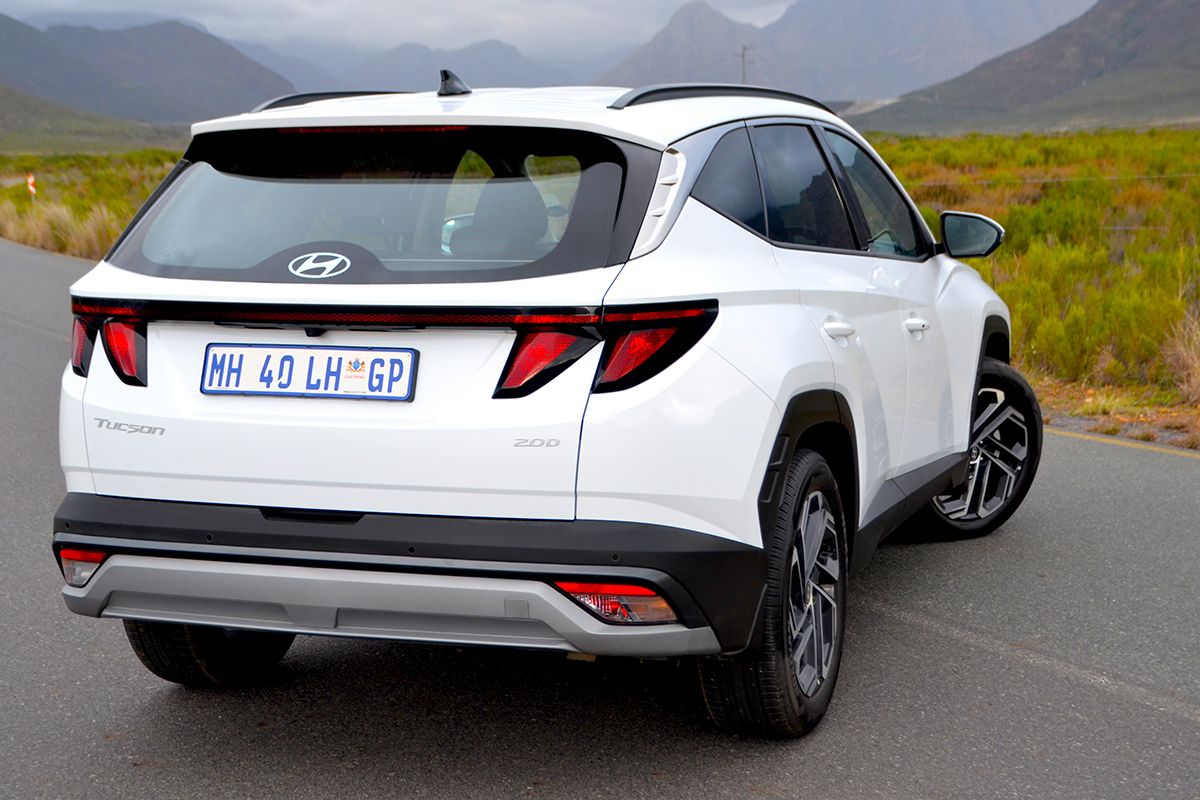
Somebody was listening somewhere
Well, thank goodness, someone was listening, somewhere. Because not only has Hyundai totally remodelled the Tucson’s dash, but all its buttons, knobs and physical controls are back, and then some! Smarter, more efficient, if a little less flamboyant than before, it’s all worked around the central floating driver-oriented 12.3-inch panoramic curved display to bring a futuristic touch.
Most importantly, there’s no more fighting stupid swipe surfaces or getting lost in cyber screens to carry out just a menial task. Now there’s basically a button or a knob for every important interface, with just the admin functions left to the clear, bright and well-stacked screen. Which means that the CarPlay and Auto infotainment works even better than before. Because now you can actually work, and use it!
While we’re inside, we may as well continue with the digital dials that now share the single wide screen with the infotainment. There are wireless chargers, front and rear air conditioning, cruise control and heated leather seats. The new style multifunction steering wheel with an odd … badge and gear lever also get a lick of leather. The large 539 litre capacity boot increases to 1,860 litres with the 60:40 split rear bench down flat.
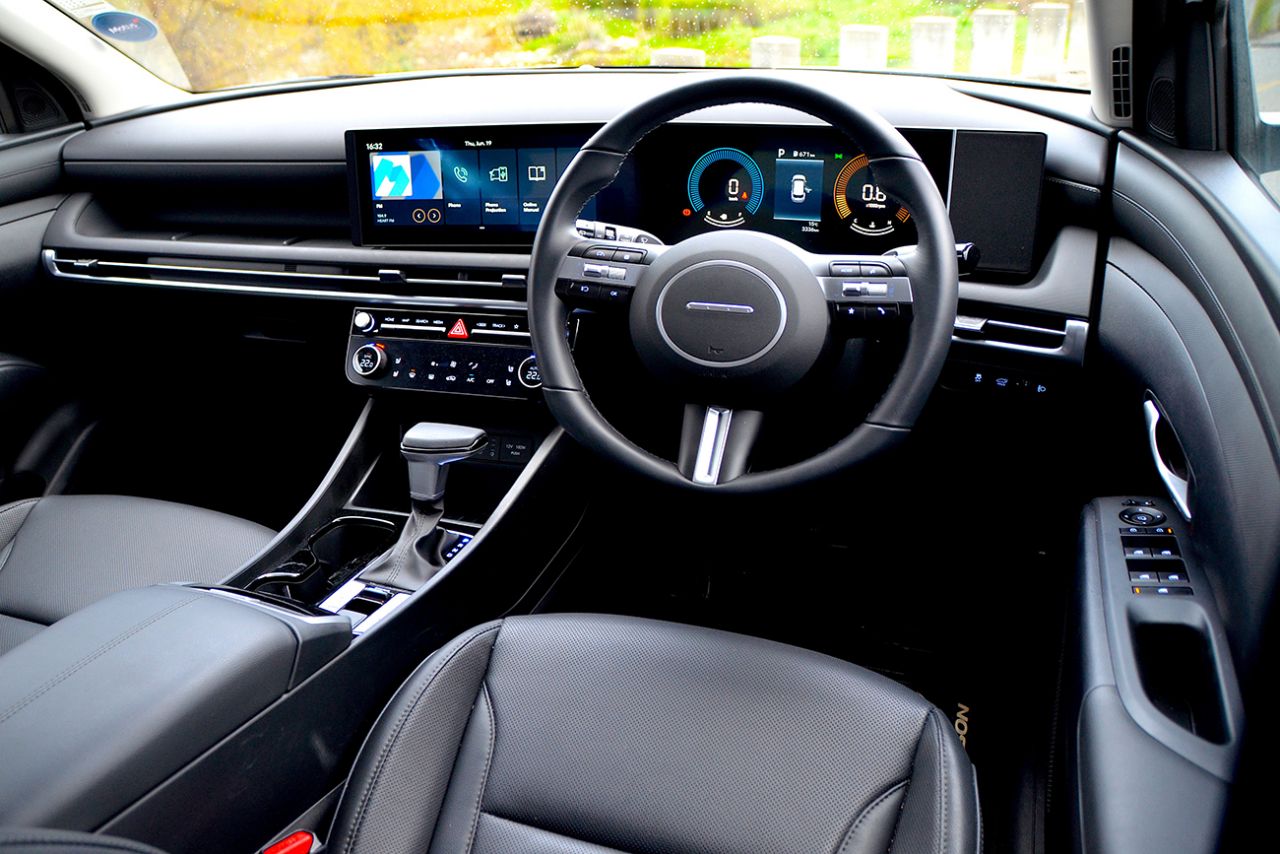
Complete makeover transforms Tucson cabin
Hidden Multi-Air three-zone climate control addresses cabin climate via indirect air vents behind a simplified grille on the totally reworked dash. Those up front are even spoiled by ventilation and heating on the faux leather clad chairs. Safety includes six front, side, and curtain airbags and ISOFIX child protection points. Add full Hyundai SmartSense with blind-spot and forward collision, rear cross-traffic and collision, lane keeping and follow, smart cruise, driver fatigue and high beam assistants.
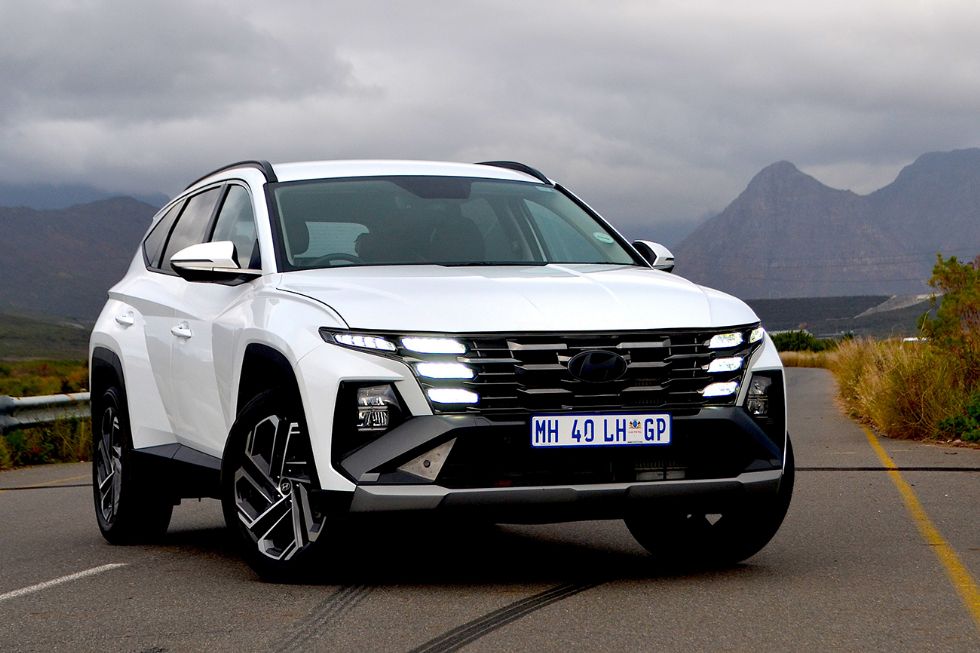
Stepping outside, there are a good few changes to the still familiar Tucson too. A more squared-off grille gets a chunkier egg crate design and revised lighting architecture. A literal treasure chest of static bending and blind-spot detecting LED headlamps still lurk between the grille elements in a distinctive Daytime pattern. Some styling facets have swapped from body colour, or vice-versa to black or grey to all make this latest take on the parametric jewelled look seem subtly more robust too
For the rest, the ‘sensuous sporty’ pronounced bonnet continues with the familiar flat roofline sitting atop a long wheelbase with short overhangs. Tucson‘s angular skin contrasts with its sleek cab-forward stance, with more of the splendidly disruptive same at the rear.
What better than turbodiesel for Tucson?
One area that this Tucson never ever needed any help with, was under the bonnet. No matter what the woke said, did and cocked-up, there is still nothing to beat a turbodiesel in a South African motoring sense. There’s really little to match the blend of torque, plushness and economy that a derv like this 137 Kw 416 Nm four-pot brings.
Finger the Start button and our middle of the range Tucson R2.0D Executive AT comes to life with a distant diesel rattle. It turns the front wheels via an efficient quick-shifting eight-speed automatic transmission. Hyundai promises 7.4 litres per 100 kilometres on fuel but our gauge showed in the 6s when it went back.
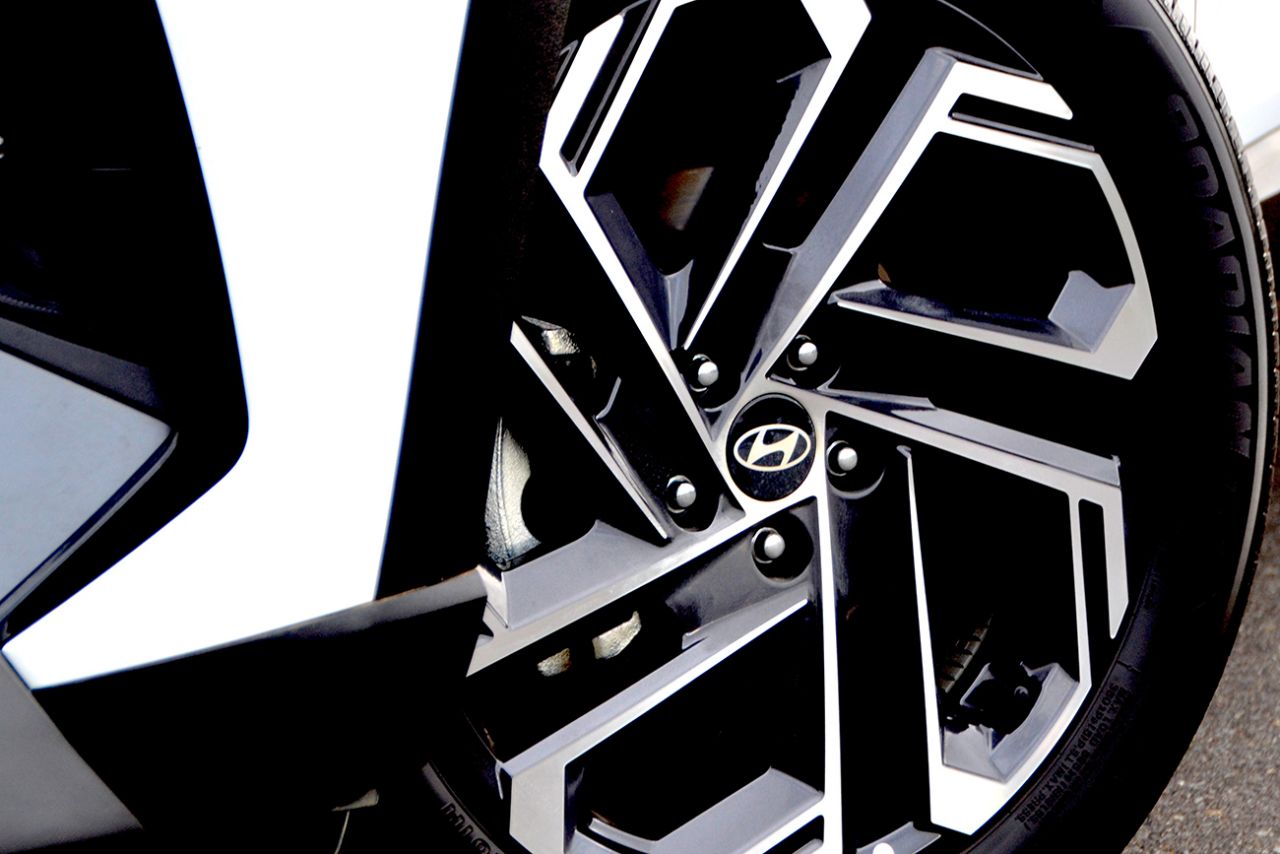
They also tell us that maximum speed is 201 km/h and we can tell you that it accelerates to 100 km/h in 8.04 seconds and stops the clocks at 15.8 seconds at 142 km/h at the quarter mile. All pretty impressive, mind you. MacPherson strut front and multi-link rear suspension with 19-inch alloy wheels and a stiff shell bring agility and surefootedness. There are also five Eco, Smart, Normal, Sport and Smart driving modes.
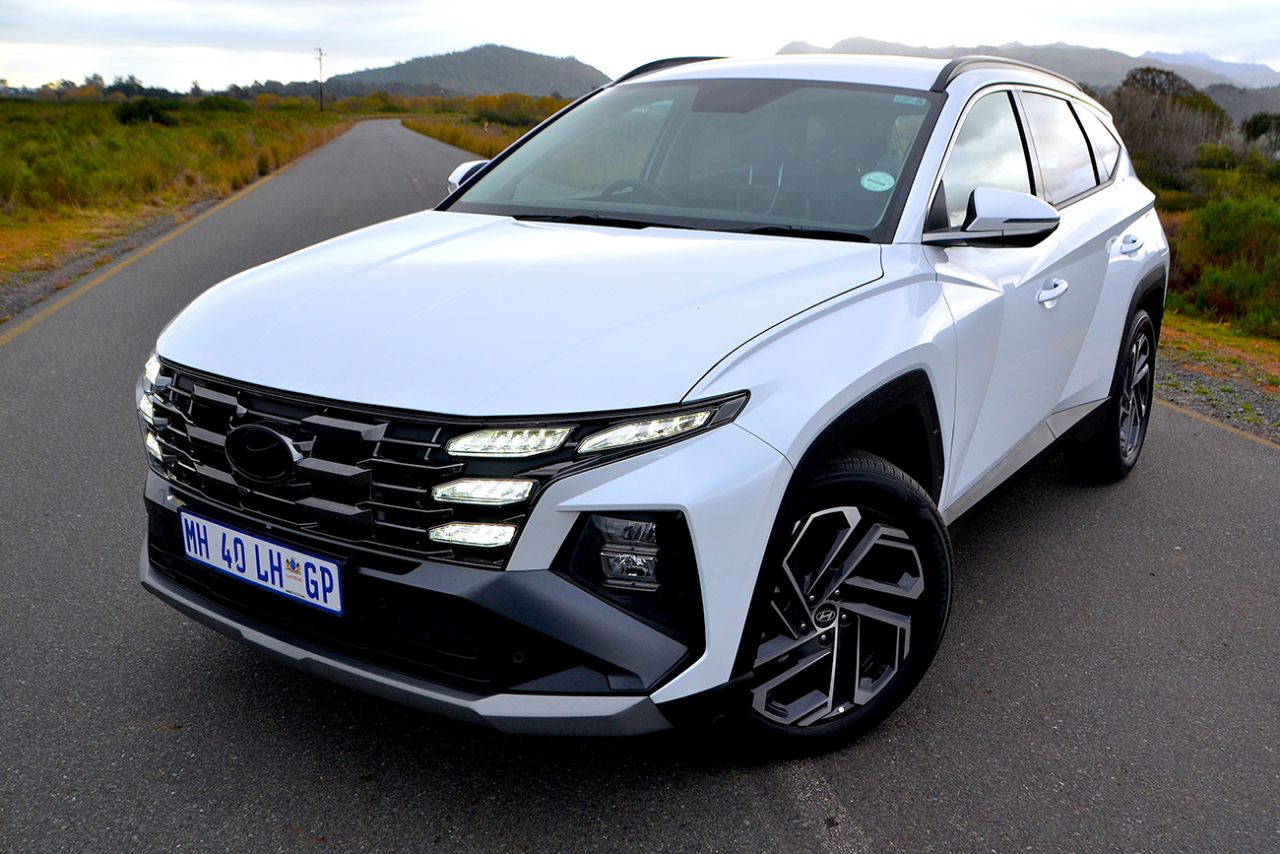
Tucson is huge when it comes to a facelift
Just as impressive as all that, this car costs ten grand less than the similar spec pre-facelift Elite we tested back in 2022. OK, this one carries a little less spec you may not need. But it still runs just as quick, uses just as little fuel and has everything you want from a car. Including knobs, buttons and turbodiesel power.
The market has also sped along in those three short years since our last Tucson test. Now we have dime a dozen cut price Chinamen to consider, too. Hyundai has however looked beyond just buttons and knobs and taken careful note of the best spec bang for buck that it can offer.
In so doing, it has delivered a far better version of an already damn good car that any human being can now actually understand and interface with. And it has priced and specced this car to also make it a most viable alternative to the Chinese. And that makes the 2025 Hyundai Tucson among the most significant facelifts we have seen in a long while… – Michele Lupini
Images & Testing: Giordano Lupini
ROAD TESTED: Hyundai Tucson R2.0D Executive AT
Engine:137 kW 416 Nm 2-litre turbodiesel I4
Drive: 8-speed automatic FWD
TESTED:
0-60 km/h:        3.49 sec
0-100 km/h:       8.04 sec
0-120 km/h:	  11.19 sec
0-160 km/h:       21.29 sec
400m:             15.8 sec @ 142 km/h
80-120 km/h:      5.69 sec
120-160 km/h:     10.10 sec
CLAIMED:
VMax:             201 km/h
Fuel:             7.4 l/100km
CO2:              169 g/km
Range:		  725 km
Warranty/Service: 5y 150/200K/5y 75Kkm
LIST PRICE:       R709K

How does it compare?
Check with Auto's Test Data right here